The Gypsum Reaction Costs More at Acre Scale Than at Dripper Scale
A grower mixing their own calcium-magnesium feed usually reaches for the same two jars: calcium nitrate and Epsom salt. It is cheap, it is everywhere, and in a small reservoir the mistake it makes is small too. Scale that same mix up to a field tank and the exact same chemistry stops being a nuisance and starts being a maintenance budget line.
The reaction, not the recipe
Epsom salt is magnesium sulfate. Put it in solution with calcium nitrate and you get a straightforward ion swap: the calcium pairs with the sulfate instead of staying with the nitrate, and calcium sulfate — gypsum — is poorly soluble. It does not stay suspended. It settles, it crusts, and once it has formed it does not go back into solution just because you add more water.
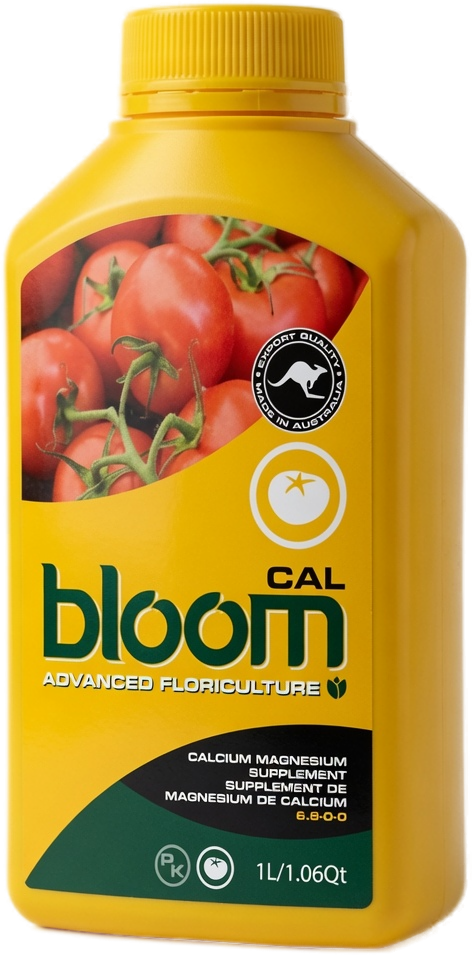
Bloom CAL (label analysis: Total N 5.2% — all nitrate nitrogen, Calcium 5%, Magnesium 1.4%, Iron 0.5% as chelated DTPA, Zinc 0.036% as chelated EDTA; derived from calcium nitrate, magnesium nitrate, iron DTPA and zinc EDTA) carries its magnesium as magnesium nitrate, not magnesium sulfate. There is no sulfate ion in the bottle for a calcium source to react with. That is a formulation choice, not an accident, and it is the whole reason this reaction never gets a chance to start.
Why the field version of this problem is bigger, not smaller
We’ve written before about this same reaction clogging a 2 mL micro-dripper in a specialty-niche setup — one emitter, one plant, a quick fix with a pin. A field-scale fertigation system doesn’t get the small-stakes version of that mistake. The volume being pumped is the difference: every gallon that passes through a disk filter, a screen filter or a drip-tape emitter at acre scale is a gallon that either is or isn’t carrying the same gypsum problem, and at field volumes it isn’t one clogged dripper, it’s filter media that needs flushing more often and drip tape that scales internally over a season. The chemistry is identical. The consequence just has more gallons behind it.
This is also why fertilizer compatibility charts — the kind every ag extension office publishes for tank-mixing — put calcium sources and sulfate sources in the same incompatible box whether you’re running a backpack sprayer or a center-pivot injector. The reaction doesn’t know the scale of the tank it’s happening in.
What this is, and what it isn’t
Bloom CAL works in soil, coco and hydro, but we’re not telling you to inject it through a pivot at a per-acre rate — that isn’t what the product is built for, and we’re not printing a field dose rate for it here. What this post is is a chemistry lesson worth carrying into any tank-mix decision at field scale: know what each jar in your tank actually brings with it. Calcium plus sulfate is a reaction, not a coincidence, whether it happens in a 2 mL emitter or a quarter-mile of drip tape. If a Cal-Mag input in your own mix is sourcing its magnesium from sulfate, that’s worth checking before it’s in the tank — not after the filters start clogging.
And while you’re reading labels: CAL’s nitrogen is 5.2%, all of it nitrate nitrogen, which is worth counting against whatever nitrogen budget you’re already running for the season — a point we’ve made before and will keep making, because it’s the kind of number that’s easy to forget is coming from somewhere other than your base fertilizer.
None of this is a reason to swap a working field program for a Cal-Mag bottle. It’s a reason to read the back of every jar going into the same tank the way you’d read a feed label — not just for the nutrients it’s guaranteeing, but for the counter-ion riding along with them. Sulfate shows up on purpose in plenty of inputs, and that’s fine on its own. It only becomes a maintenance problem the moment it meets a calcium source in the same tank, and that reaction costs the same whether the tank holds two liters or two thousand gallons.