
The Metals Ceiling That Gets Tighter, Not Looser, When a Fertilizer Declares a Micronutrient
Every fertilizer sold in the US sits under a ceiling for arsenic, cadmium and lead, set by AAPFCO and pointed to on the back of Bloom’s own labels. Most growers assume that ceiling is one flat number. It isn’t. The moment a label declares a micronutrient like iron or zinc, the math changes — and for a greenhouse program built around chelated iron, it usually changes the wrong way for anyone hoping a bigger guarantee buys more room.
Two Kinds of Ceiling, Not One
AAPFCO’s heavy-metals guidance publishes two different ceilings depending on what a label guarantees. A low-phosphate specialty fertilizer making no micronutrient claim gets a flat, absolute cap: arsenic at 10 ppm, cadmium at 20 ppm, lead at 100 ppm, full stop. But once a label declares a micronutrient — iron, manganese or zinc — the ceiling stops being a flat number and becomes a rate: 13 ppm arsenic, 12 ppm cadmium and 140 ppm lead, per percent of that declared nutrient. The cap scales with the guarantee.
That word “per percent” is the whole story. A product declaring 10% iron earns a generous allowance. A product declaring half a percent earns almost none.
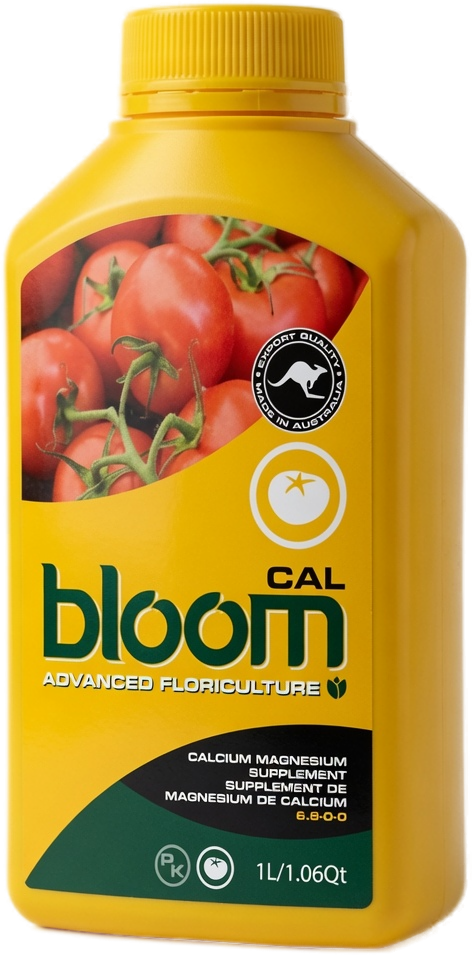
Bloom CAL‘s own guaranteed analysis — 5.2% nitrogen (all nitrate), 5% calcium, 1.4% magnesium, 0.5% chelated iron (DTPA) and 0.0360% chelated zinc (EDTA), derived from calcium nitrate, magnesium nitrate, iron DTPA and zinc EDTA — is a real example of how small those declared micronutrient percentages usually are in a Cal-Mag supplement, and it shows the scaling math at its tightest.
Why Greenhouse Iron Programs Run Into This
Floriculture growers running a dedicated Cal-Mag line into a greenhouse irrigation system usually care about one thing from a chelate: whether the iron stays soluble at the water’s pH, which is a separate question we’ve covered before. The metals-ceiling math is a different axis entirely — it’s about how much headroom the guarantee itself buys, not whether the nutrient stays available in solution.
Run the arithmetic and the pattern is almost backwards from what a casual read of “bigger guarantee, bigger allowance” suggests. CAL’s declared iron is 0.5% — low by the standards of a dedicated iron chelate, which can run 6% or higher — so the arsenic allowance it buys, 6.5 ppm, is already tighter than the flat 10 ppm ceiling a product with no micronutrient claim gets. Scale down again to CAL’s declared zinc, 0.036%, and the allowance shrinks to well under half a part per million of arsenic. A small declared percentage doesn’t relax the rule. It tightens it.
The lesson isn’t about Bloom specifically — it’s about reading any label’s guarantee before assuming more numbers on the back means more room underneath them.
None of this changes anything about how CAL performs in a feed tank. It’s a reminder of what the guaranteed-analysis panel is actually regulating: not purity in some general sense, but a specific, published allowance tied directly to the percentage printed right above it. A grower comparing two Cal-Mag products on a shelf can run this same math from the label alone — no lab needed, no guessing, just the declared percentages and AAPFCO’s published rates.
It also explains why a bulk broadacre micronutrient blend, often declaring 6% or more of a single metal, can carry a far larger absolute metals allowance than a dilute greenhouse chelate feeding the same element at a fraction of a percent — the two products are regulated by completely different arithmetic even though both say “iron” on the front. Reading that one line on the back of the bottle, the declared percentage next to the micronutrient name, tells you more about the regulatory room a product has than anything on the front label ever will.
We’ve written before about why CAL’s chelate choice protects iron at greenhouse water pH. This is the companion piece: the regulatory ceiling sitting underneath that same guarantee, and why a small, precise micronutrient declaration is a stricter promise than it looks.