Cal in Soil, Coco and Hydro: What Changes and What Doesn’t
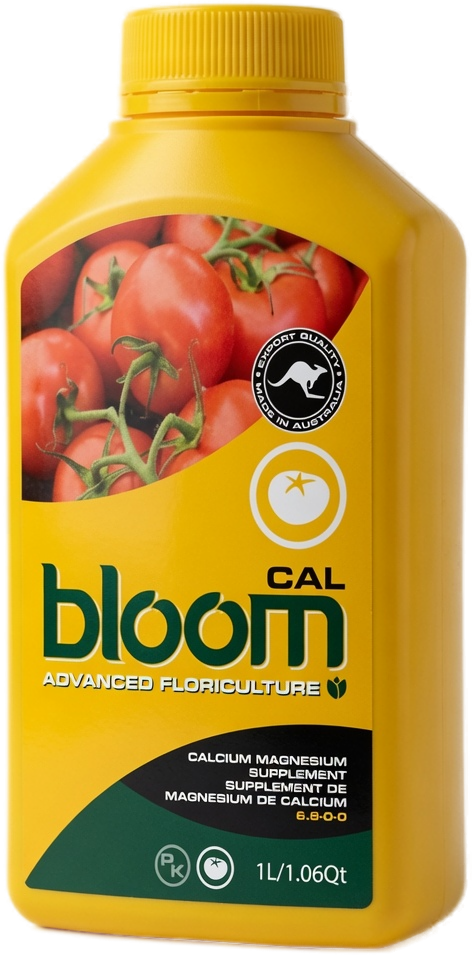
We get asked this one a lot: “Can I use Bloom CAL in soil, or is it just for hydro?” Short answer, yep, it works in soil, coco and hydro. Same bottle, same rate: 1 ml/L, weekly. What changes from one medium to the next isn’t the product, it’s what you keep an eye on while you feed it. Here’s the rundown.
What’s in the bottle (and why it doesn’t care what’s in the pot)
CAL’s guaranteed analysis is 5.2% nitrogen, all of it nitrate, plus 5% calcium and 1.4% magnesium, from calcium nitrate and magnesium nitrate. There’s no sulfate in the formula, so you don’t get calcium sulfate dropping out of your mix the way you can when people blend calcium nitrate with Epsom salts themselves. It also carries 0.5% iron as DTPA chelate and 0.036% zinc as EDTA chelate.
A chelate is basically a little cage that holds the metal in solution so it doesn’t bond with something else in the water and fall out as a solid the roots can’t use. The two chelates aren’t the same: DTPA keeps iron soluble up to roughly pH 7.5, while EDTA tends to give out above roughly pH 6.5. That’s a handy margin whether your feed is going into a reservoir, a coco pot or a soil bed.
Yellow leaves with green veins is usually a pH problem, not a missing-feed problem. The iron’s often already there. Get the pH sorted first and the feed can do its job.
What doesn’t change
The rate. Bloom CAL goes in at 1 ml/L, weekly, whether you’re in soil, coco or hydro. Check your pH once your full feed is mixed.
What changes: a few notes per medium
Soil
Soil holds onto nutrients and buffers pH, so changes show up slower. Check your runoff EC and pH every so often so you know what’s building up in the pot or bed. If your water is hard, test it first, since it may already be bringing a fair bit of calcium and magnesium to the party.
Coco
Keep an eye on runoff EC and pH so you can see if salts are creeping up, and water to a bit of runoff so the root zone doesn’t drift.
Hydro
In a reservoir you can see what’s going on straight away. Check pH and EC when you mix and as the tank runs down, and top up or change the tank on your usual schedule. Hard water counts here too, so get a reading on your source water before you start.
Same bottle, same 1 ml/L weekly, soil, coco or hydro. The only thing that changes is where you take your readings.
If you’re not sure where your water or runoff is sitting, test before you tweak anything. And if something looks off, flick us a message with your medium and your readings and we’ll have a look with you.