

COCO & HYDRO GROWERS
Nothing buffers a mistake here.
Every input has to be dialed.
In a living soil bed, biology quietly corrects for a bad week. Coco and hydro don’t do that — the medium is inert, drainage is fast, and EC and pH can drift in hours, not days. Bloom’s coco & hydro range is built for that reality: chelated bases, fast-acting biostimulants, and the trace and structural inputs an inert medium can’t supply on its own.
Australian-made · 26 years supplying US growers · Works alongside your existing base · Agricultural Organics, South Australia
Why it matters
No soil biology.
No safety net.
Living soil forgives a lot — microbes buffer pH, cycle nutrients, hold a reserve for a rough week. Coco and hydro don’t have that cushion. Every mineral the plant gets has to already be in the reservoir or the drip line, in a form the roots can actually use, in the right ratio, every single feed.
No microbial buffer
In an inert medium there’s no biology quietly correcting a mismatch. What you feed is what the plant gets — nothing held in reserve.
Fast-draining, fast-swinging
Coco and hydro drain or recirculate fast. A pH or EC drift a soil bed would absorb over days shows up in your canopy within 24–48 hours.
Everything has to be chelated
Minerals soil biology would naturally break down and deliver have to arrive already plant-available — or they simply don’t get taken up in time.
Run a facility? You already know these
The problems
that cost you a room.
These aren’t abstract risks — they’re the specific, recurring ways a coco or hydro room loses yield. Here’s what each one actually is, and which Bloom inputs are built to solve it.
Cal-Mag lockout CAL-MAG
The single most common deficiency in coco. Coco coir naturally holds onto calcium and magnesium ions on contact, pulling them out of solution before the plant ever gets them — worse with soft or RO water. Left uncorrected it shows up as rust spots, curled tips and pale new growth across a whole room at once, not just one plant.
EC and pH drift EURO / GROW+FLOWER
No soil buffer means a reservoir or drip line can swing fast, especially under high-intensity LED driving heavy transpiration. It’s often silent and colourless — the first real sign is a leaf symptom that shows up after the drift already happened. Chelated two-part bases hold minerals available across a wider pH range than raw salts, buying you a bigger margin for error.
Root-zone oxygen & disease pressure ROOTS + SEAFUEL
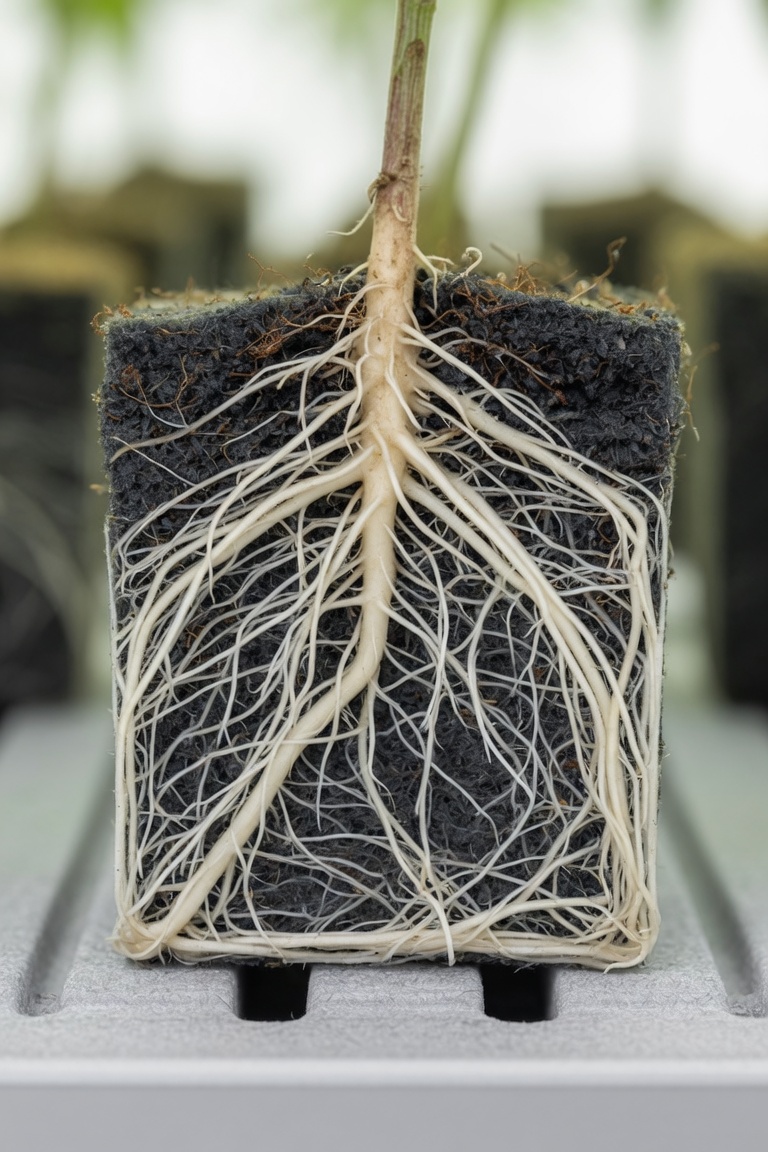
Recirculating hydro systems and overwatered coco both risk anaerobic pockets where root-rot pathogens get a foothold. A fast, dense, well-fed root mass with active beneficial biology is harder for a pathogen to establish in than a slow, thin one — the goal is out-competing the problem, not treating it after it shows up.
Weak structure under intense light SILICA
Modern LED fixtures push growth faster than a plant’s cell walls naturally keep pace with, leading to floppy stems and a canopy that can’t hold its own weight once buds load up. Silica deposits directly into the cell wall, physically stiffening the plant against that.
Consistency at scale The whole range
The challenge is never one plant — it’s every plant, in every room, every week. A feed that’s “close enough” compounds into real yield variance across a facility. The fix is the same tested ratio, every bottle, every time — the entire point of a dosed input over open guesswork.
Four systems, one coco & hydro range
Not one bottle.
A coordinated system.
Each of these covers a different job in a coco or hydro program — layer in what your current setup is missing, without ripping out what’s already working.
Base Nutrition & Support
EURO · GROW A+B · FLOWER A+B · CAL-MAG · SEA MINERALS · PK
Your feed foundation. Chelated two-part bases plus the Cal-Mag and trace minerals coco strips out of solution on contact.
Shop this range →

Structural Development
ROOTS · PRE · ULTRA · PHAT · OOZE · FINAL · PK
One purpose-built input for every stage — root development, branching, the flip, mid-flower bulk, and the finish.
Shop this range →

Health & Vigor
SEAFUEL · SEAWEED · GROIGEN · FLORIGEN · SWTNR
Biostimulants and foliar sprays that keep the plant fed and steady when root uptake alone is too slow to respond.
Shop this range →

Generic & Specialty
CAL-MAG · HUMATE · SEA MINERALS · SILICA
The problem-solvers — the inputs that fix lockout, lift uptake, and reinforce structure when something specific is off.
Shop this range →
The honest comparison
Add-ons bolted on vs. a coordinated system.
Uncoordinated add-ons
✗
Bought one at a time, chasing whatever problem showed up last.
✗
No idea if two products are working against each other in the reservoir.
✗
Chelation and dose rates you have to guess at.
✗
A different brand, ratio and instructions for every bottle.
Bloom’s coco & hydro system
✓
Built to work together, at rates tested against each other.
✓
Chelated minerals dosed for coco and hydro specifically.
✓
One consistent feed chart across the whole range.
✓
Works alongside your current base — enhance it, don’t rebuild it.
What growers are seeing
Reliable.
Even when you’re not watching.
“I was gone a week, and the nutrient levels on the Bloom Roots buckets were still active — my Clone-X bucket ran dry days before. Such a great product.”
@jason_capsaicin_
DWC, side-by-side vs. Clone-X · shared via Instagram
“Tried the Seafuel, Silica and Cal and the plants are praying — loving it.”
@yendofarms444
“Ultra weeks 1–2, then Phat — finishing early with major bulk.”
@greendiamondgarden_est2015
“Still using Roots and Seafuel in my cloning regime and they love it.”
@griffbain13
The honest questions
What coco & hydro growers
actually ask us.
Why does coco need Cal-Mag when soil doesn’t?
Coco coir has a naturally high cation exchange capacity — it holds onto calcium and magnesium ions on contact, pulling them out of the nutrient solution before the roots get a chance at them. Living soil doesn’t have that same binding effect, so the deficiency is specific to coco (and worse with soft or RO water). Running Cal-Mag every feed, especially in fresh coco, heads it off before it shows up.
What’s actually causing my EC or pH to drift?
Three things compound: no soil biology buffering the reservoir, fast drainage or recirculation giving errors nowhere to dilute into, and heavy transpiration under intense LED pulling water and minerals unevenly. Chelated two-part bases like EURO or GROW/FLOWER hold minerals available across a wider pH range than raw salts, which buys real margin for error.
Can I run this alongside my existing synthetic base?
Yes — that’s exactly how it’s built to work. Whether you’re running a synthetic base, a hybrid approach, or Bloom’s own EURO or GROW/FLOWER, the biostimulants and specialty inputs layer on top to improve uptake, root development and structure. Nothing here requires rebuilding your existing system.
How do I protect a recirculating system from root rot?
There’s no single product that guarantees immunity, but the real lever is root-zone strength: a fast, dense, well-fed root mass with active beneficial biology is harder for a pathogen to get a foothold in than a slow, thin one. ROOTS and SEAFUEL early in the cycle are built specifically to establish that quickly, alongside good oxygenation practice in the reservoir itself.
Do I need every category, or can I start with one?
No — start with Base Nutrition & Support if you don’t already have a dialed base, or Generic & Specialty if you’ve got a base running and are chasing a specific issue like lockout or weak stems. Add the others as the actual problem shows up.
Nothing buffers a mistake here.
So nothing here is guesswork.
One consistent, chelated system built for coco and hydro — not soil forgiveness, precision.
Shop the range →
Or get your full feed chart at bloomyellowbottles.us/feed-schedules