
Stems that fold under the weight.
Leaves that cop every stress.
Soft growth bends, flops and needs a trellis to hold it up. Silica goes in the tank first, on its own, at a tiny rate, then your base goes in on top as normal.

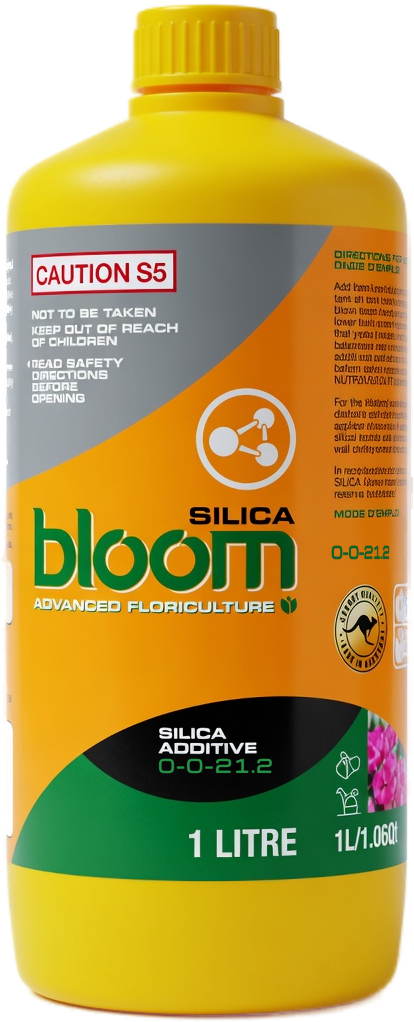 Thick stems, standing straight
Why do stems go soft?
Under strong light, plants put on size quicker than they firm it up. The new growth is soft and easy to bend.
Plants that take up silica lay it down in their cell walls. Research links that to firmer stems and leaves. Clean water and bottled bases usually have next to none.
Silica stays where the plant puts it, so new growth only gets it if it’s in the feed while that growth is forming.
Three jobs, one small dose.
Keep your base. Silica goes in first, on its own, at the label rate.

Add it first, alone.
Potassium silicate is strongly alkaline. Stir it into plain water first, then add the rest of your feed, then check pH last.

Firm up the frame.
Veg is when the plant builds its stems and branches. Having silica in the feed while that growth forms is the whole point.

Hold the branches up.
Keep it going as the buds put on weight, so the branches carrying them are as sturdy as they can be.
Potassium silicate, nothing fancy.
No synthetic hormones. No live microbes.
Silica in their own grows.
“Thank you guys for making awesome products — I use your Silica every watering till week 5.”@gweedosgrowroom · Silica
“Loving the Silica — this one’s turning purple and I’m impressed with the results.”@fannondaniel · Silica
Growers’ own words, individual results vary.
Not every floppy plant needs silica.
Rule these out first. Silica helps, but it can’t fix the setup.
Not enough light, or the light is too far away. Bring it closer or turn it up before blaming the feed.
Watering. Overwatered and underwatered plants both droop. Check the pot weight and the runoff first.
Mixing order. Silica went in after the other nutrients. Start again: silica first, stir, then the rest.
Pick your size.
Cost per gallon is worked out at the label rate of 0.33 ml per litre. Bigger bottles cost less per gallon.
Retail prices from the store today. Wholesale accounts see their own pricing at checkout.
Silica questions.
Why does it have to go in first?
Potassium silicate is strongly alkaline. Mixed straight into a tank of other nutrients it can react and cloud up. Plain water, silica, stir, then the rest of your feed, then pH last.
When do I run it?
From week 2 of veg and on through flower, once a week at 0.33 ml/L on the feed charts. Plenty of growers run it every watering instead, which is fine too.
Can I use it with my current nutrients?
Yes. Keep your base and add Silica first. You don’t need the whole Bloom line to use it. The calculator works out the dose for your tank.
Not sure it fits your grow? Talk to Nate.
Tell us what you’re growing and how it’s holding up, and we’ll tell you straight if Silica is worth adding.