
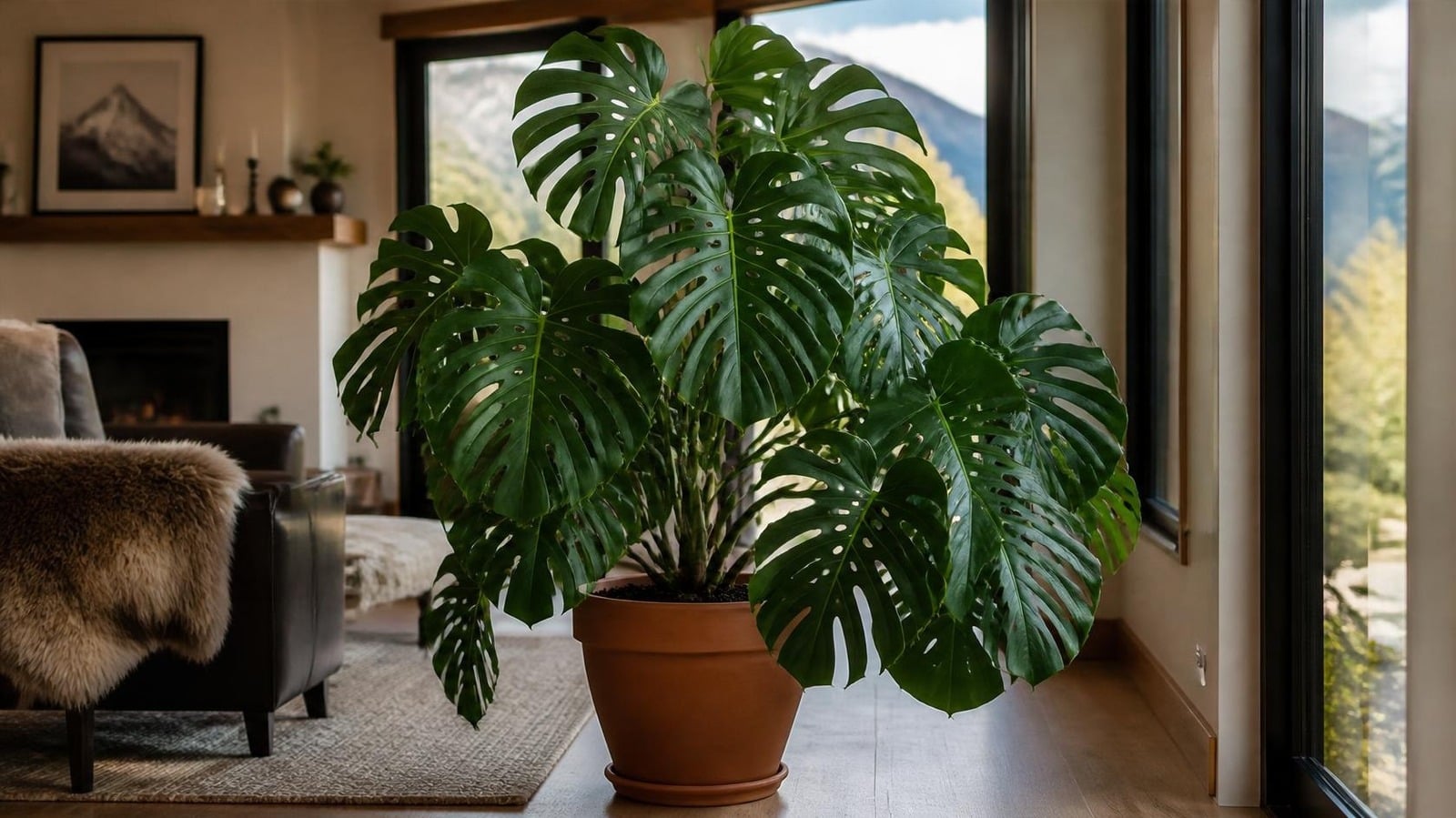
Houseplants · Bloom Yellow Bottles
Keep it looking like the day you bought it.
Dry indoor air is tough on tropicals. Brown edges, pale leaves, cuttings that sit there doing nothing. Below, each problem comes with what’s actually in the bottle, what it does inside the plant, and why that fixes it, straight off the label.
- 26 yearsin the US market
- About 13¢a gallon of feed with Seafuel
- Kitchen spoonsand tap water. Nothing fancy
- To your doorshipped anywhere in the US
Quick plant check
What’s your plant doing?
Tap the one that looks like yours. You’ll get the fix, what’s in the bottle, and why it works.
 Dry airFed with Bloom
The big one in dry homes
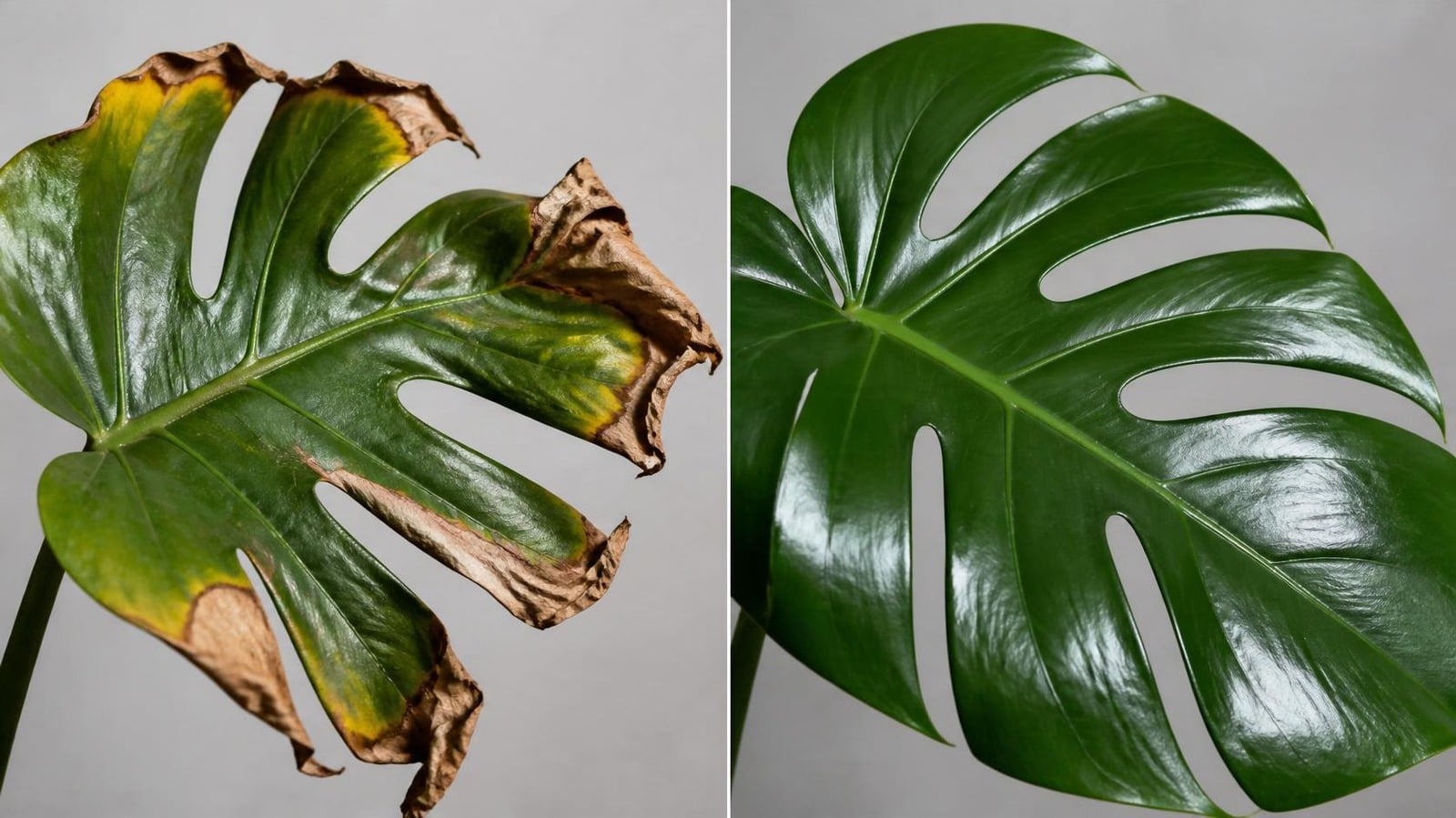
Crispy brown edges
Dry indoor air pulls water out of thin leaf edges faster than the plant can top it up. Tips go brown, edges curl, and the plant looks tired even when you’re doing everything right.
- New leaves come out thicker and tougher, with clean edges
- Big Monstera and Alocasia leaves hold themselves up instead of flopping
- Far less tip burn through the dry winter months
Why it works
The edge is the thinnest part of the leaf and the furthest from the water supply, so it dries out and collapses first. Two things help: tougher cell walls, and a plant that handles dry-air stress better.
- Potassium silicate + monosilicic acidin Silica
Silicon is the one thing in here the plant builds into its own structure. It gets laid down in the cell walls of new growth, so new leaves come out physically stiffer and hold up better at the edges. - Southern bull kelp (Durvillaea potatorum)in Seaweed
A cold-water Southern Ocean kelp carrying natural cytokinin- and auxin-like growth compounds and potassium. Potassium is what the plant uses to open and close the pores on its leaves, which is how it manages water loss.
Full ingredient breakdown, straight off the label: Seaweed · Silica
What fixes it
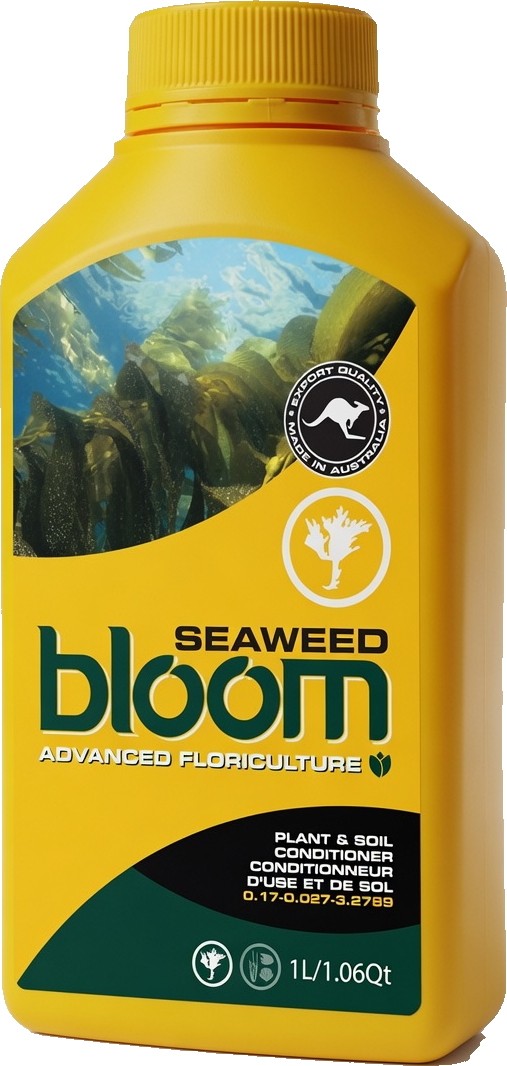 SeaweedThe Grower’s Insurance¾ tsp per gallon1L · $33.76Buy Seaweed
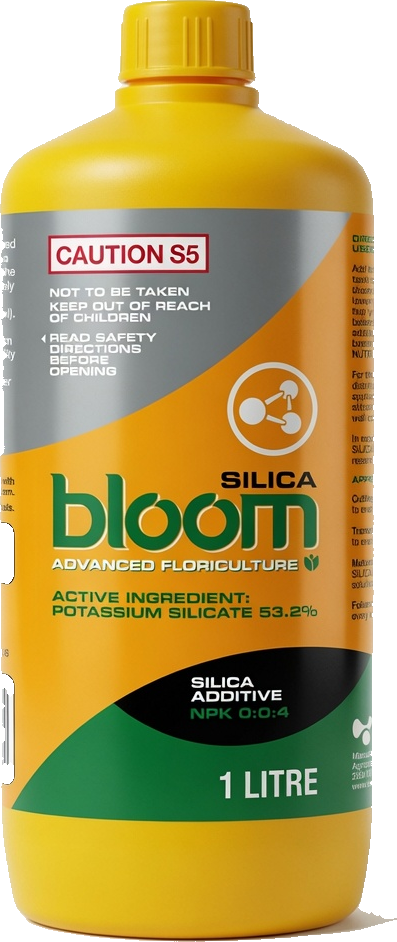 SilicaThe Plant Armor¼ tsp per gallonOut of stock right nowSee Silica
When you’ll see it: the next one or two new leaves, usually 4–8 weeks in spring and summer. Silica’s out of stock right now, so start with Seaweed and add Silica once it’s back.
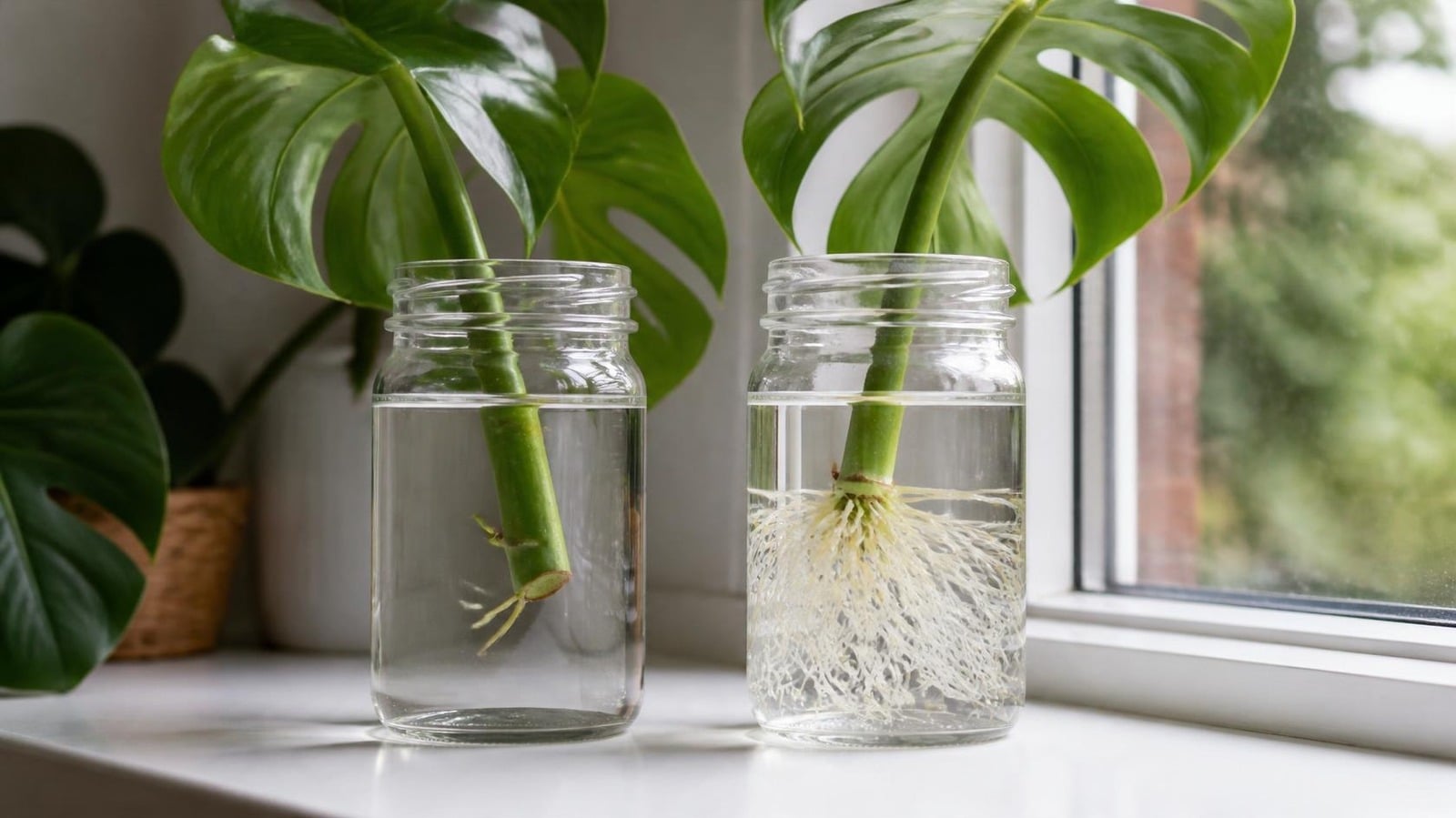 Water onlyRoots + Seaweed
Rare cuttings and props
Cuttings that root, not rot
You’ve paid good money for a node cutting and it’s been sitting in water for a month. Give it something to work with.
- First white root tips showing sooner
- More roots, thicker roots, side branches before you pot it up
- Less sulking when it moves into soil or LECA
Why it works
A cutting has no roots, so it’s living off whatever’s stored in the stem. To root it needs two things: a signal to start, and the raw material to build with.
- Root-initiating compoundsin Roots
Signal the cells at the node to start dividing and form new root tips. That’s the switch. - L-form amino acidsin Roots
Ready-made building blocks the cutting turns straight into root tissue, instead of having to make them first from stored energy it doesn’t have much of. - Fulvic acid + vitamin B1in Roots
Fulvic acid holds onto minerals and carries them across into the new root. Thiamine (B1) helps the cutting handle the stress of being cut. - Southern bull kelpin Seaweed
Natural auxin- and cytokinin-like growth compounds, the same family of signals plants use to grow roots and shoots.
Full ingredient breakdown, straight off the label: Roots · Seaweed
What fixes it
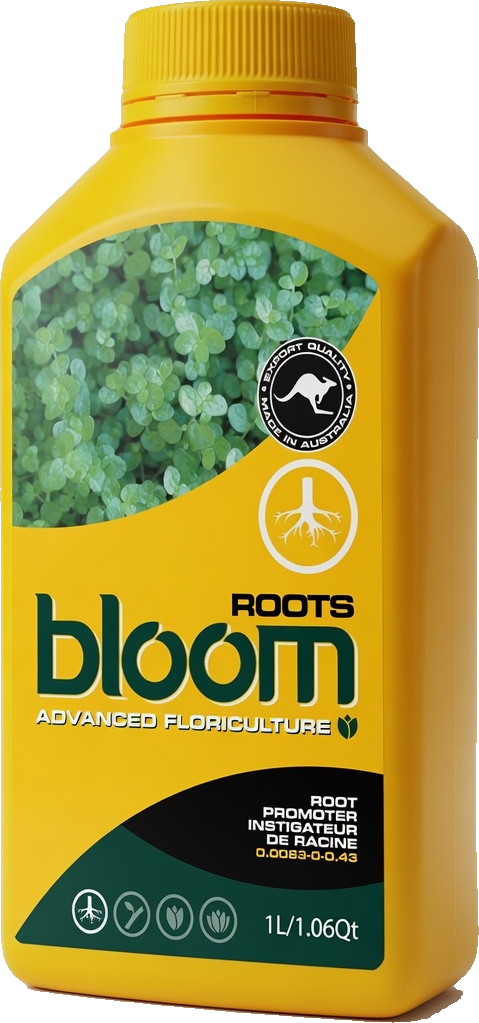 RootsThe Root Igniter¾ tsp per gallon for cuttings1L · $46.46Buy Roots
SeaweedThe Grower’s Insurance¾ tsp per gallon1L · $33.76Buy Seaweed
RootsThe Root Igniter¾ tsp per gallon for cuttings1L · $46.46Buy Roots
SeaweedThe Grower’s Insurance¾ tsp per gallon1L · $33.76Buy Seaweed
When you’ll see it: roots visibly ahead in 2–3 weeks. Seaweed tints the water a light tea colour, so change it weekly.
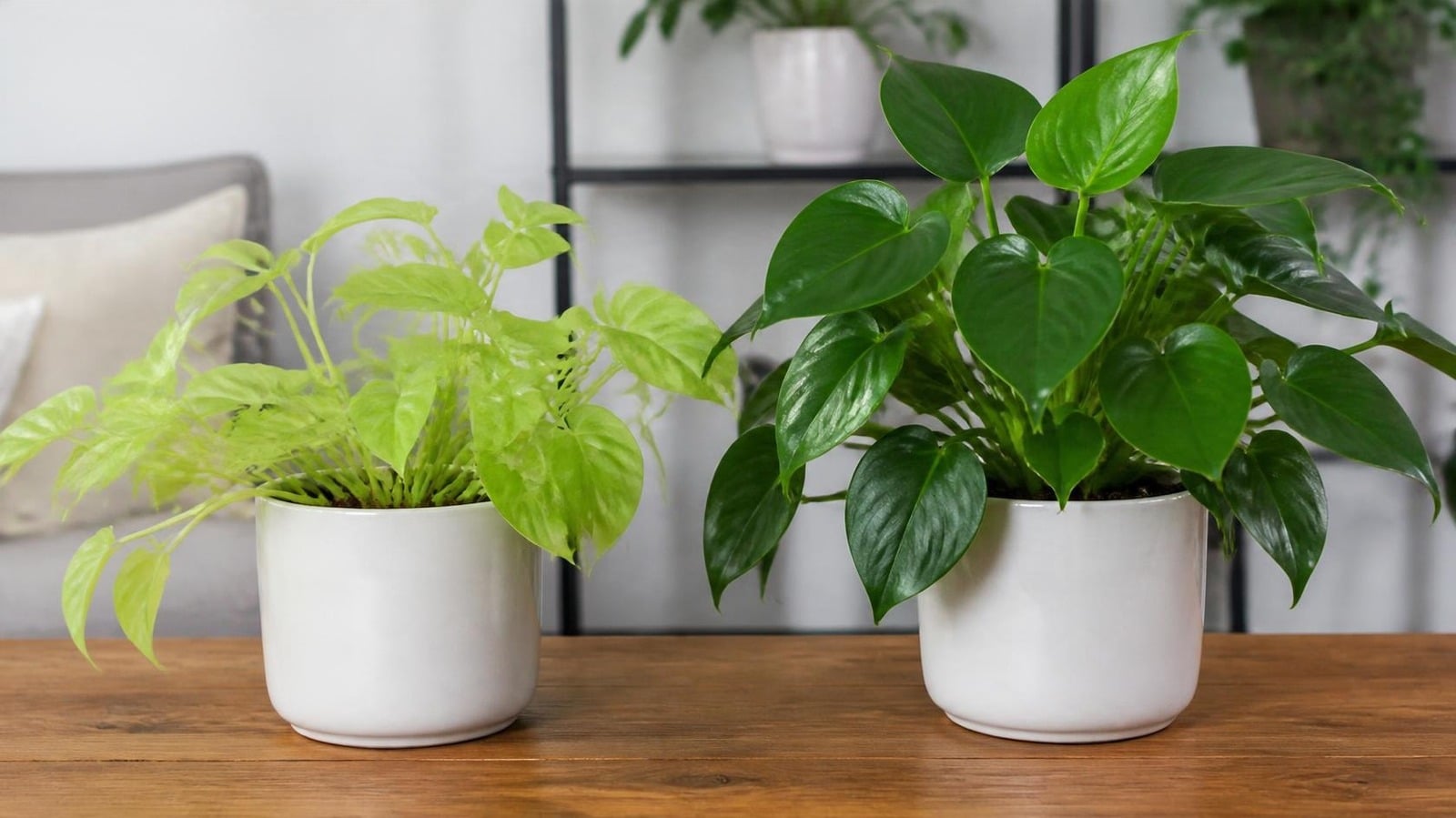 Tap water onlyMonthly feed
Every plant, eventually
Pale, leggy and sparse
Most houseplants sit in the same potting mix for a year or more. Once it’s used up, leaves come out smaller and lighter with long bare stems between them. Seafuel goes in the watering can; Groigen is a leaf spray you mist on in the evening.
- Deeper green on new leaves
- Bigger leaves, sturdier stems, a fuller-looking plant
- A potting mix that stays alive between repots
Why it works
Pale, small leaves usually mean the potting mix has run out of usable nutrition, and nitrogen is normally the first thing to go. Nitrogen is part of chlorophyll, the green stuff, so short supply shows up as lighter, smaller leaves.
- Southern Bluefin Tuna hydrolysate, cold-processedin Seafuel and Groigen
Fish broken down into amino acids without heat, so the nitrogen, oils and proteins stay intact. Gentle, steady nitrogen in a form the plant can use, not a harsh salt. - Humic acidin Seafuel
Holds minerals in the mix in a form the roots can take up, so the feed doesn’t just wash out the bottom of the pot. - Southern bull kelpin Seafuel
Natural growth compounds and trace minerals that keep new growth even. - Sea water minerals + nori-type red algae (Porphyra)in Groigen
Trace elements and amino acids misted onto the leaf, which absorbs them directly. A second way in on top of the roots.
Full ingredient breakdown, straight off the label: Seafuel · Groigen
What fixes it
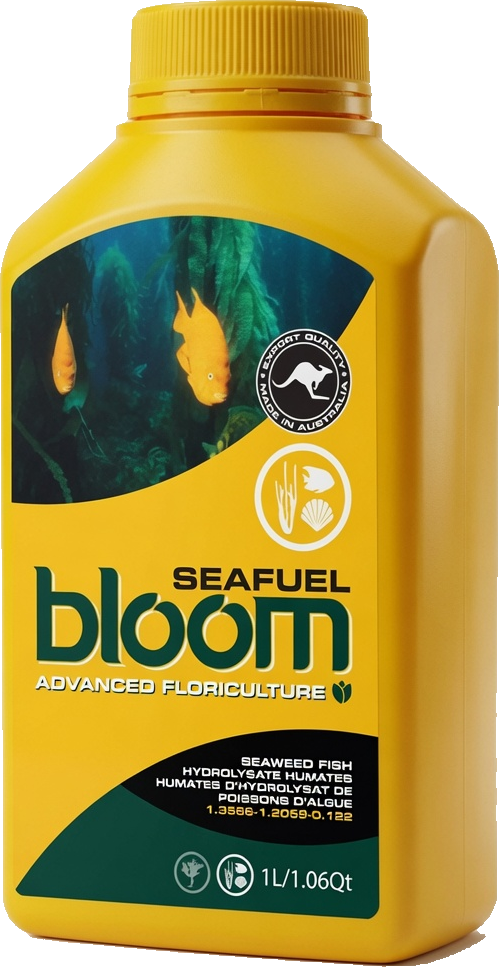 SeafuelThe Living Plant Tonic¾ tsp per gallon, in the can1L · $33.76Buy Seafuel
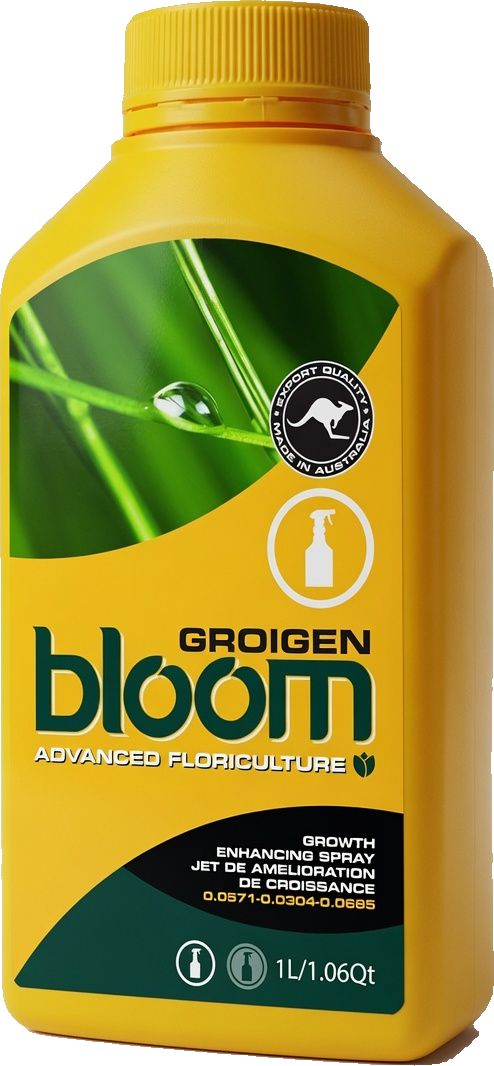 GroigenThe Leaf-Fed Grow2 tsp in a 500 mL spray bottle1L · $54.00Buy Groigen
When you’ll see it: colour shifts in 3–4 weeks, a fuller plant by the end of the season.
 Clean white
The pricey ones
Keep the white white
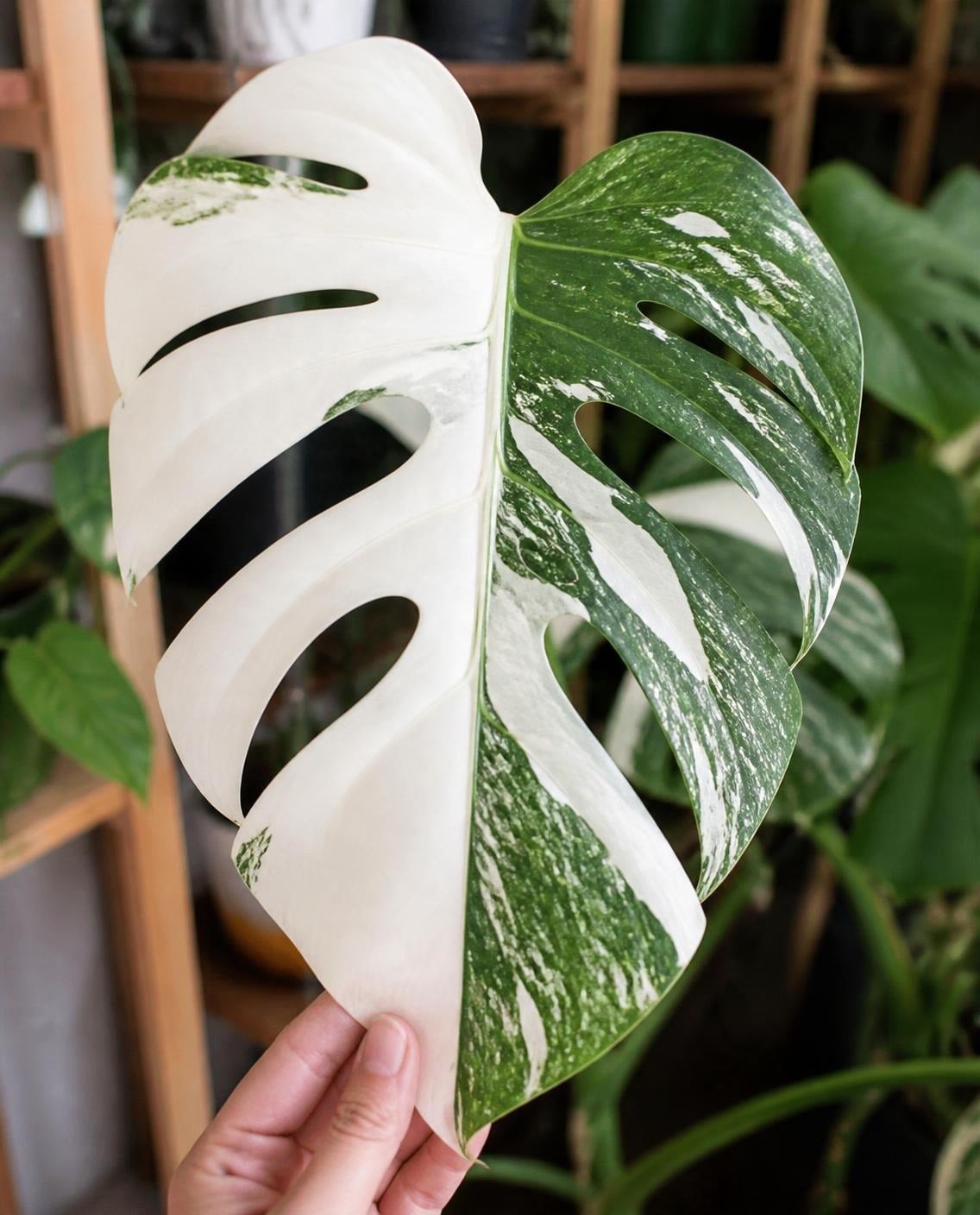
The white on an Albo, Thai Con or Pink Princess has no chlorophyll. It’s the weakest part of the leaf and the first to go brown and papery in dry air, and that’s where the plant’s value is.
- Fewer brown, papery patches on the white sections
- Tougher leaves that cope better with moving and handling
- Steady growth so the plant can afford to keep its white leaves
Why it works
White sections have no chlorophyll, so they can’t make their own food. They’re fed by the green parts of the leaf, their cells are weaker, and they’re the first to dry out.
- Potassium silicate + monosilicic acidin Silica
Silicon goes into the cell walls of new leaves, white sections included, making that thin tissue tougher and less likely to go brown and papery. - Fish hydrolysate, bull kelp + humic acidin Seafuel
Steady amino-acid nitrogen and trace minerals keep the green parts working hard, so the plant can afford to carry its white.
Full ingredient breakdown, straight off the label: Seafuel · Silica
What fixes it
SeafuelThe Living Plant Tonic¾ tsp per gallon1L · $33.76Buy Seafuel
SilicaThe Plant Armor¼ tsp per gallonOut of stock right nowSee Silica
When you’ll see it: judge it leaf by leaf. Every new one should come out cleaner. Start on Seafuel now and add Silica once it’s back in stock.
 New leaf coming
The rescue
Bring a sad plant back
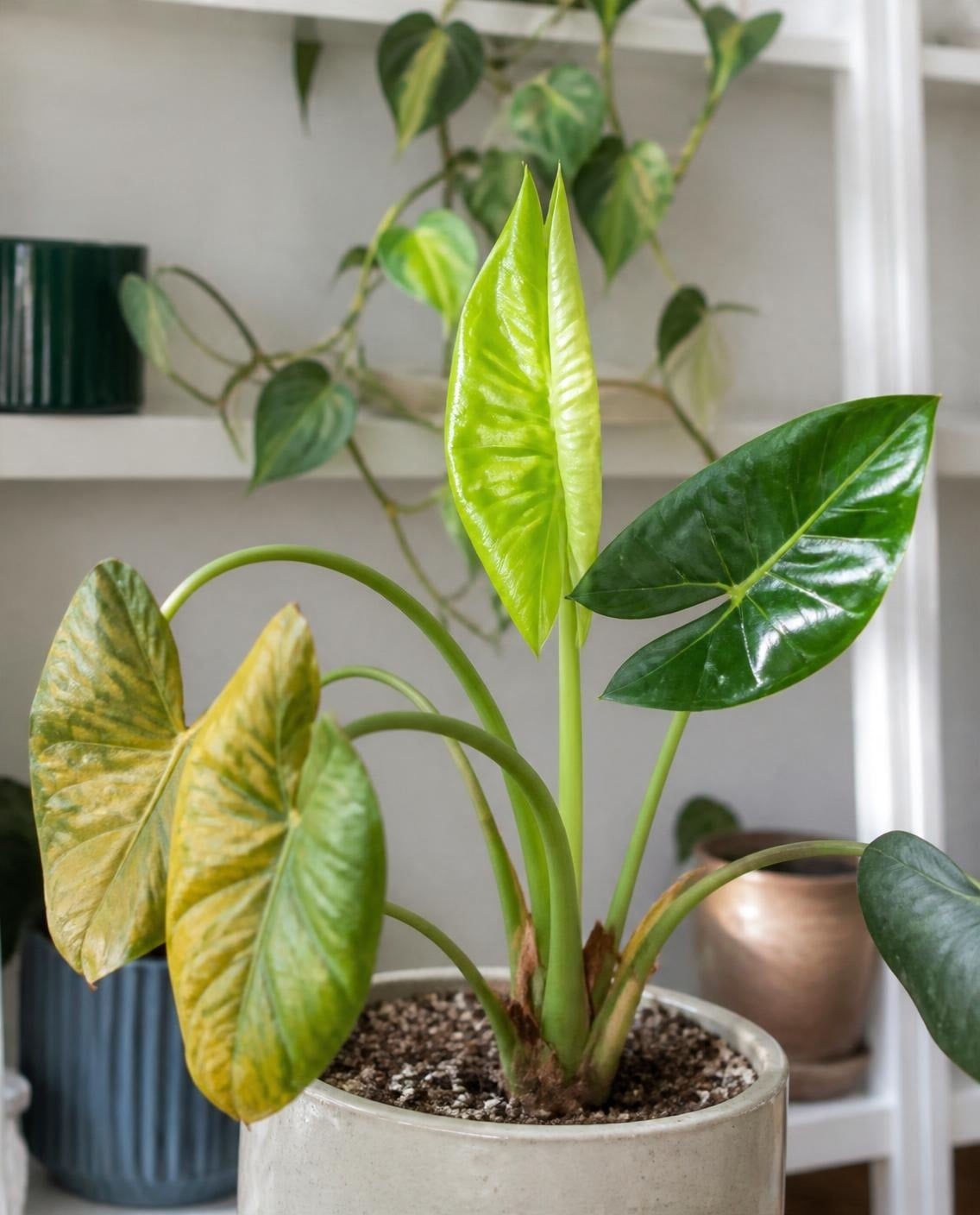
Alocasias are the classic. A cold window, a move, a pest run-in or a dry week and they drop leaves or go dormant. Don’t bin it yet.
- A new leaf pushing up from the middle, often before the old ones finish yellowing
- Firm white new roots when you check the root ball
- A plant that bounces back instead of sitting dormant all winter
Why it works
When an Alocasia drops its leaves, it’s pulled back to its corm and roots to wait out the stress. It won’t push a new leaf until it has fresh roots to support one, so the roots come first.
- Root-initiating compounds + L-form amino acidsin Roots
The signal to start new roots and the building blocks to make them, so the plant rebuilds what it lost underground. - Vitamin B1 + fulvic acidin Roots
Thiamine helps buffer the stress of a move or a cold snap. Fulvic acid carries minerals into the new roots. - Southern bull kelpin Seaweed
Natural cytokinin-like compounds, the signal plants use to restart shoot growth, plus potassium to help manage water while the plant gets going again.
Full ingredient breakdown, straight off the label: Roots · Seaweed
What fixes it
RootsThe Root Igniter⅜ tsp per gallon1L · $46.46Buy Roots
SeaweedThe Grower’s Insurance¾ tsp per gallon1L · $33.76Buy Seaweed
When you’ll see it: feed weekly until the first new leaf opens, usually 3–6 weeks. Sort any pests out first. Bloom helps recovery, it doesn’t treat bugs.
What to expect
Your first 12 weeks
- Week 0First feedMix it in the watering can and water through until it drains out the bottom.
- Wk 2–3Roots move firstCuttings show root tips. Potted plants firm up and stop drooping between waterings.
- Wk 3–4ColourNew growth comes through a deeper, more even green.
- Wk 4–8The first new leafThicker, with cleaner edges. That’s the one you’ll want to take a photo of.
- Week 12A different plantFuller, sturdier, and holding its own against the dry air.
Mixing guide
How much goes in the can
Pick your routine and your watering can. Kitchen measuring spoons into plain tap water is all you need.
Routine
Watering can
Not sure where to start?
Grab the kit that fits
Every kit is full 1L bottles. One bottle of Roots, Seaweed or Seafuel makes over 260 gallons of feed, so a kit looks after a whole shelf of plants for a long time.
The best place to start
Roots + Seafuel bundle
Roots · Seafuel
New roots plus an everyday feed. Covers rescues, repots and the monthly feed in one go.
$59.00$80.22
Pale, leggy plants
Monthly Feed
Seafuel · Groigen
Seafuel in the can once a month, Groigen misted on the leaves. Greener, bigger, fuller.
$87.76
Cuttings and comebacks
Propagation Pair
Roots · Seaweed
Faster, fuller roots on the cuttings you paid good money for, and the go-to for Alocasias that have gone quiet.
$80.22
Where to get it
Straight to your door
Order online and we’ll ship it to your door, anywhere in the US.
Order online
The full Bloom range
Not sure which kit fits your plants? Email nathan@bloomyellowbottles.com and we’ll point you to the right one.
Shop now