
FloraFlex and Bloom
FloraFlex’s dry range on the left, Bloom’s liquids on the right, matched on the job each one does. The powders and QuickFill coco stay. Here’s what goes in the tank after them.
Last checked 5 November 2026 · Public information only
This Fit Report is a summary of publicly available information about FloraFlex and its products, taken from their own website, labels and published material as of 5 November 2026. We’ve linked each source so you can check it yourself. Rates are as printed on each company’s own pages; we don’t show prices. It isn’t affiliated with, endorsed by or approved by FloraFlex, and product names belong to their owners. Products, rates and claims change, so please confirm current details with the manufacturer before making any decision. Spotted something out of date? Email nathan@bloomyellowbottles.com and we’ll correct it.
An all-mineral dry base, with room in the tank.
FloraFlex’s six dry nutrients are mineral salts, per the derived-from lists on their pages, dosed by grams per gallon and EC. Their dry list has no kelp, fish, humic, sea-mineral, carbohydrate or root additive. Those are the jobs Bloom’s weekly liquids do, going in once the powders have dissolved.
- Stays as is: V1, V2, B1, B2, Root Drip, QuickFill coco and the drippers.
- Both have one: a flower PK, a ripener, foliar sprays and cal-mag.
- Not on their dry list: root, kelp, fish, humic, sea minerals, carbs and stage additives.
Their line, Bloom’s fit at a glance
Matched on job, not NPK. FloraFlex prints grams per US gallon with a target EC; Bloom prints ml per litre on a weekly feed chart. Tap a tag to filter.
Keep your base. Bloom’s additives go in after the powders dissolve (our read).
Keep your bloom base. Bloom’s flower additives sit on top of it.
Both sit in the mid-flower bulking window, and Bulky B and PK both carry P and K. Plan the stack, or pick one.
Same finishing window. Full Tilt is monopotassium phosphate; Final runs alongside Ooze. Pick which one owns those weeks.
All foliar sprays. Their No Cal/Mag chart sprays veg to bloom week 3. Plan spray days before running both.
Same job. FloraFlex says their base covers most needs; add one cal-mag, not two.
Bloom has no root-zone or line cleanser. Roots is a feed additive, a different job (our read).
Bloom has no growing media. Its products work in coco, per its pages.
Bloom makes no hardware. Its liquids run through drip lines.
Amino acids, B vitamins and fulvic acid, from cuttings through flower.
Pre in mid veg, Ultra at the flip, on top of the base.
Southern bull kelp, tuna and kelp, 10% humic acid and trace minerals from sea water.
Carbohydrates and potassium in the tank.
Insecticide and miticide, OMRI Listed per its product page.
Why each one fits
What the Bloom product does, the research behind that kind of input, and where it sits in a program that already runs.
Kelp and tuna over a salt base
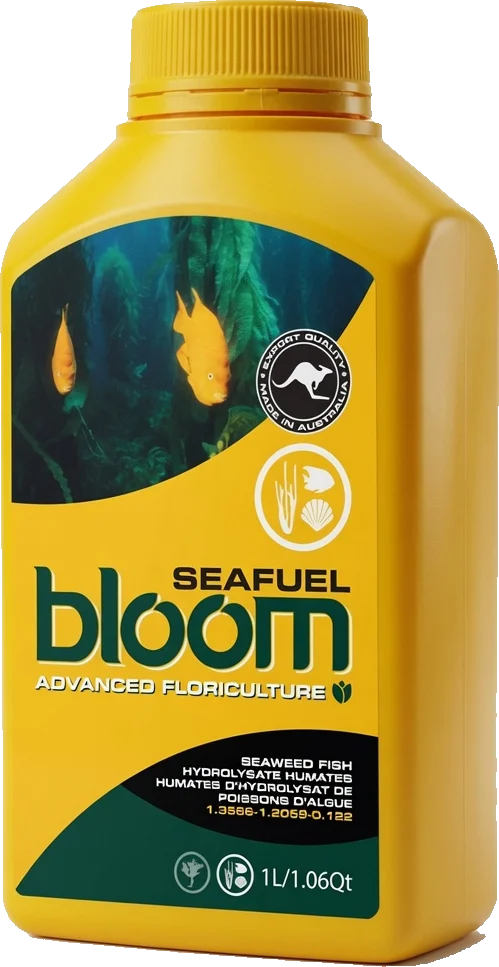
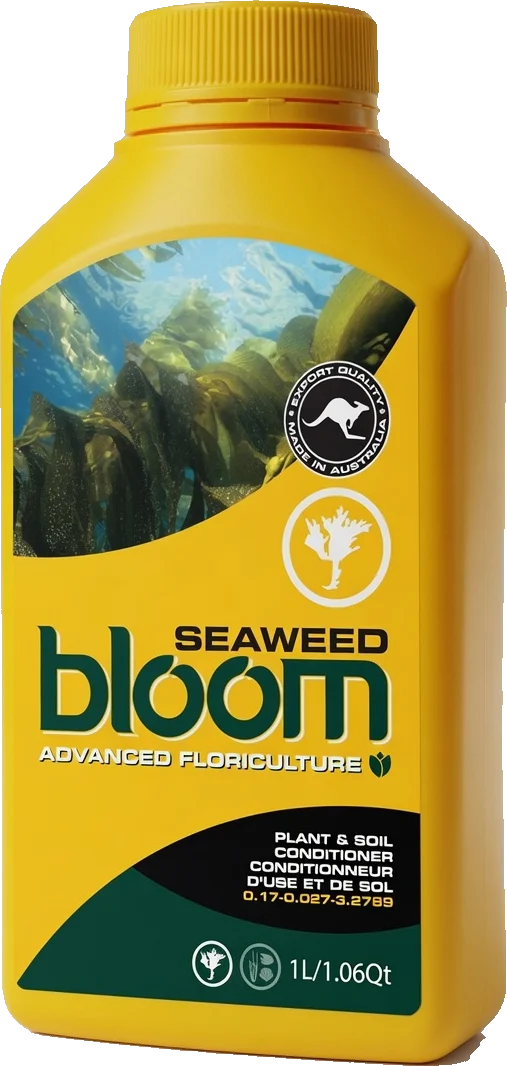
What it does. Seaweed is southern bull kelp; Seafuel is tuna and kelp. 1 ml/L each, weekly: Seaweed seedling through the flush, Seafuel clone through late flower, tapering at the flush.
Reviews of seaweed extracts report effects on growth and stress tolerance across many crops. Work on protein hydrolysates, which fish inputs belong to, is newer and links them to nutrient uptake, mostly under stress. None of it tests these bottles.
Ali et al. (2021), Plants (review) · Malécange et al. (2023), Int J Mol Sci (review)
How it stacks. Mix V1 or B1 first, then V2 or B2, as FloraFlex says, then add Bloom’s liquids and check EC against their target for the week (our read).
Humic acid and sea minerals
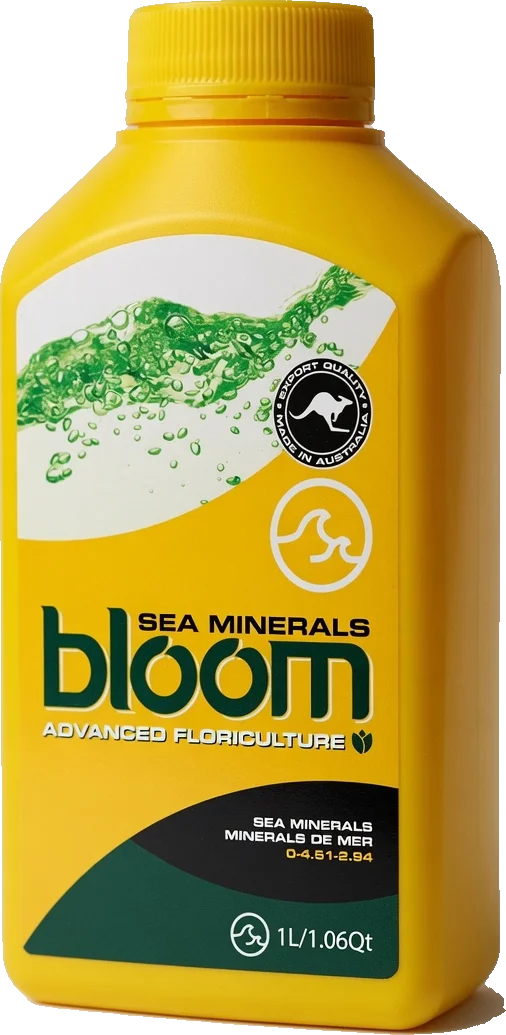
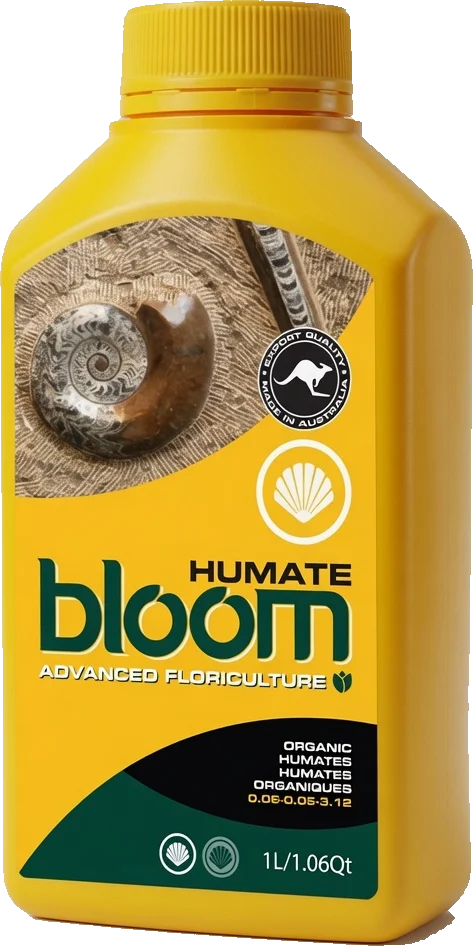
What it does. Humate is 10% humic acid at 2.5 ml/L weekly, seedling through flush. Sea Minerals is trace minerals from sea water at 0.13 ml/L weekly, veg to bloom.
A major review links humic substances to changes in root structure and function tied to nutrient uptake, including more lateral roots. It doesn’t test either company’s products.
How it stacks. V1 and B1 already carry chelated iron, manganese, boron and molybdenum, so Sea Minerals adds to that rather than standing in for it (our read).
Roots from the plug into QuickFill
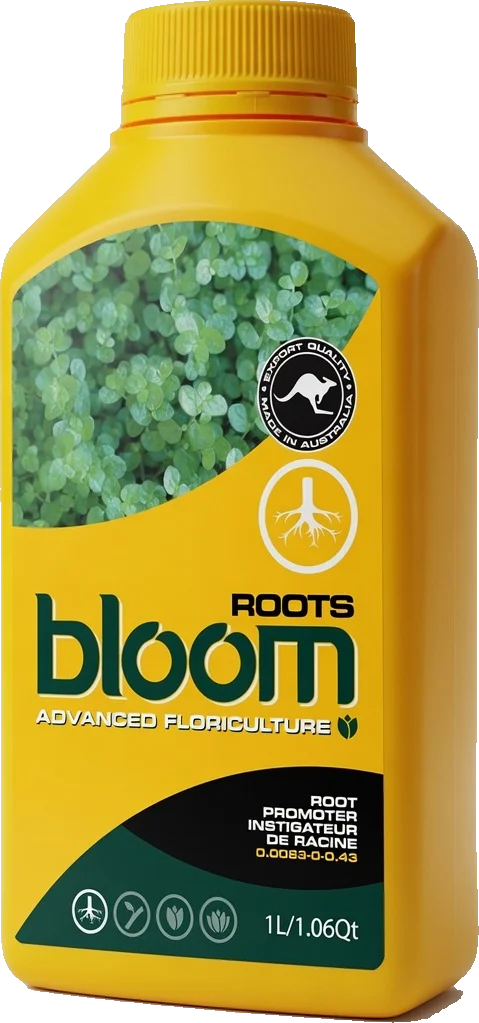
What it does. Roots is amino acids, B vitamins and fulvic acid: 1 ml/L as a cutting dip, or 0.5 ml/L weekly from cuttings and veg through flower, stopping in the final 1–2 weeks.
How it stacks. QuickFill bags come pre-drilled for a plug and drippers. Roots goes in the weekly feed from day one, and Root Drip keeps its cleaning job. Root Drip is an oxidiser per their article, so dose them apart and check both labels (our read).
Stage bottles and carbs
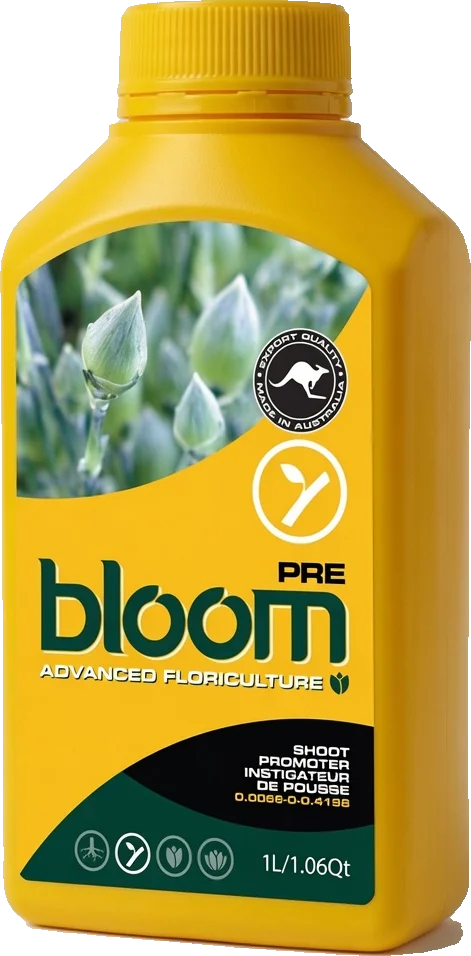
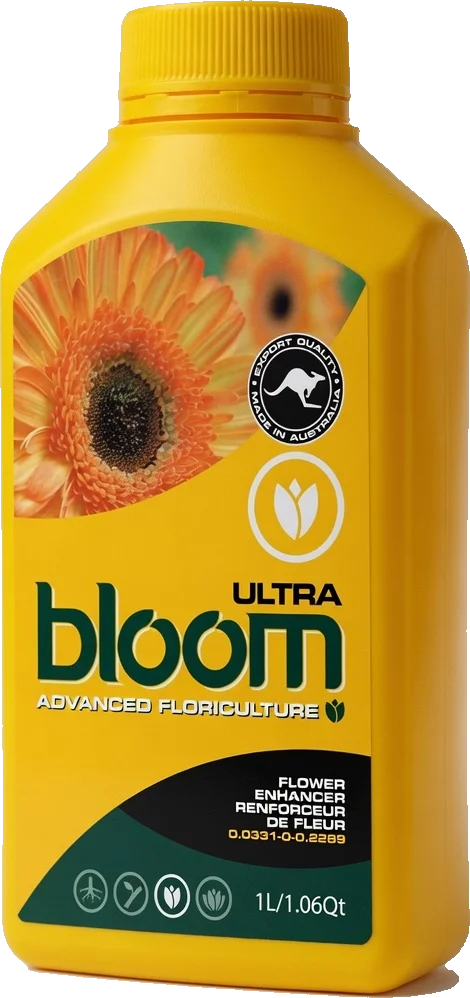
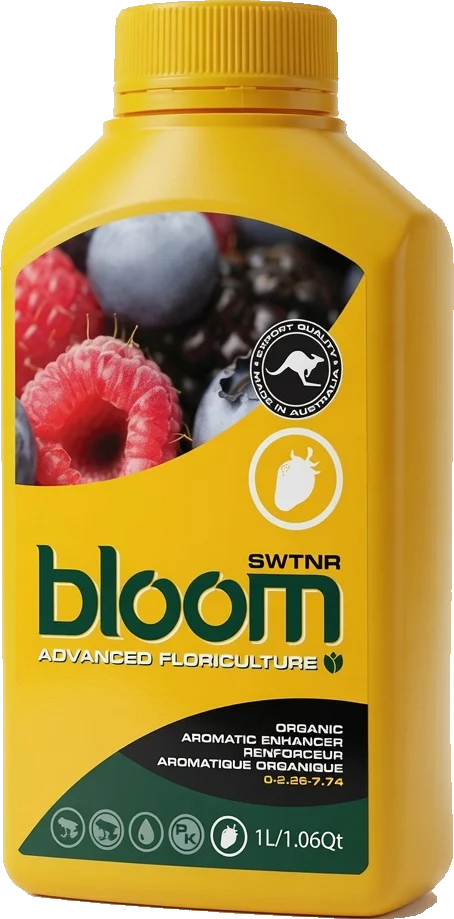
What it does. Pre in mid veg (weeks 2–3), Ultra at the flip (flower weeks 1–2), 1 ml/L each weekly. SWTNR is carbohydrates and potassium at 1 ml/L weekly, veg week 2 to the flush. Timing tools, so no study is cited for them here.
How it stacks. FloraFlex’s charts step grams and EC week by week. These go into those weeks without changing the gram rates (our read: log runoff EC when you add anything).
Where the programs complement each other
Kelp, humic and sea minerals on an all-salt base
The derived-from lists on FloraFlex’s dry pages are mineral salts. Seaweed, Seafuel, Humate and Sea Minerals go in at 0.13–2.5 ml/L weekly, and the gram rates stay as their chart prints them.
Roots from the plug, Root Drip on the lines
Their dry list has no root additive. Roots runs at 0.5 ml/L weekly from cuttings, while Root Drip keeps the line and root-zone cleaning job (our read: dose them apart).
One cal-mag plan, not two
Their Full Tilt chart adds your preferred cal-mag at a 0.3 EC start through bloom week 4, and their cal-mag article says supplement only when needed. If Bloom’s Cal-Mag goes in at 1 ml/L weekly, it takes that slot.
Where each bottle sits in the cycle
FloraFlex’s timing in grey, Bloom’s in yellow, across shared stages of the grow.
| Stage | Root | Veg | Flip | 3–4 | 5+ | Last 2 | Flush |
|---|---|---|---|---|---|---|---|
| FloraFlex, per their pages | |||||||
| V1 · V2 | |||||||
| B1 · B2 | |||||||
| Bulky B | |||||||
| Full Tilt | |||||||
| Veg Foliar (No Cal/Mag chart) | |||||||
| Cal/Mag slot (Full Tilt chart) | |||||||
| Bloom, per Bloom’s weekly feed charts | |||||||
| Roots | |||||||
| Pre | |||||||
| Ultra | |||||||
| Phat (weeks 3 and 4) | |||||||
| Ooze (wk 5 to flush) | |||||||
| Final (with Ooze) | |||||||
| Seafuel | |||||||
| Seaweed · Humate · Sea Minerals | |||||||
| SWTNR | |||||||
| Cal-Mag | |||||||
| Groigen (foliar, as needed) | |||||||
| Florigen (foliar, as needed) | |||||||
| PK (as needed) | |||||||
| Silica | |||||||
Timing from FloraFlex’s Full Tilt and No Cal/Mag schedules: four weeks of veg, seven of bloom, a clean-water flush in week 8. Bloom weeks 6–7 are read as the last two before the flush (our read). Full Tilt starts week 5 on one chart and week 6 on the other, and B1 and B2 drop out by week 7, so those ends are pale. Bloom’s bars follow its weekly feed charts; pale Bloom bars are tapers or as-needed bottles.
Put it side by side
Where both ranges have a product for the same job, the fair answer is a test in your own room. Here’s what to watch and how to keep it fair.
Keeping it fair
- Same plants. Clones off the same mother, same cultivar, same age.
- Same room. Same light, climate, media, pot size and watering.
- Same base. Keep the base feed and EC the same on both sides.
- One change. Change only the product being tested, and write down what you see each week.
Already covered
- Base feed. V1 and V2 in veg, B1 and B2 in bloom, dosed by grams and EC.
- Flower PK and ripening. Bulky B in early to mid flower, Full Tilt before the flush.
- Foliar. Veg Foliar and Bloom Foliar.
- Cal-mag. Wet CalMag, when needed.
- Media and watering. QuickFill coco bags and Micro Dripper Assemblies.
Stays exactly as is
- V1, V2, B1 and B2. Your base. Bloom’s additives sit on top.
- Root Drip. Bloom has no root-zone or line cleanser.
- QuickFill. Bloom has no growing media.
- Drippers. Bloom makes no irrigation hardware.
- Bulky B, Full Tilt and their foliars. If they’re working, keep them, or test Bloom’s next to them.
Background, science and sources
Who FloraFlex are
FloraFlex’s homepage says the brand has been going since 2015. Its About page says it’s owned and operated by Cresthaven Agricultural Corp, at an address in St. Petersburg, Florida, with products designed for professional growers and distribution partners.
The range is six dry water-soluble nutrients (V1, V2, B1, B2, Bulky B and Full Tilt), foliar sprays, QuickFill coco coir bags and dripper assemblies. Pallet, truckload and container orders go direct to qualified customers and distribution partners; smaller orders go through authorised distributors and resellers.
Sources: Home · About · Dry nutrients
What each company brings
FloraFlex: A dry two-part base for veg and bloom, a bloom stimulator, a late-bloom ripener, foliar sprays, a cal-mag, a root-zone cleanser, coco grow bags and published gram-and-EC schedules.
Bloom: one additive for each stage of the crop, seaweed, humic and sea mineral inputs, foliar sprays, and weekly feed charts for soil, coco and hydro. Rates and timing are on every product page.
Cropping Solutions, the other brand under Agricultural Organics, isn’t part of this report.
Dose basis: how each side counts
FloraFlex counts grams of powder per US gallon with a target EC each week. On their Full Tilt chart V1 and V2 start at 2 g/gal each (about 0.53 g/L) and Full Tilt peaks at 8 g/gal (about 2.1 g/L) in bloom week 7.
Bloom prints ml of liquid per litre on a weekly feed chart. Grams and millilitres don’t line up product for product, so there’s no straight conversion here. The mix calculator covers Bloom’s side; FloraFlex’s own calculator covers theirs.
Mix calculator
Rates as printed on each company’s page (1 US gallon is 3.785 L). Bloom’s rates are per litre of nutrient solution, dosed weekly per its feed charts. Pick a product and your tank size.
Potassium in flowerWell supported
A 2018 review in Agronomy covers potassium’s role in enzyme activity, stomata, photosynthesis and carbohydrate building, and in how plants handle drought and salt.
Why it matters here: Bulky B, Full Tilt and Bloom’s PK all carry potassium in flower. Stacking them means adding up the K from each, so check EC before running more than one.
Sources, all viewed 5 November 2026
FloraFlex: Home · About · Dry nutrients · Feed schedules · V1 · B1 · Bulky B · Full Tilt · Nutrient line guide (foliars) · Cal-mag article (Wet CalMag) · Root Drip article · QuickFill
Bloom: Roots · Pre · Ultra · Phat · Ooze · Final · Seafuel · Seaweed · SWTNR · Humate · Cal-Mag · Groigen · Florigen · Sea Minerals · PK · Euro · Grow · Flower · Silica · OrganiShield
Last checked 5 November 2026. Public information only. Not affiliated with, endorsed by or approved by FloraFlex; product names belong to their owners. Please confirm current details with the manufacturer. Corrections: nathan@bloomyellowbottles.com. All Fit Reports