
A fish nobody eats, or Southern Bluefin Tuna?
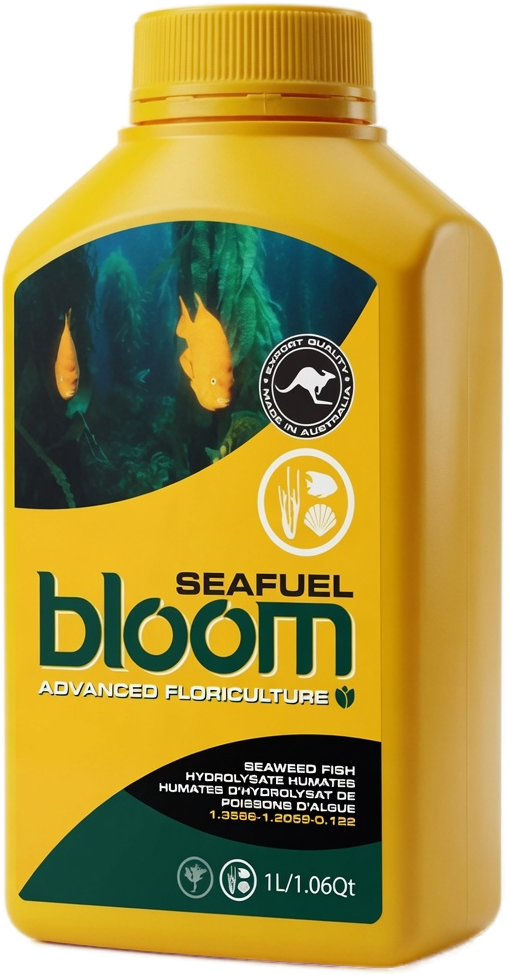
Cooked fish emulsion is made from menhaden: small, bony fish caught to be ground into fishmeal and oil. Seafuel, Groigen and Florigen are made from Southern Bluefin Tuna, one of the most prized fish in the ocean. And Seafuel still works out at about 13¢ a gallon.

 Forage fish, caught for reduction
Why “fish” on the label doesn’t tell you much.
The usual cooked emulsion starts as stickwater: the liquid left once the oil and the meal have been taken out and sold off.
Per 100 g, stickwater is 88.5 g water and 4.5 g protein. Raw bluefin starts at 68.1 g water and 23.3 g protein.
“Fish solubles” or “a variety” is common. You can’t tell what went in, or from where.
Same shelf. Very different fish.

One named fish, on the label.
Southern Bluefin Tuna, grown for the premium seafood market and ranched off South Australia. What goes in the bottle is hydrolysed tuna: protein broken down into peptides and amino acids.
| Cooked fish emulsion | Bloom tuna hydrolysate | |
|---|---|---|
| The fish | Mostly menhaden, a small bony forage fish | Southern Bluefin Tuna |
| Caught / grown for | Grinding into fishmeal and fish oil | The premium seafood market, ranched off South Australia |
| What goes in the bottle | Stickwater: the liquid left once the oil and meal are taken out | Hydrolysed tuna: protein broken down into peptides and amino acids |
| Protein to start with | 4.5 g per 100 g | 23.3 g per 100 g |
| Named on the label | No, “fish solubles” | Yes, Southern Blue Fin Tuna |
What’s in 100 g of starting material
Grams per 100 g, before anything is bottled.
| Starting material | Water | Protein | Fat (oil) | Other |
|---|---|---|---|---|
| Stickwater (what cooked fish emulsion is made from) | 88.5 | 4.5 | 1.2 | 5.8 |
| Bluefin tuna, raw (the species our hydrolysate starts from, USDA average for bluefin) | 68.1 | 23.3 | 4.9 | 3.7 |
5× the protein. Raw bluefin carries about five times the protein of the stickwater that emulsions start from.
Starting material only. Both get processed and concentrated before they reach a bottle, so this compares what each one begins with.
Better fish. Less per gallon.
What a gallon of finished feed costs you, with each product mixed at its own label rate. Seafuel goes in at 1 ml per litre, so one bottle makes a lot of feed.
Cents per gallon of finished feed
Each at its own label rate, from shelf prices.
| Product | Per gallon of feed |
|---|---|
| Seafuel, 15 L | 9¢ |
| Seafuel, 1 L | 13¢ |
| Cooked fish emulsion, 1 gal | 21¢ |
| Great Lakes hydrolysate, 1 gal | 27¢ |
| North Atlantic hydrolysate, 1 gal | 35¢ |
| Seafuel bottle | Price | Makes at 1 ml/L | Per gallon of feed |
|---|---|---|---|
| 300 ml | $16.88 | 79 gallons | 21¢ |
| 1 L | $33.76 | 264 gallons | 13¢ |
| 2.5 L | $67.50 | 660 gallons | 10¢ |
| 15 L | $346.42 | 3,963 gallons | 9¢ |


Prices: bloomyellowbottles.us and listings at major US garden retailers, checked 23 Oct 2026. Your price will vary. The other products are fed as fertilisers; Seafuel is a tonic that goes on top of your base, so this compares what each costs per gallon of mix, not what each one does.
22 products. One fish.
No shellfish, no mixed scraps, no “fish solubles”. The only sea animal in the whole Bloom range is Southern Bluefin Tuna, and it’s in three bottles. Everything else we take from the ocean is seaweed and seawater. Tap any product to go to it.
| Product | From the sea | Group |
|---|---|---|
| Roots | Bull kelp | Seaweed or seawater, no fish |
| Pre | Rockweed + bull kelp | Seaweed or seawater, no fish |
| Ultra | Rockweed | Seaweed or seawater, no fish |
| Phat | Kombu + Chilean kelp | Seaweed or seawater, no fish |
| Ooze | Red seaweed + kombu | Seaweed or seawater, no fish |
| Final | Rockweed + bull kelp | Seaweed or seawater, no fish |
| Seafuel | Tuna + bull kelp | Southern Bluefin Tuna |
| Seaweed | Bull kelp | Seaweed or seawater, no fish |
| SWTNR | Seawater + red seaweed | Seaweed or seawater, no fish |
| Humate | Humic acid | Nothing from the sea |
| Cal | Minerals | Nothing from the sea |
| Groigen | Tuna + seawater + seaweed | Southern Bluefin Tuna |
| Florigen | Tuna + seawater + seaweed | Southern Bluefin Tuna |
| Sea Minerals | Seawater | Seaweed or seawater, no fish |
| PK | Minerals | Nothing from the sea |
| Euro A | Base nutrient | Nothing from the sea |
| Euro B | Base nutrient | Nothing from the sea |
| Grow A | Base nutrient | Nothing from the sea |
| Grow B | Base nutrient | Nothing from the sea |
| Flower A | Base nutrient | Nothing from the sea |
| Flower B | Base nutrient | Nothing from the sea |
| Silica | Minerals | Nothing from the sea |
The three tuna bottles
| Bottle | Where it goes | Tuna on label | Rate | Partners |
|---|---|---|---|---|
| Seafuel | Root zone · every feed. Bluefin tuna and southern bull kelp, with a touch of humic acid. Cutting to harvest, in soil, coco or hydro. | Hydrolysed Blue Fin Tuna | 1 ml per litre | Kelp + humic acid |
| Groigen | Leaf spray · growth. The same tuna, with seawater and Porphyra red seaweed, sprayed straight onto the leaf through the growing weeks. | Southern Blue Fin Tuna | 20 ml per litre, every 5–7 days | Seawater + red seaweed |
| Florigen | Leaf spray · flower. Same tuna, seawater and seaweed base, built with more potassium for the first weeks of flower. | Southern Blue Fin Tuna | 20 ml per litre, weeks 1–4 of flower | Seawater + red seaweed |
Pick one, two or all three. They sit on top of whatever base nutrient you already run.
Southern Bluefin Tuna. The good stuff.

Ranched, quota-managed, tracked.
Ranching pens off the South Australian coast (illustration). Every fish is caught under an international quota and tracked through a catch documentation scheme.
- Lives in the cool southern oceans and can grow to over 2 metres and 180 kg.
- Caught wild, then ranched in sea cages off Port Lincoln, South Australia, and fed on locally caught sardines.
- South Australia’s most valuable fish and a major export earner for the state.
- Every fish is caught under an international quota and tracked through a catch documentation scheme.
- Rich in protein and omega-3 oils, with selenium and other minerals.
| Per 100 g of raw tuna | Figure |
|---|---|
| Protein | 20–23 g |
| Fat (oil), in the fatty cuts | up to 28 g |
| Omega-3 (EPA + DHA), in the fatty cuts | up to 4.7 g |
| Selenium | ~31 µg |
These are figures for the fish itself, raw. They show what the tuna brings in, not the analysis of the bottle. The label is further down the page.
Two ways to turn a fish into fertiliser.
Same idea, very different fish, very different path.
| Step | The usual way · cooked emulsion | The Bloom way · Southern Bluefin Tuna |
|---|---|---|
| 1 | Catch forage fish in bulk. Mostly menhaden in the US: small, oily, bony fish caught for reduction, not for eating. | Catch wild bluefin. Caught in the Southern Ocean under an international quota (CCSBT). Quota managed. |
| 2 | Cook and press. The whole catch is cooked, then pressed. | Ranch off Port Lincoln. Towed to sea cages in South Australia and fed on local sardines. |
| 3 | Spin the oil off. A centrifuge takes the oil out. It’s sold for supplements and animal feed. Oil sold off. | A prized food fish. Southern Bluefin is grown out for the seafood market, not caught for reduction. |
| 4 | Dry the protein. The solids become fishmeal for livestock and fish farms. Protein sold off. | Hydrolyse the tuna. The protein is broken down into the peptides and amino acids plants can use. Named on the label. |
| 5 | Boil down what’s left. The leftover stickwater is evaporated into a thick brown concentrate. | Blend with the sea. Seafuel: southern bull kelp and humic acid. Groigen and Florigen: seawater and red seaweed. |
| 6 | Add acid, bottle it. Phosphoric acid stops it spoiling. Some brands add urea to lift the nitrogen number. | Bottle in South Australia. Made by Agricultural Organics and shipped to the US. |
Every fish product does something. Look at the fish.
The common types of fish fertiliser sold in the US, and the fish behind each one.
| Type | The fish | What part, from where | One named species? |
|---|---|---|---|
| Cooked fish emulsion | Mostly menhaden, a forage fish | Leftover stickwater from fishmeal and fish-oil plants | No, “fish solubles” |
| North Atlantic hydrolysate | A mix of North Atlantic fish | Frames left after the fillets are cut | No, a variety |
| Great Lakes hydrolysate | Freshwater fish | Fish processing scraps | No |
| Pacific Northwest hydrolysate | Often salmon scraps, some with crab and shrimp shell | Seafood processing scraps | No, a blend |
| North Sea emulsion | North Sea fish | Fish emulsion, blended with sugar beet | No |
| Bloom Seafuel, Groigen, Florigen | Southern Bluefin Tuna | A ranched, quota-managed food fishery, South Australia | Yes, Thunnus maccoyii |
Why it matters to your plants
- Amino acids and peptides. Protein hydrolysates are one of the main biostimulant groups studied. Research links them to better nutrient uptake, photosynthesis and stress tolerance, and in one study a fish-derived hydrolysate grew lettuce with more leaves and more root.
- Organic nitrogen, no urea. Seafuel’s nitrogen is listed on the label as water-soluble organic nitrogen, from tuna and kelp. There’s no urea on the label pumping the number up.
- Fish and seaweed, together. Every tuna bottle pairs it with the sea: southern bull kelp in Seafuel, seawater and red seaweed in Groigen and Florigen. One bottle, more than one input.
- You know what you’re getting. One named fish, on the label, from one quota-managed fishery.
Tuna, kelp and seawater.
No urea on the label.
Seafuel in their own grows.

“Just chopped my last grow and I’m impressed. Roots and SWTNR for veg, Seafuel and Phat for flower — noticeably more colour and no signs of deficiency.”@houseofnuggs · Roots, SWTNR, Seafuel, Phat
Growers’ own results, individual results vary.
Not every fish-feed hiccup is the fish.
Rule these out first.
Bottle not shaken or added to too little water. Shake well and mix into the full volume of the tank.
Sprayed under hot lights or in full sun. Spray at lights-off or in the cool of the day.
The natural fade, or the base feed’s nitrogen running down. Check the base before adding more.
Pick the bottle that fits.
Root zone every feed, a leaf spray in growth, or a leaf spray into flower. Use one for a few weeks or run all three. They go on top of the base you already trust.
The sources.
Ingredients and rates: Bloom Seafuel, Groigen and Florigen product labels.
Tuna nutrition per 100 g, lean and fatty: Australian Southern Bluefin Tuna Industry Association. Selenium: FishBase, Thunnus maccoyii. Average bluefin water, protein and fat: USDA FoodData Central, bluefin tuna, raw (FDC 173706).
Size and habitat: FishBase; Seafood New Zealand.
Ranching at Port Lincoln, sardine feed and value to South Australia: Fish farming in South Australia; FRDC, FISH magazine.
Quota and catch documentation: Marine Conservation Society; CSIRO.
How emulsion is made, oil removed, stickwater concentrated: USDA AMS, Fish-Based Fertilizers technical report (2019); University of Florida EDIS, fishmeal processing.
Stickwater composition: US Patent 6,685,975, example 5.
Menhaden as the main source: Fish Farming Expert. Phosphoric acid and urea: Rainy Side Gardeners.
Other fish types: each maker’s own product description. Shelf prices: listings at major US garden retailers, checked 23 Oct 2026, each used at its own label rate. Bloom prices: bloomyellowbottles.us.
Photos of fish, boats and pens on this page are illustrations.
Protein hydrolysates as biostimulants: Malécange et al. (2023), Biostimulant properties of protein hydrolysates, IJMS; fish hydrolysate on lettuce, Xu and Mou (2017), via Molecules 25:1122.
Fish questions.
Is Seafuel a fish emulsion?
No. It’s a hydrolysate: Southern Bluefin Tuna protein broken down into peptides and amino acids, blended with southern bull kelp and humic acid. Emulsions are usually cooked stickwater.
Are the tuna bottles vegan or allergy-safe?
No. All three contain fish, so they’re not vegan and anyone with a fish allergy should know.
Can I use them with my current nutrients?
Yes. They sit on top of whatever base you already run. The feed charts and the calculator show the rates for your setup.
Not sure it fits your grow? Talk to Nate.
Tell us what fish feed you run now and how, and we’ll tell you straight if switching is worth it.