
The Science Behind the Yellow Bottles
Nothing in here is a nutrient trick. It’s a signal.
Seaweed, fish, humates, silica, sugars. For 26 years the Bloom range has been built on inputs that don’t feed the plant so much as tell it what to do. The research category has a name now: biostimulants. Here’s how it works, and where each bottle fits.
Market figures are analyst estimates and vary by firm. Yield figures are pooled averages across crops and conditions, not a promise for any one grow.
The category, mapped
Five kinds of biostimulant. Bloom runs on all five.
The industry body (EBIC) and the EU regulation sort biostimulants by what they’re made from. Tap a group to see what the research says it does and which bottles sit in it.
Seaweed extracts
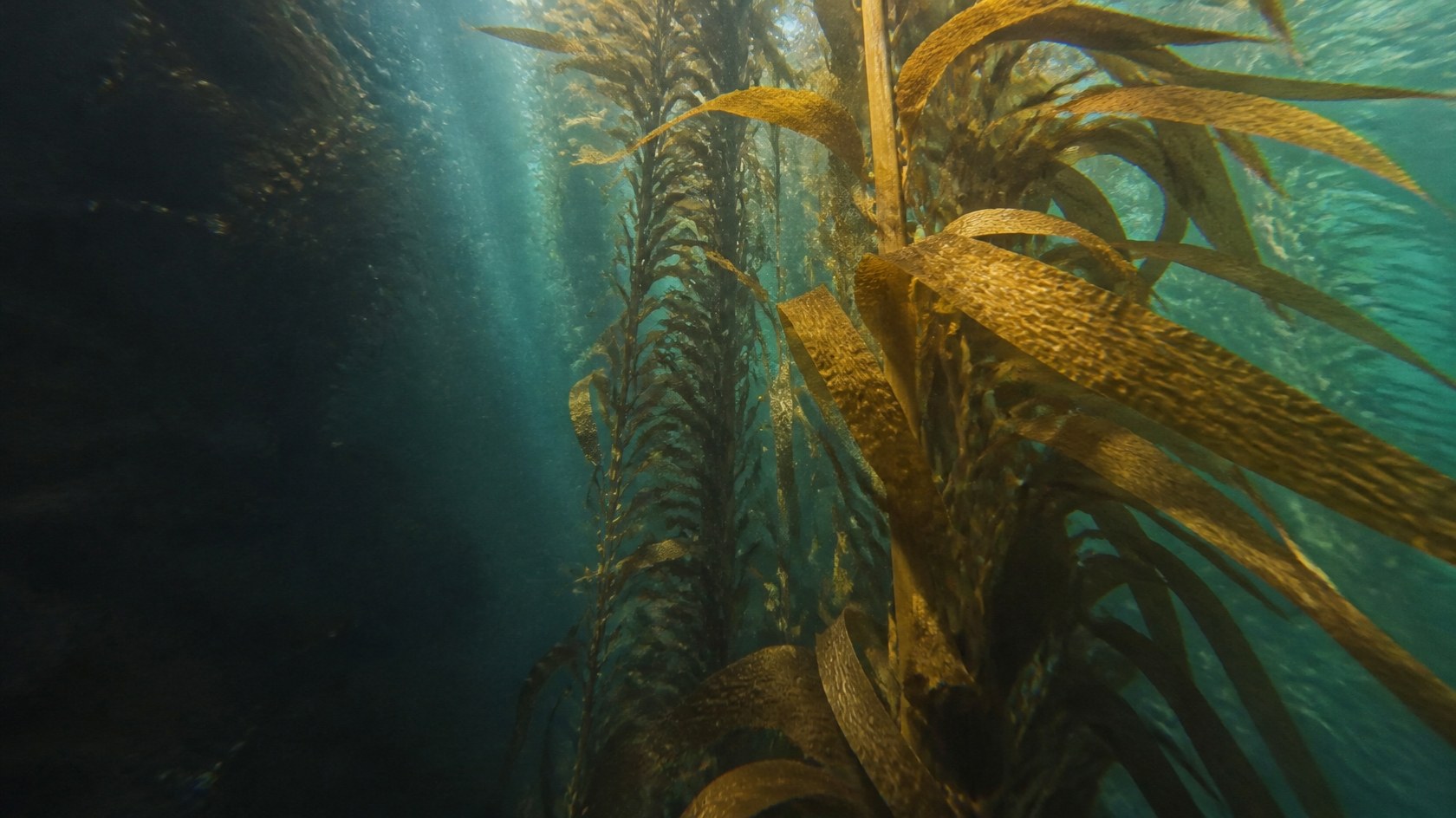
Brown kelps carry 30–40% of their dry weight as polysaccharides (alginate, fucoidan, laminarin) plus polyphenols and osmoprotectants. Research on Ascophyllum, Laminaria and Durvillaea extracts shows plants reading those molecules as an early-warning signal: stress genes and nutrient transporters switch on ahead of heat, drought, salt or frost.
- Pooled yield response across 198 trials: +16% for Ascophyllum, higher for Laminaria
- Best responses when applied before the stress, every 10–14 days
- Soil and root-zone application edged foliar in the meta-analysis
 Roots
 Pre
 Ultra
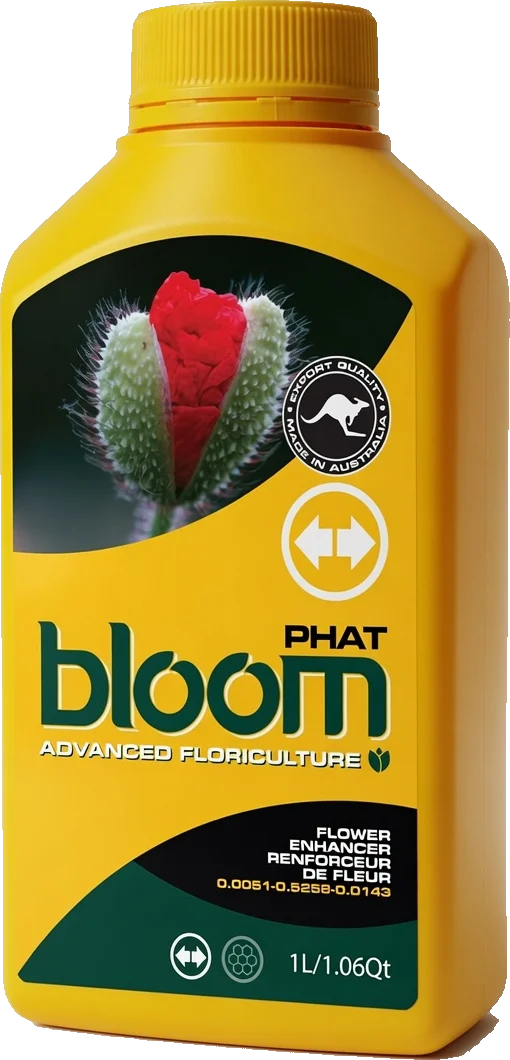 Phat
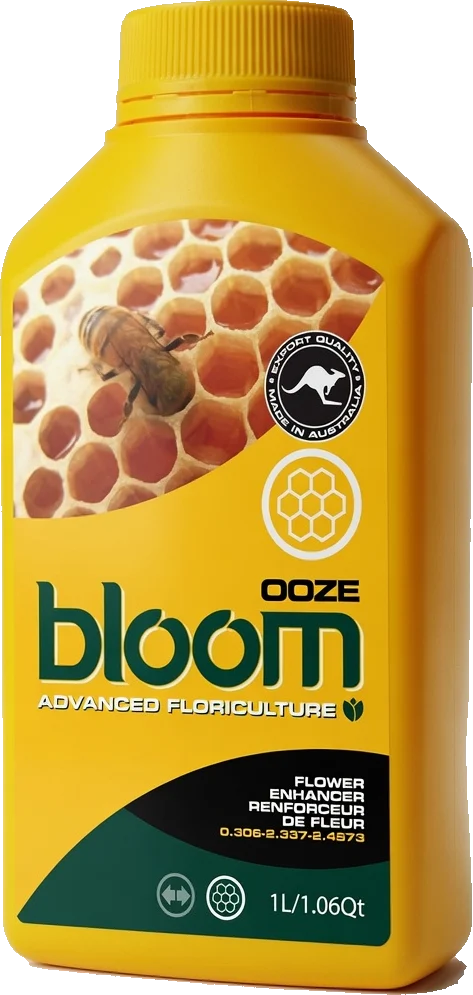 Ooze
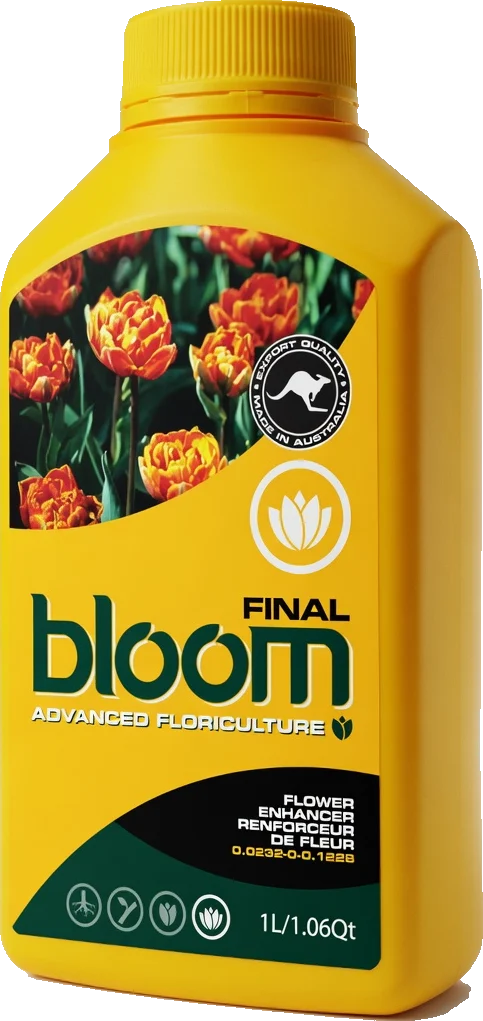 Final
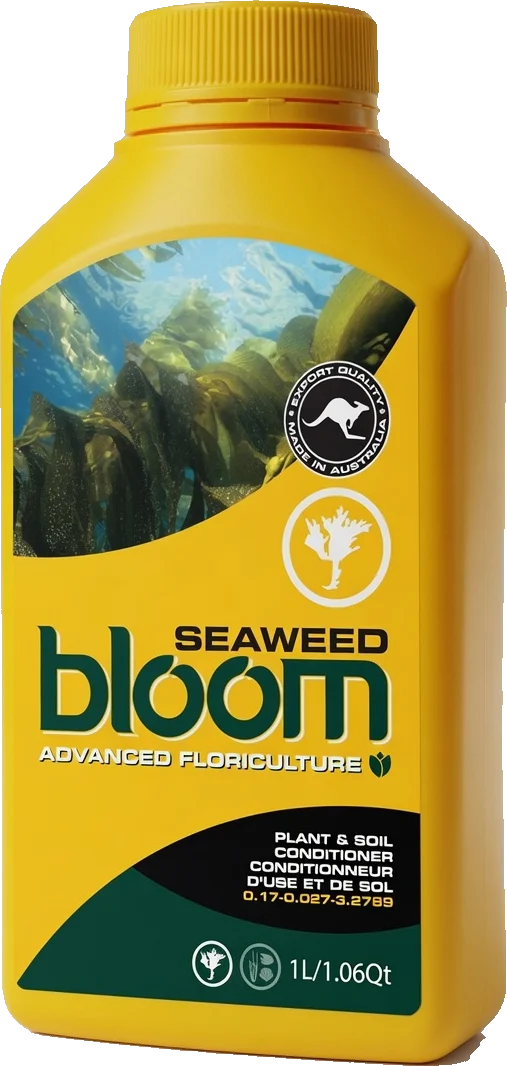 Seaweed
Protein hydrolysates
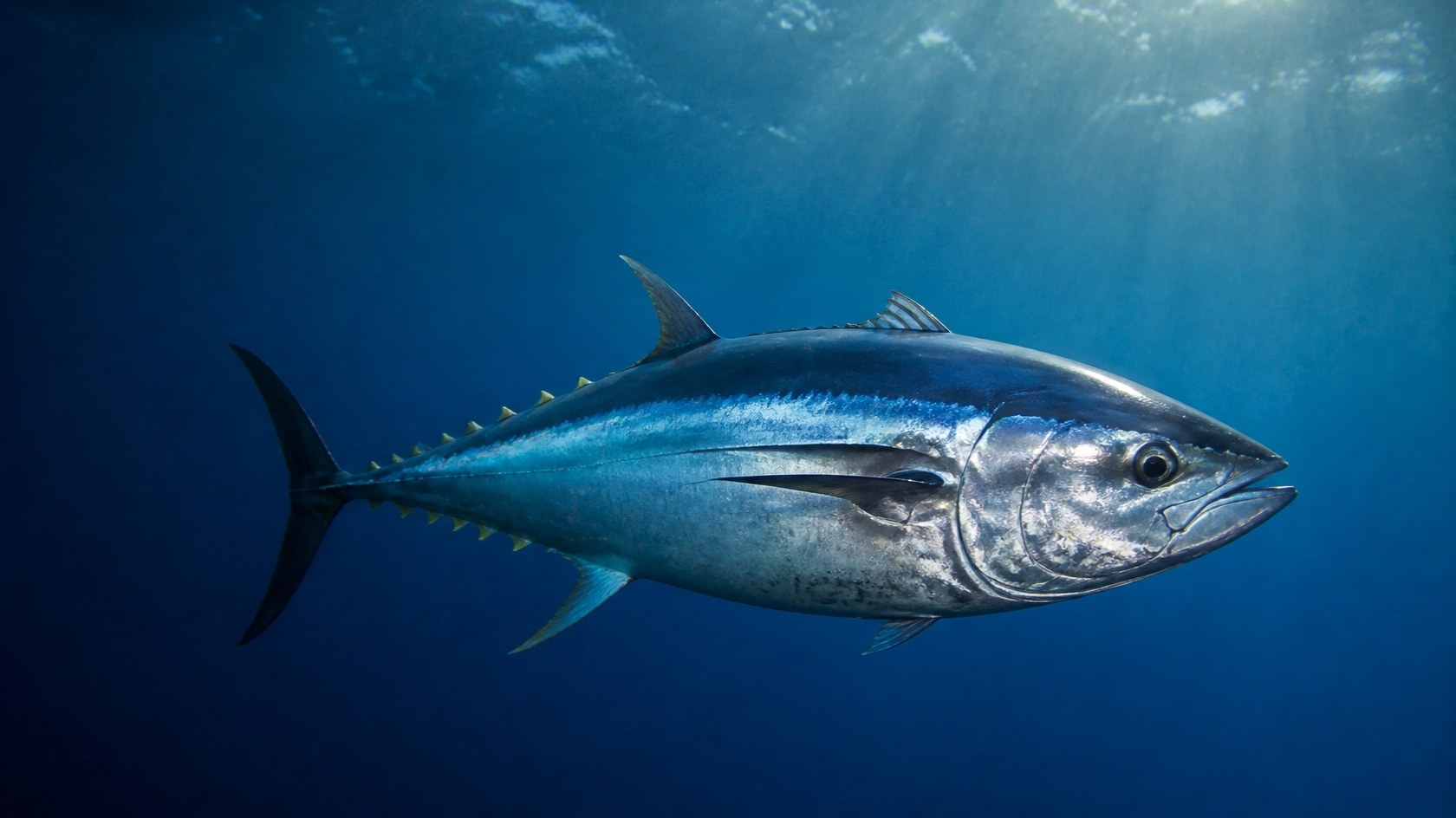
Fish protein that has been hydrolysed (broken down). The published work on protein hydrolysates shows lifted nitrogen metabolism and better nutrient translocation, with the strongest effects under stress. Bloom’s fish input is hydrolysed Southern Bluefin Tuna.
- Effects in the research are strongest when the plant is under stress
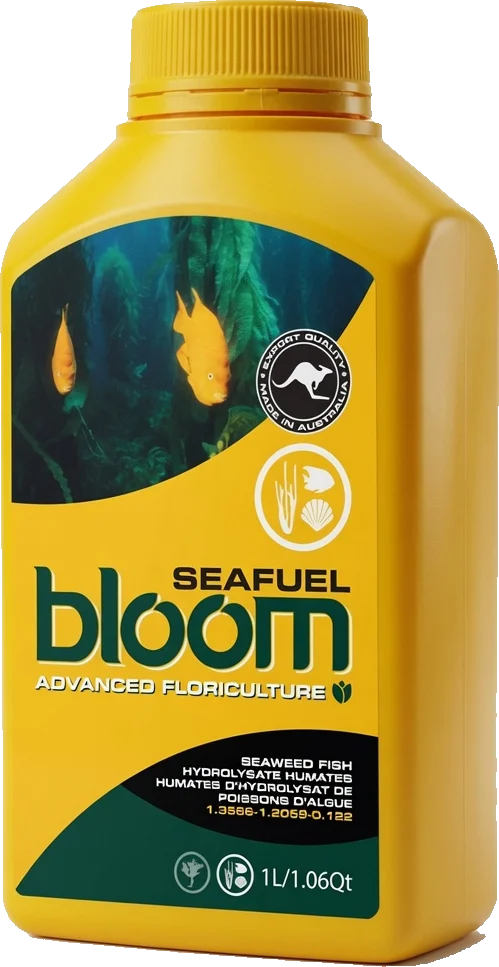 Seafuel
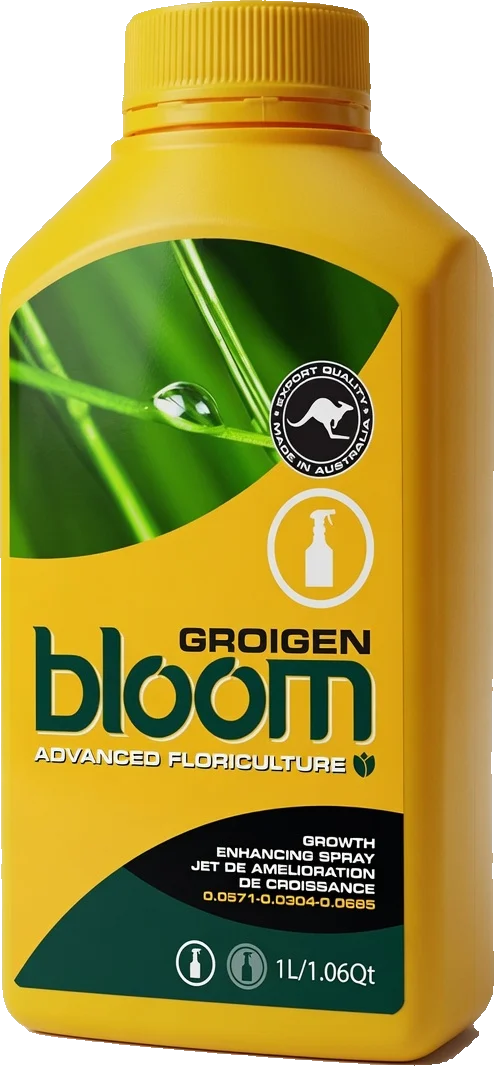 Groigen
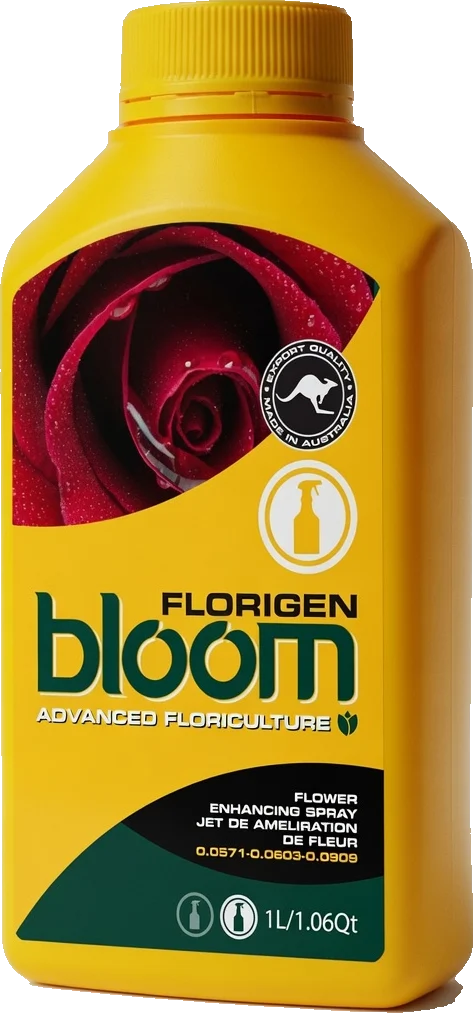 Florigen
Humic substances
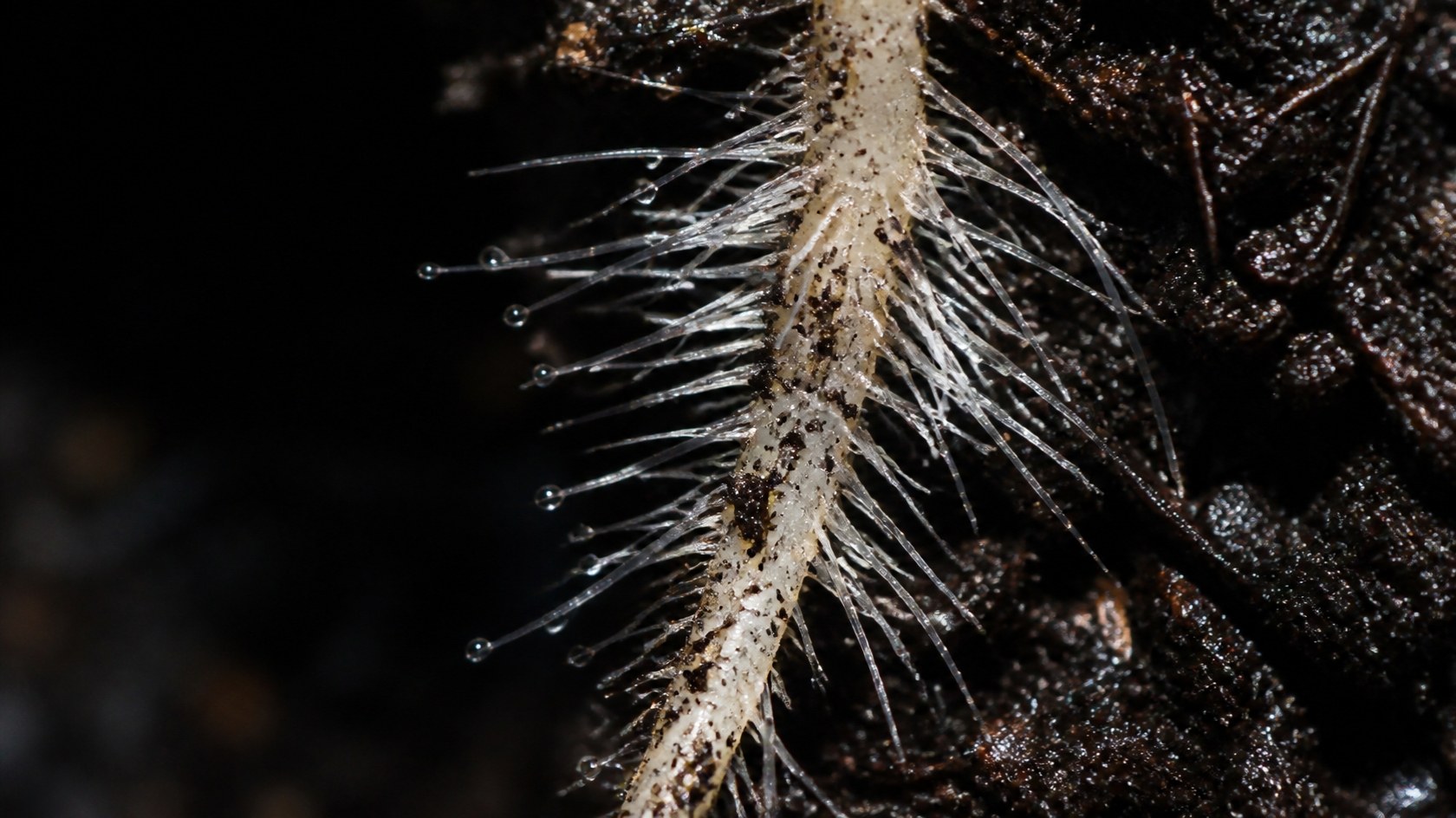
Humic acid from leonardite: Humate carries 10%. Research shows humics switch on the root H⁺-ATPase pump and extend root hairs, which is why humate-treated plants can pull more from the same feed. The Humate label declares potassium hydroxide in the bottle.
- Root hair length and density lift: the “nutrient acquisition response”
- Better nutrient use efficiency, especially nitrate
- Shifts in primary and secondary metabolism tied to stress tolerance
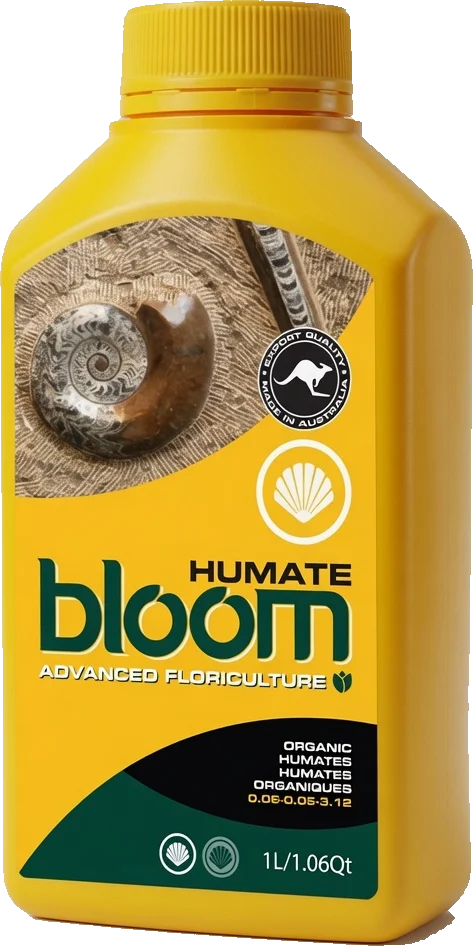 Humate
Silicon
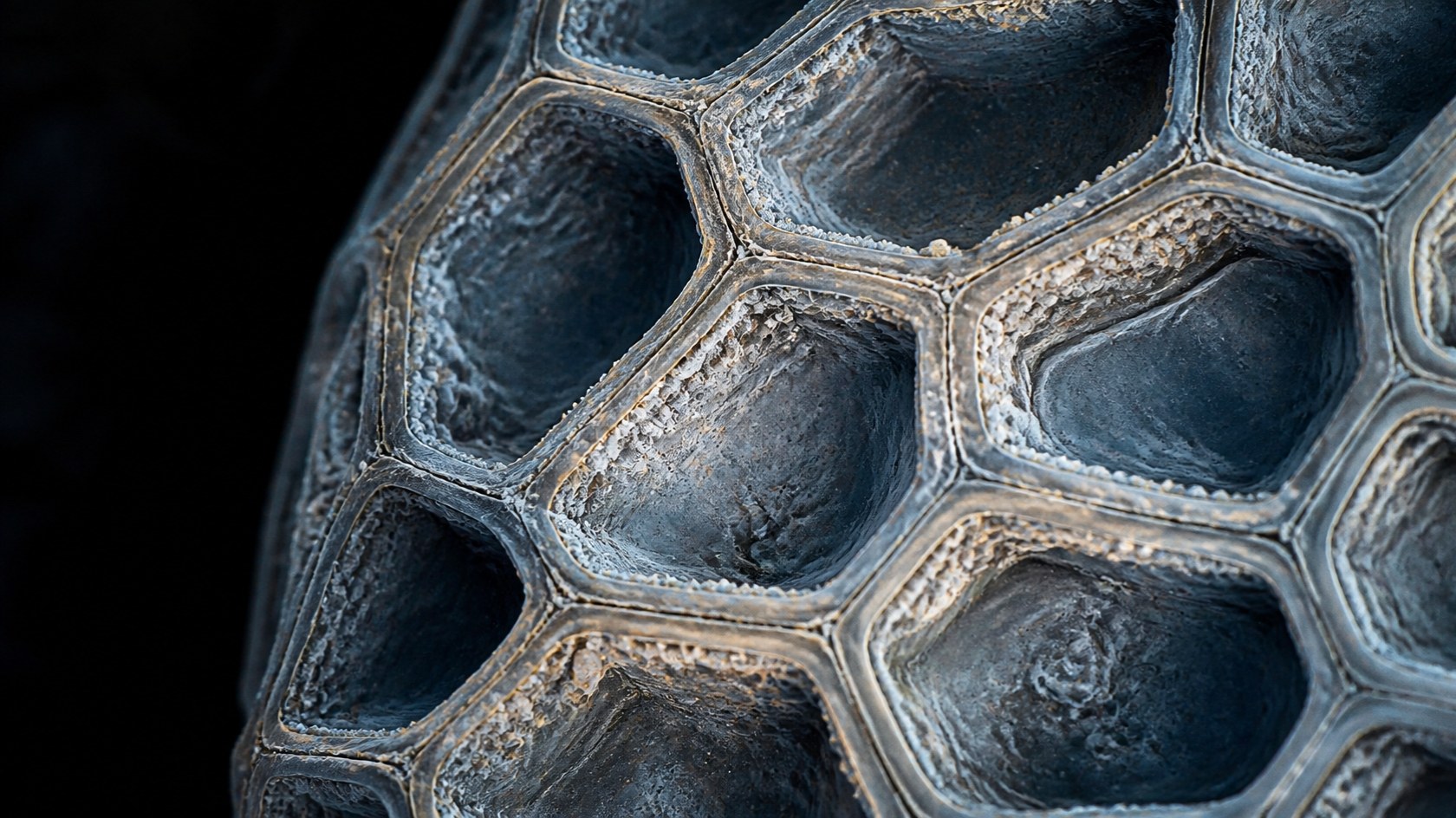
Not essential for most plants, but the only inorganic substance the EU biostimulant regulation recognises. Silicon deposits in cell walls and supports cell-wall strength. Bloom Silica is the silicon bottle in the range: 31% silicon (as monosilicic acid) and 21.2% K2O.
- Mechanical strengthening of tissue, less lodging
- High-accumulator crops (grasses, cucurbits, rice) respond most
Bottles in this group
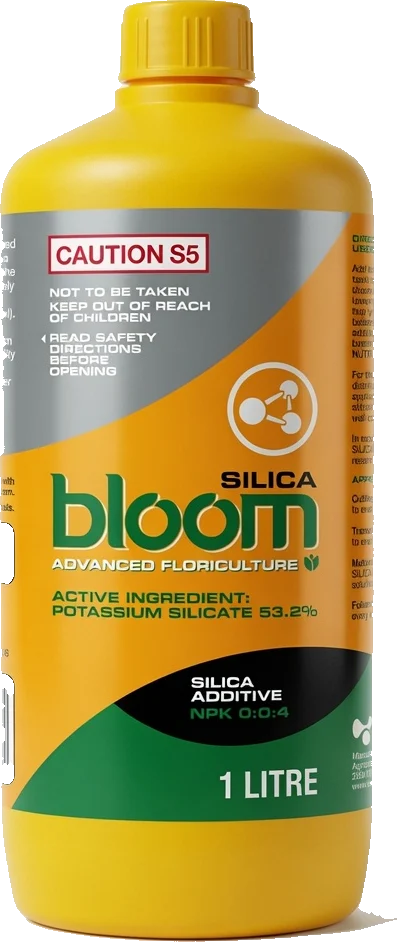 Silica
Sources: Biomolecules 2021 (EU biostimulant substances review); Savvas & Ntatsi 2015.
Complex organics
The catch-all group in du Jardin’s taxonomy: sugars, plant extracts and mineral complexes that work mostly through the root-zone biology rather than the plant directly. SWTNR is built to feed the microbes that in turn feed the roots.
- Carbohydrates as a food source for rhizosphere microbes
- Seaweed extracts measurably shift the soil microbiome alongside growth
- Cal-Mag and Sea Minerals carry declared nutrients, so they sit on the fertiliser side of the line
Bottles in this group
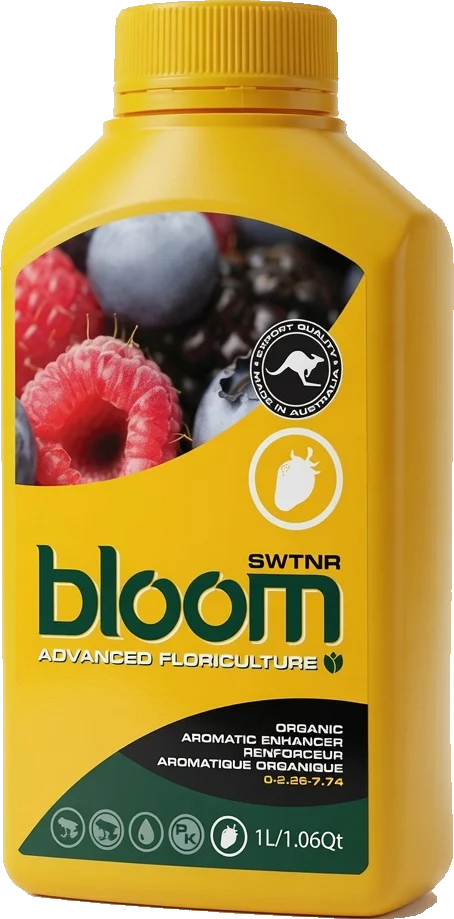 SWTNR
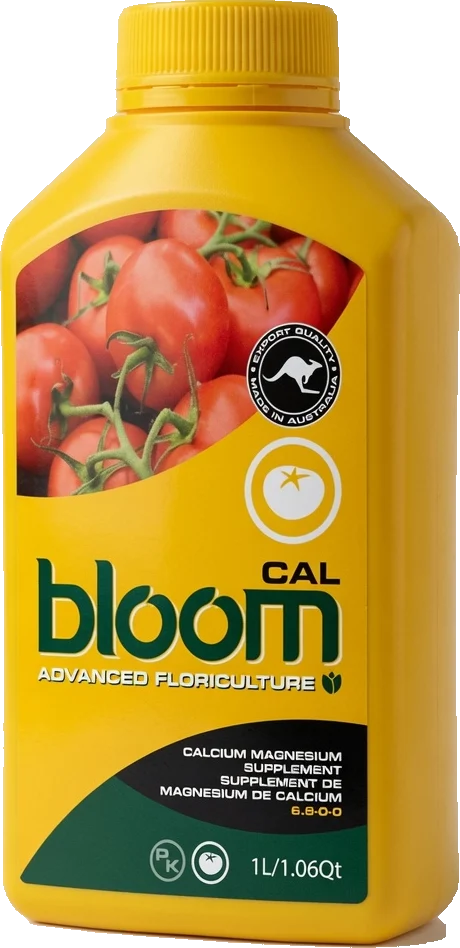 Cal-Mag
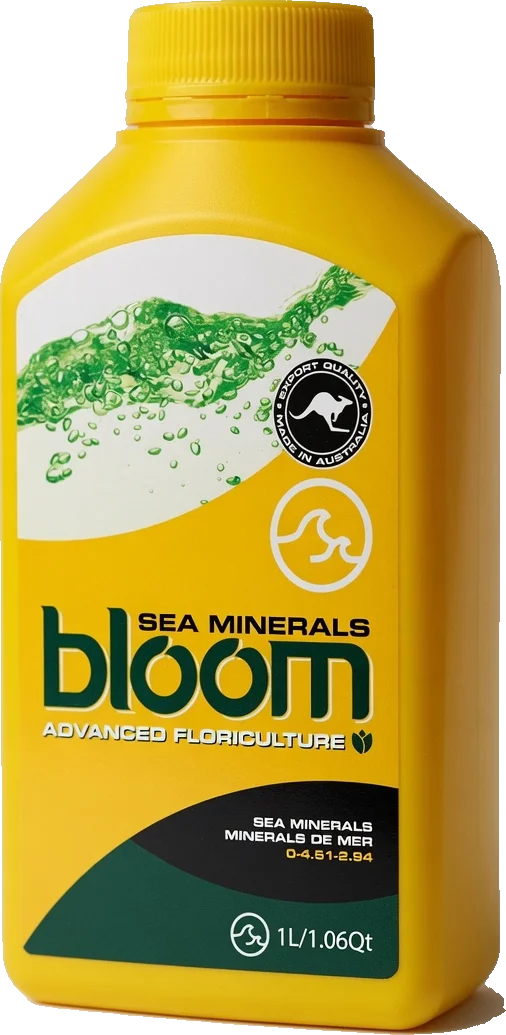 Sea Minerals
Sources: du Jardin 2012/2015; Arioli et al. 2021 (seaweed extract and rhizosphere metagenomics).
Also in the range: the base-feed lines these sit on top of
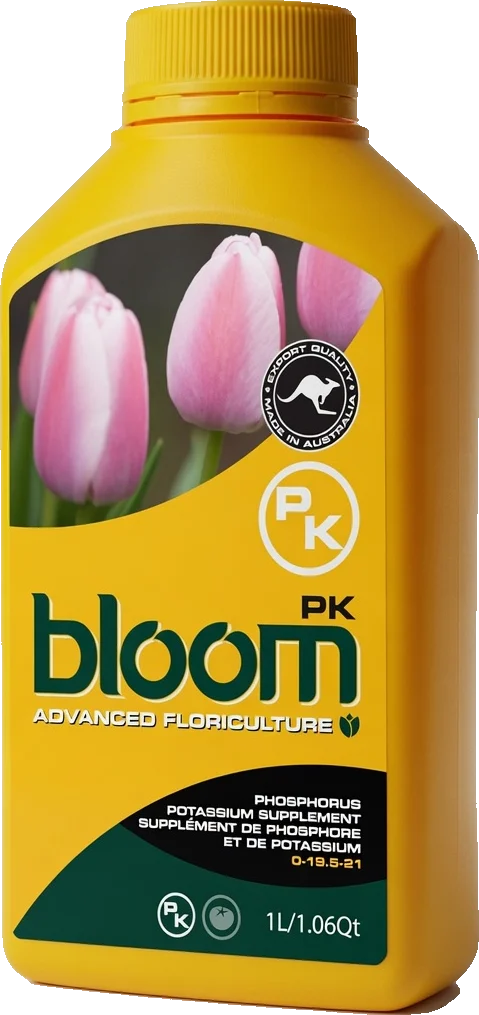 PK
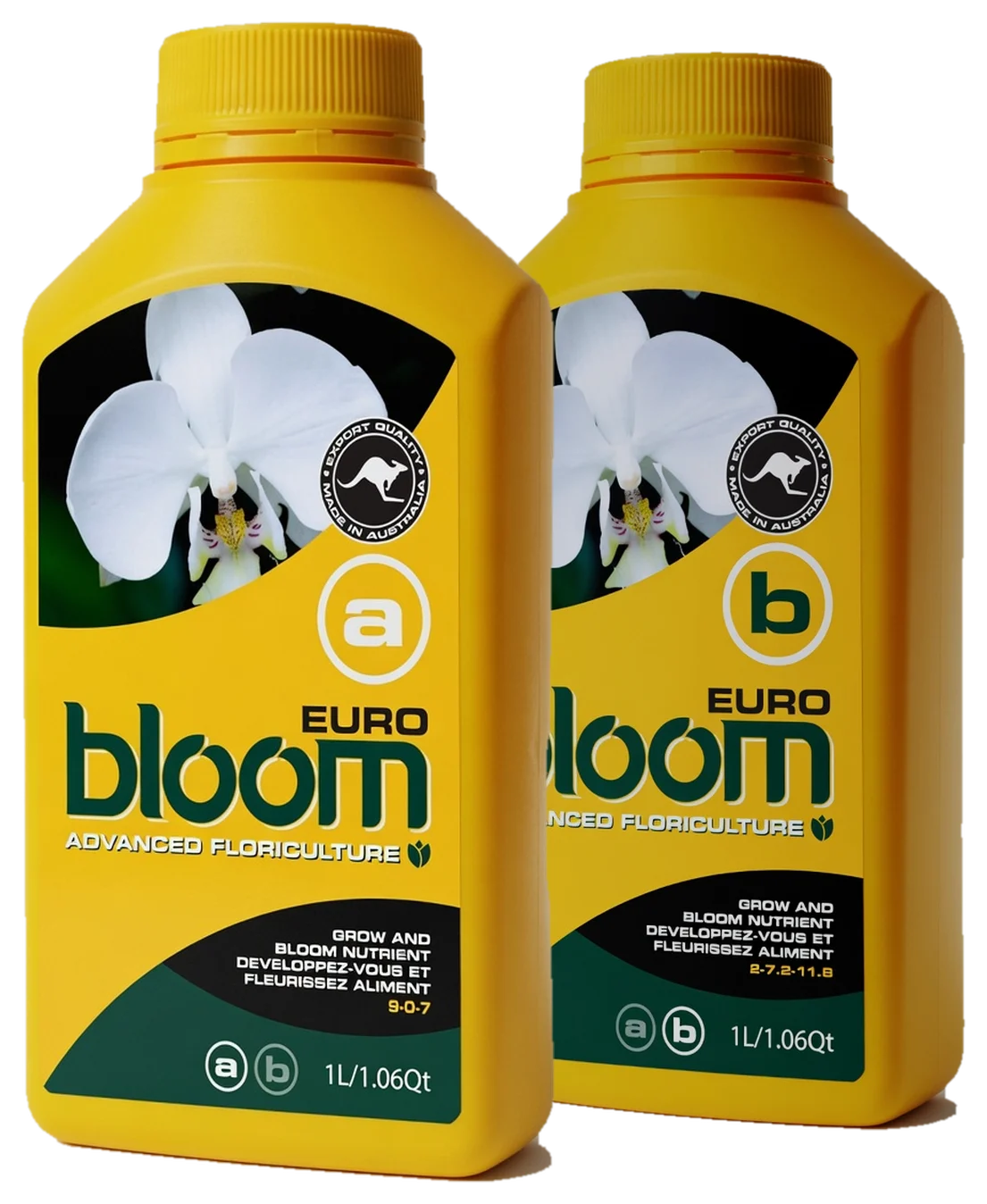 Euro A+B
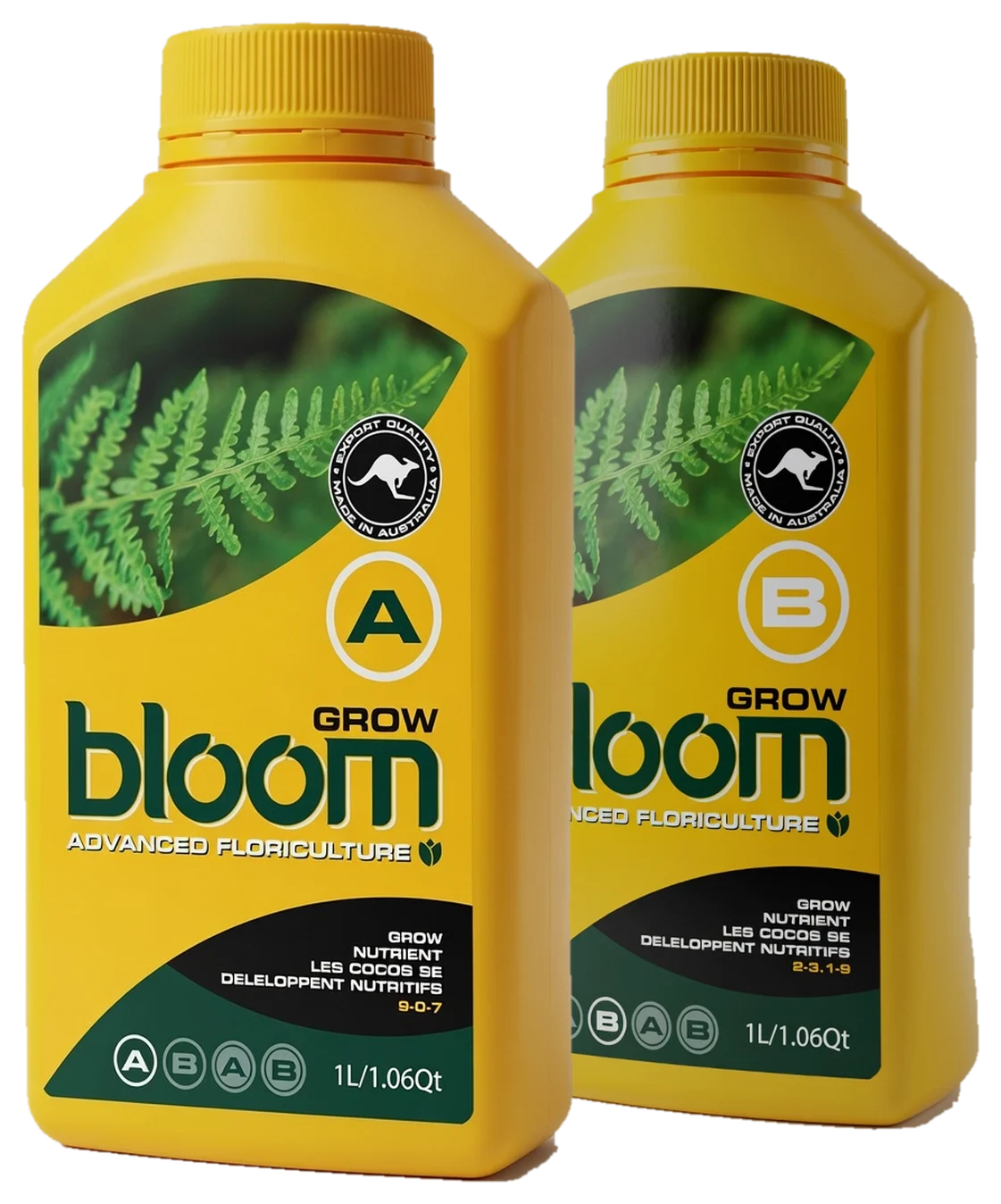 Grow A+B
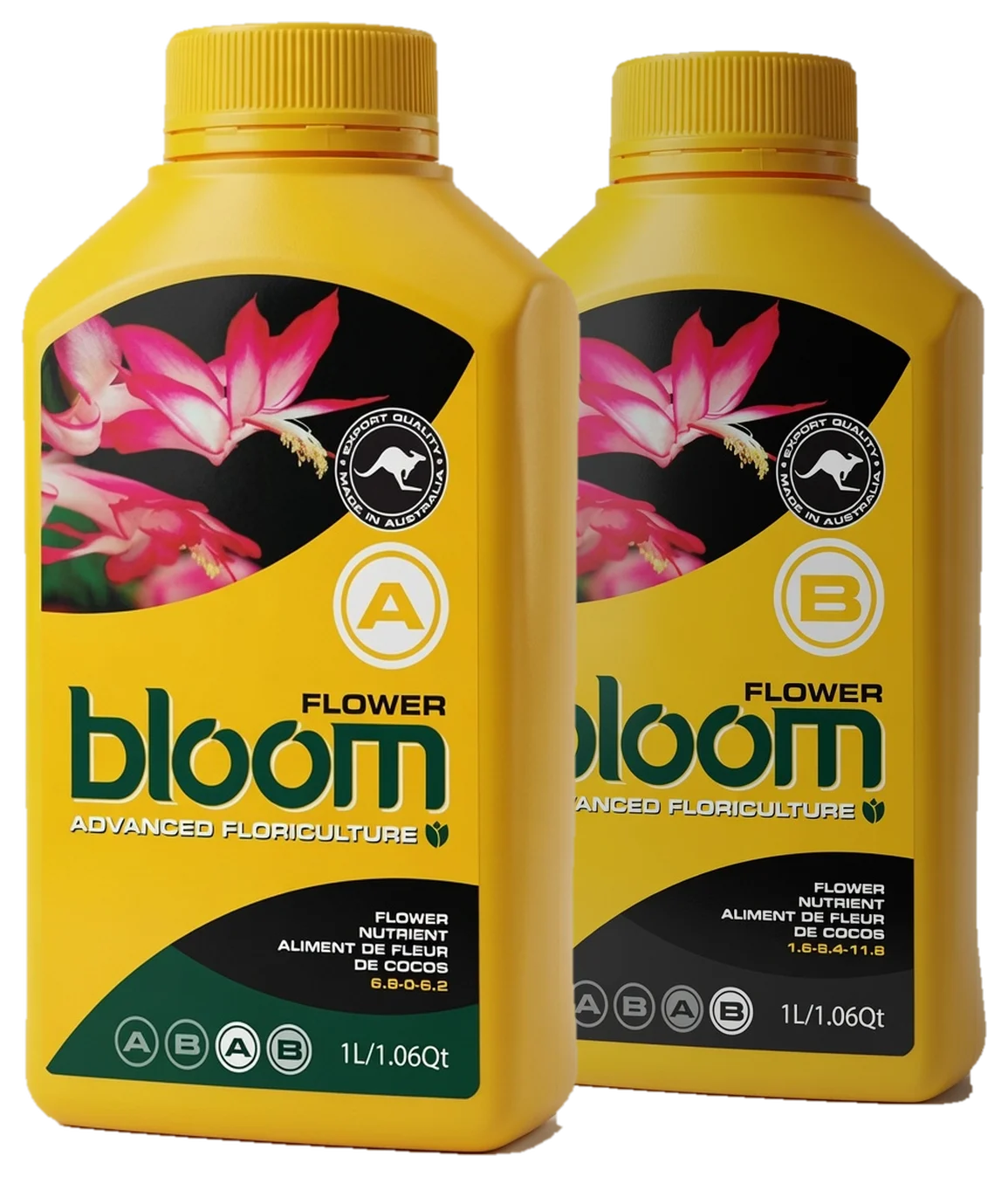 Flower A+B
How a seaweed extract actually works
It isn’t hormones. It’s priming.
The old story was “kelp is full of plant hormones”. The industry’s own white paper now says the hormone levels in extracts sit well below the dose a plant responds to. What the gene-expression studies show instead: the extract’s large molecules are read as a signal, and the plant switches on its own stress and uptake machinery early.
Polysaccharides, polyphenols, betaines and mannitol. The large molecules are the point.
Read as a signal, applied foliar or at the root zone ahead of stress. Ali et al. report a 10–14 day interval as the optimum.
Stress-response and antioxidant genes, carbohydrate metabolism and nitrogen transporters come up (Arabidopsis, tomato, maize).
Plants that hold up under heat, drought, salt and frost, and use more of the feed they’re already getting.
Pathway drawn from Shukla et al. 2019 (Frontiers in Plant Science), Santaniello et al. 2017 and Ali et al. 2021.
Four inputs, four pathways
Same idea, different door.

Where it fits in a grow
Keep your base nutrient. Add the signal when it counts.
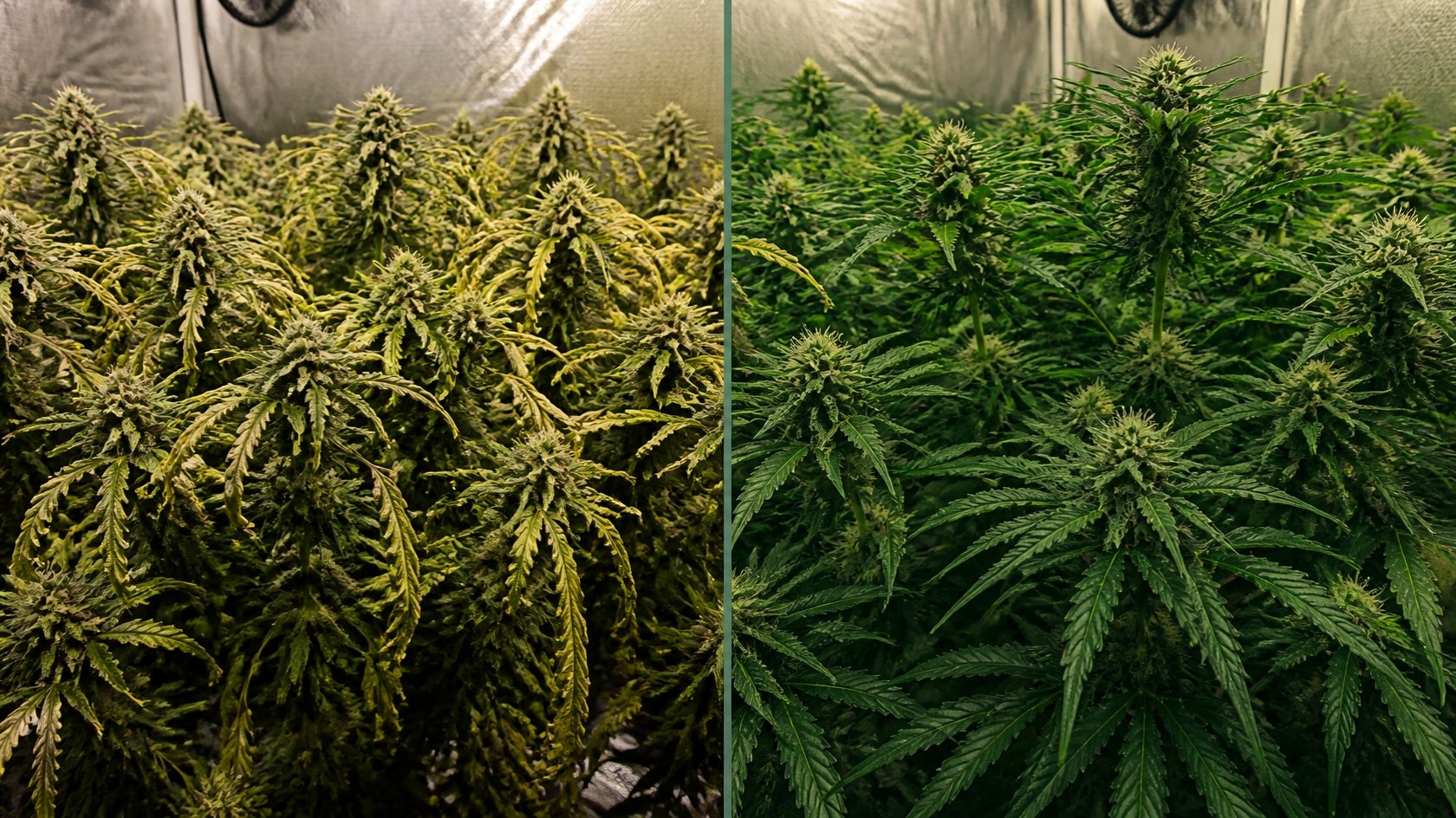
Bloom isn’t a feed program you swap in. It’s a set of tools you lay over whatever base you already run. Pick the weeks that matter and the bottle that does that job. Tap any bottle to open its page.
Veg and transplant
Root start, early branching and a foliar fish feed. Timing is on each page.
Flower, weeks 3–4
The size and density step. Rate and system detail are on the Phat page and feed chart.
Flower, weeks 5–8
The terpene and oil step. OOZE runs at 2.5 ml/L from week 5. System detail is on the Ooze page and feed chart.
The PHAT weeks 3–4 / OOZE weeks 5–8 split is the standard schedule. Facilities that know the tools sometimes run four weeks of PHAT and two of OOZE to lean toward bulk; that’s an option, not the default. Every rate is on the bottle label, the feed chart and each product page.
Straight talk
What we won’t tell you, and why.
Seaweed isn’t sold as a hormone product.
EBIC’s 2023 white paper says the hormone levels measured in commercial extracts sit well below the dose a plant responds to. The polysaccharide and polyphenol fraction is the point, so that’s what we talk about.
It’s not a base nutrient.
Biostimulants change how the plant uses what it’s already getting. Keep whatever feed you run. Nothing on this page replaces it, and we won’t pretend a biostimulant bottle is a food.
Results are pooled averages.
The meta-analysis numbers above are across hundreds of trials, crops and climates. Your result depends on your stress, your medium and your timing. That’s why we’d rather show you a trial than a promise.
The evidence rack