
More nodes. More buds. More options.
Bonsai’s about control, not size. Each Bloom input is matched to one stage of the tree’s year. Here’s what to look for, and when.
No bonsai trial data yet. Images are representative of what each input is designed to do.
Grow it small. Grow it right.
You’re not pushing the tree. You’re redirecting it.


What to look for in the tree.
Rates are off our printed feed chart. The bonsai timing is our read on it.
The core three
Where we’d startLook for: a dense mat of fine roots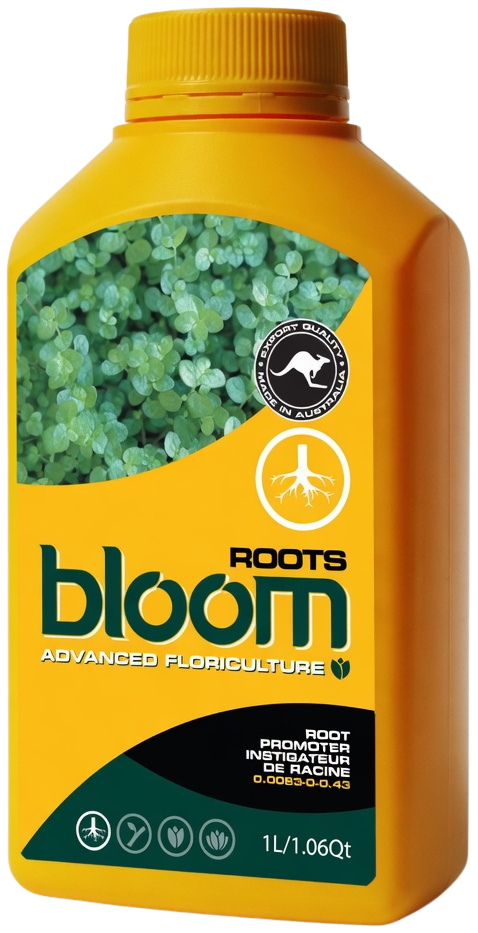
Roots
When: at repot, while the root pad rebuilds, and again for the autumn root flush.
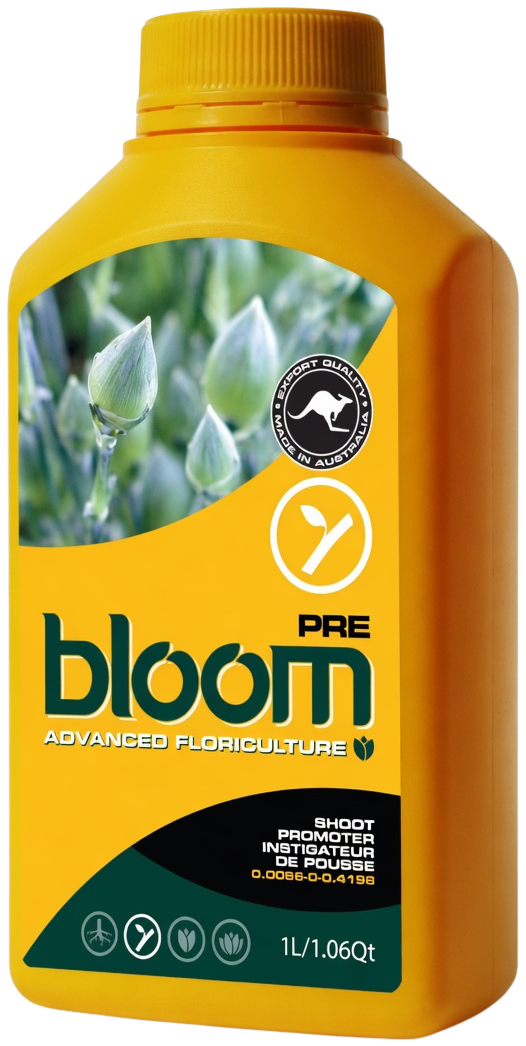
Look for: tighter nodes, more budsPre
When: as new shoots extend after bud break, or after a pinch or prune.
 Look for: branches that hold the wire

Silica
When: through the growing season, into wiring, defoliation and summer heat.
Goes in first. Strongly alkaline, so pH it alone before adding anything else. Azalea and satsuki growers: check pH once it’s all in.
Fill the gaps
Inert mixes and soft water Designed to: help the mix hold your feed

Humate
When: summer maintenance, on into autumn.
 Look for: even green across the leaf

Cal
When: summer maintenance. Rain and RO water carry next to none.
 Designed to: top up trace elements

Sea Minerals
When: summer maintenance. A tiny rate goes a long way.
Timing tools
Foliar sprays, at dusk Foliar at dusk, straight after repot

Groigen
When: straight after repotting, and through the spring flush.
 Spray the leaves, not the blooms

Florigen
When: through the flowering period. Keep it off open blooms.
Development trees only
Growing out, not refining Development trees: building the trunk
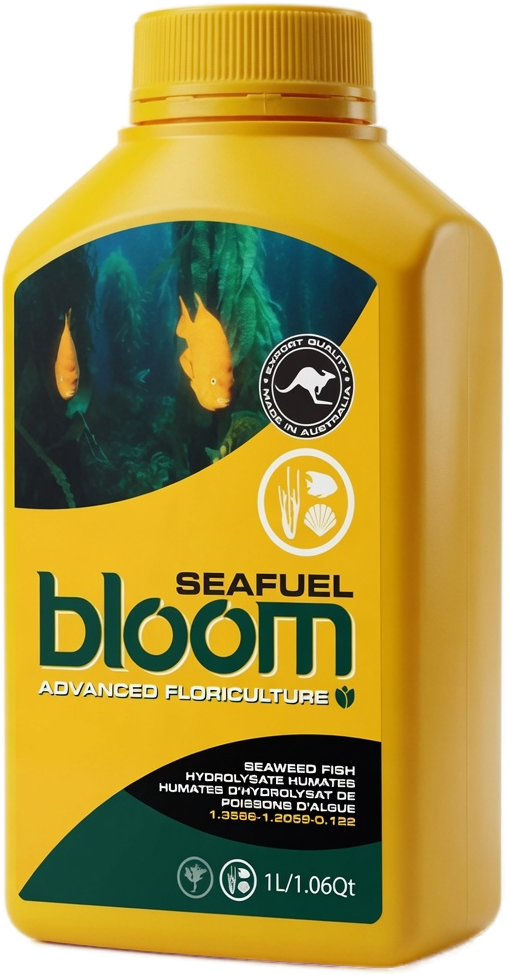
Seafuel
When: only on trees you’re growing out for trunk. Fish and kelp.
Not for refinement-stage trees. Once you’re refining, you’re holding growth back, not driving it.
Tap a season. See what’s on.
RootsPreHumateCalGroigenFlorigenSea MineralsSilicaNorthern Hemisphere seasons. Tropicals kept indoors run on their own clock, so go by their growth flushes.
Different stage. Different kit.

Growing out for trunk
Let it run. Sacrifice branches, a deep pot or the ground. Seafuel only belongs here. Pre waits until you’re building branches.
RootsSeafuelHumateCalGroigenSea MineralsSilica
Refining the detail
Structure’s set. Now it’s tight nodes, fine ramification and a dense root pad. No Seafuel.
RootsPreHumateCalGroigenFlorigenSea MineralsSilicaSeeing this? Tap it.
Not a diagnosis. It shows what each sign is commonly associated with. If a tree’s going backwards, get someone to look at it in person. Your local club is gold for this.
Got a bloomer? That’s Florigen.

Satsuki like it acidic. If Silica’s in the root feed too, check your pH.
Feeding the tree vs. timing it to the stage.
Those feed the tree. Ours are matched to a stage of growth.
On B1: every Signature bottle, Roots and Pre included, carries a bit of B1 and humic acid. We don’t lean on the B1. Roots is built on Durvillaea kelp, and Pre on Ascophyllum and Durvillaea.
Sources: 1 University of Florida IFAS, HS1255 · 2 UC Nursery and Floriculture Alliance · 3 Bonsai Outlet fertilizer FAQ · 4 Washington State University, Puyallup
Three rules. That’s it.

In the water alone. pH it, let it settle, then add the rest. Don’t chase pH after that. Acid-lovers: check the finished mix, since Humate’s alkaline too.
Groigen and Florigen get time on the leaf before the sun’s on it. Florigen stays off open blooms.

Small pot, small root mass. If you’re unsure, go under the rate, not over, and build up.
 Representative image
New territory for us, and we want to hear from bonsai growers.
Tell us what you grow and we’ll work out a trial with you. Good, bad or no difference, we want the honest read.
Already running Bloom on your trees? Tell us your grower story →
@bloomyellowbottles · @bloom_crew_nate
Images on this page are a mix of real photos and AI-generated illustrations, used to show what each input is designed to do. They aren’t trial results.