
Drip Hydro and Bloom
Drip Hydro on the left, Bloom on the right, matched on the job each bottle does. Their base, cleaners and pH stay put. Here’s where Bloom sits on top.
Last checked 5 November 2026 · Public information only
This Fit Report is a summary of publicly available information about Drip Hydro and its products, taken from their own website, labels and published material as of 5 November 2026. We’ve linked each source so you can check it yourself. Rates are as printed on each company’s own pages; we don’t show prices. It isn’t affiliated with, endorsed by or approved by Drip Hydro, and product names belong to their owners. Products, rates and claims change, so please confirm current details with the manufacturer before making any decision. Spotted something out of date? Email nathan@bloomyellowbottles.com and we’ll correct it.
Their program, and what sits alongside.
Drip Hydro’s range is mineral base feed, cal-mag, PK, a carbon additive, a rooting gel, line cleaners and pH. Their product list has no seaweed, fish, humic or sea-mineral input. That’s the job Bloom’s weekly tonics do, and they go into the same tank over the base you already run.
- Stays as is: Base A and B or Powders A to D, Flow, Shock, pH Up and pH Down.
- Both have one: cal-mag, PK, carbon and cuttings. Run one, or test them side by side.
- Not on their list: kelp, tuna, humic acid, sea minerals, stage additives and foliar sprays.
Why each one fits
What the Bloom product does, the research behind that kind of input, and where it sits in a program that already runs.
Kelp and tuna in the tank
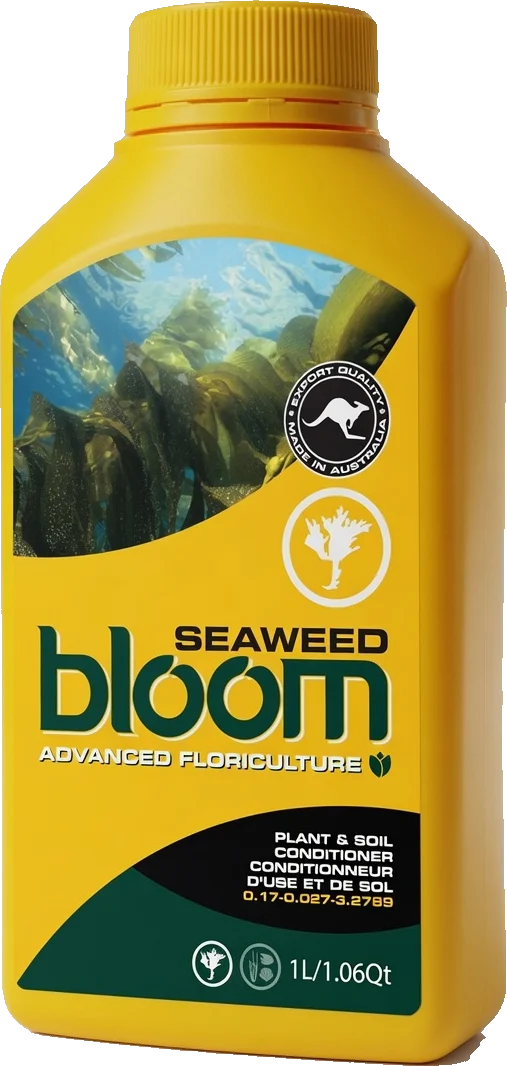
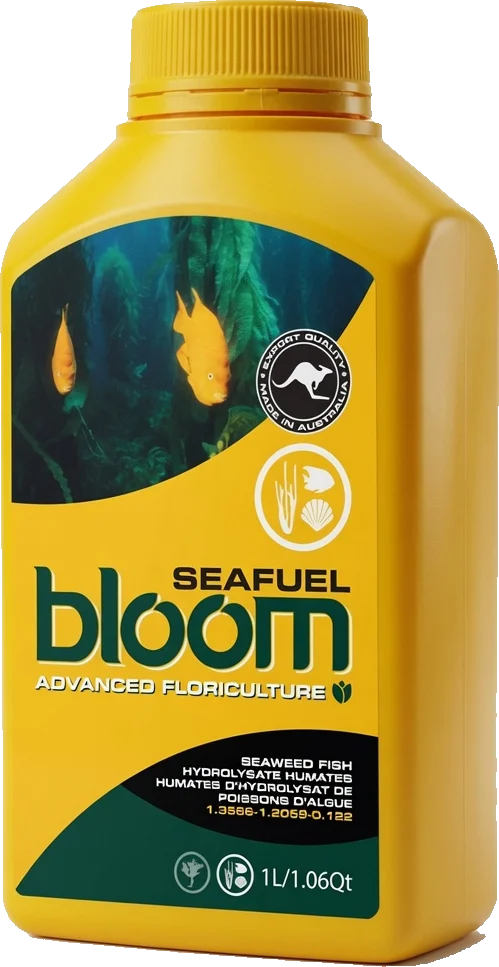
What it does. Seaweed is southern bull kelp; Seafuel is tuna and kelp. Both run at 1 ml/L weekly: Seaweed from seedling through the flush, Seafuel from clone through late flower, tapering at the flush.
Reviews of seaweed extracts report effects on growth and stress tolerance across many crops. Work on protein hydrolysates, which fish inputs belong to, is newer and links them to nutrient uptake, mostly under stress. None of it tests these bottles or cannabis.
Ali et al. (2021), Plants (review) · Malécange et al. (2023), Int J Mol Sci (review)
How it stacks. Add after the base, 1 ml/L each. Drip’s Ooze page says to dose carbon inputs after a sanitiser like Flow, or in a separate tank. Our read: plan any organic additive the same way, and check both labels.
Humic acid and trace minerals
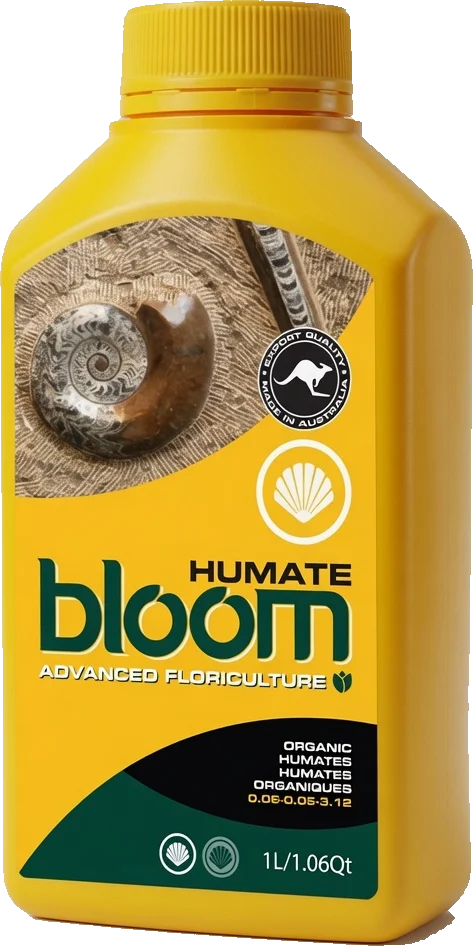
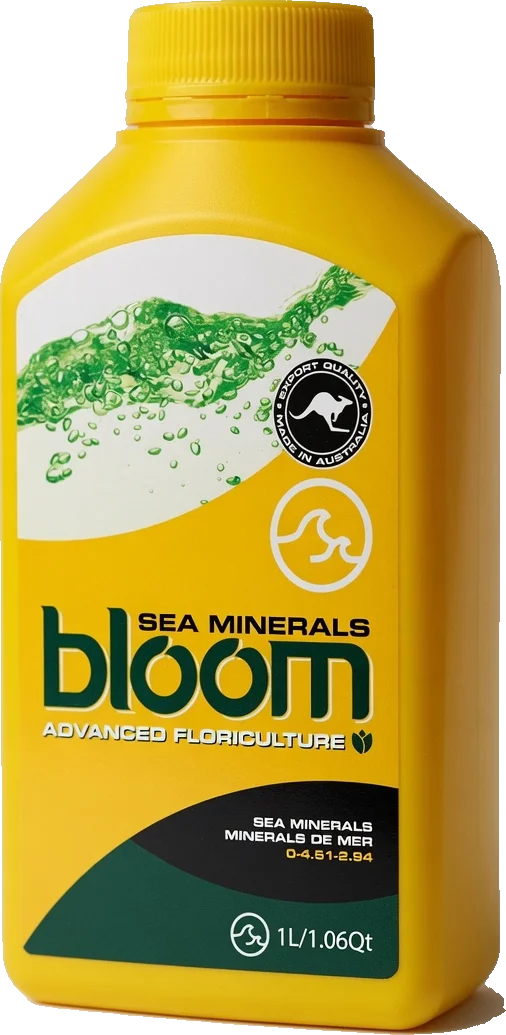
What it does. Humate is 10% humic acid at 2.5 ml/L weekly, seedling through flush. Sea Minerals is trace minerals from sea water at 0.13 ml/L weekly, veg to bloom.
A major review links humic substances to changes in root structure and function tied to nutrient uptake, including more lateral roots. It doesn’t test either company’s products.
How it stacks. Small doses on top of Base A and B or the powders. Powder D already carries Drip’s chelated micros, so Sea Minerals adds to it rather than standing in for it (our read).
One bottle per stage
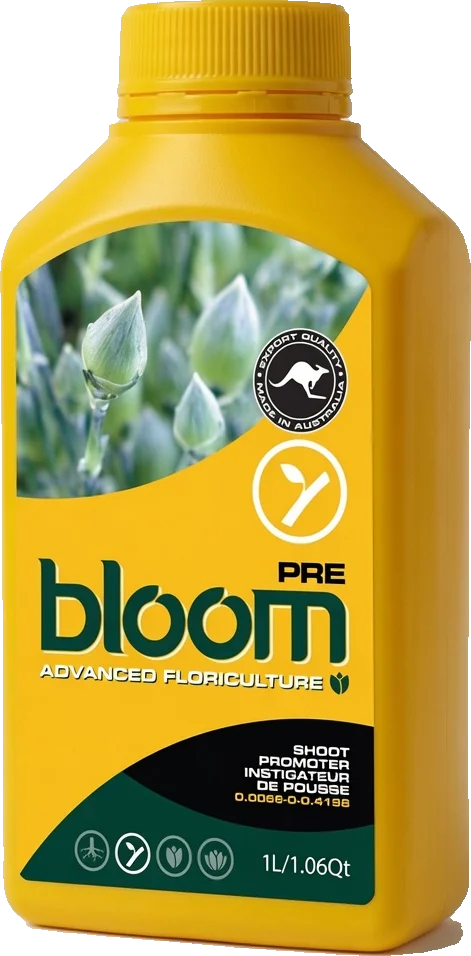
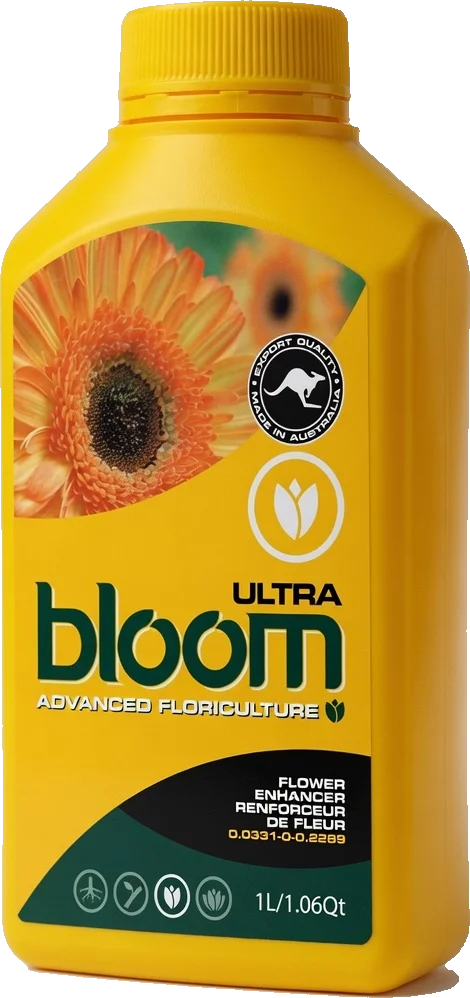
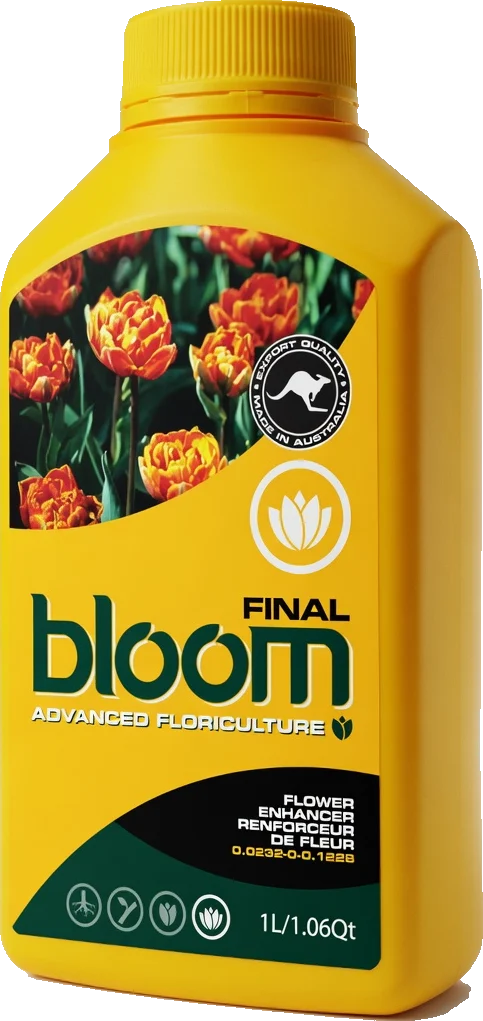
What it does. Pre in mid veg (weeks 2–3), Ultra at the flip (flower weeks 1–2), Final for the last two weeks including the flush, running alongside Ooze. 1 ml/L each, weekly. These are timing tools, so there’s no study cited for them here.
How it stacks. Drip’s charts already set the base and PK week by week. These go into those same weeks without touching the base EC plan (our read: check runoff when you add anything).
Dip at the cut, Roots in the feed
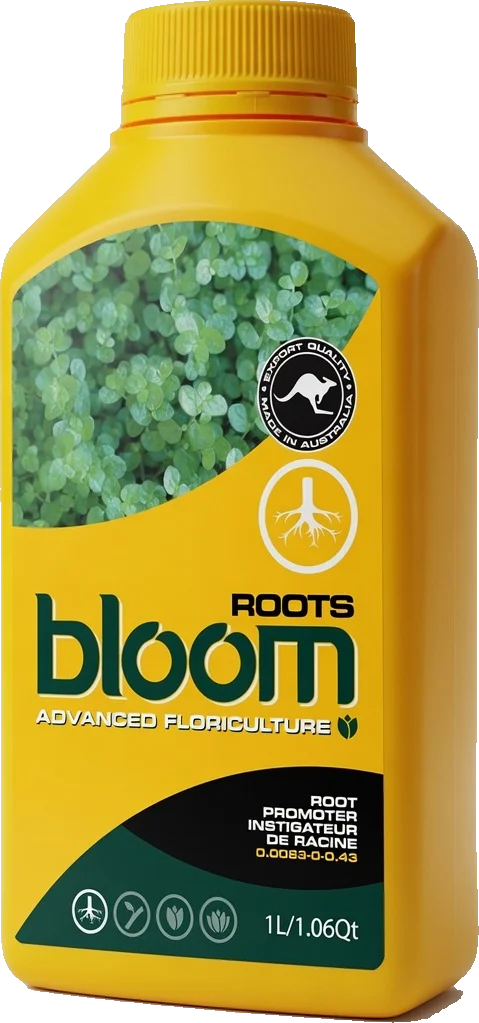
What it does. Roots runs at 1 ml/L as a cutting dip, or 0.5 ml/L weekly from cuttings and veg through flower, stopping in the final 1–2 weeks.
How it stacks. Drip’s page has Dip at sticking only, and says it doesn’t change the feed program. Roots can carry on in the weekly feed once cuttings are in, so a grower could run them in sequence, or test one against the other (our read).
Their line, Bloom’s fit at a glance
Matched on job, not NPK. Drip prints rates per US gallon, Bloom per litre on a weekly feed chart. Tap a tag to filter.
Keep your base. Bloom’s additives sit on top of it.
Keep the dry base. Bloom’s additives are liquid and run alongside it.
Both are calcium and magnesium. Drip’s lists nitrogen and iron; Bloom’s lists iron and zinc. Pick one.
Both are PK. Drip’s start early in flower; Bloom’s PK is an as-needed bottle shown at peak bloom. Plan the stack, or pick one.
Both put carbohydrates in the tank. Drip’s runs transplant to flush; SWTNR adds potassium from veg week 2.
Both are used at the cutting. Dip is a gel at sticking; Roots is a liquid that can carry on in the weekly feed.
Keeps lines and tanks clean. Bloom has no line cleaner, so it stays.
A reset between cycles. Nothing in Bloom’s range does this job.
Bloom doesn’t make pH adjusters, so yours stay.
Southern bull kelp, and a tuna and kelp tonic, through the cycle.
10% humic acid, plus trace minerals from sea water.
One additive for mid veg, one for the flip, one for the last two weeks.
Foliar sprays for veg and the flip, applied every few days as needed, outside the feed line.
Where each bottle sits in the cycle
Drip Hydro’s timing in grey, Bloom’s in yellow, across shared stages of the grow.
| Stage | Root | Veg | Flip | 3–4 | 5+ | Last 2 | Flush |
|---|---|---|---|---|---|---|---|
| Drip Hydro, per their pages | |||||||
| Dip (cuttings) | |||||||
| Base A and Base B | |||||||
| Powder A | |||||||
| Powder B and D | |||||||
| CaMg | |||||||
| Flex and Powder C | |||||||
| Ooze (Drip Hydro) | |||||||
| Flow (weekly) | |||||||
| Bloom, per Bloom’s weekly feed charts | |||||||
| Roots | |||||||
| Pre | |||||||
| Ultra | |||||||
| Phat (weeks 3 and 4) | |||||||
| Ooze (wk 5 to flush) | |||||||
| Final (with Ooze) | |||||||
| Seafuel | |||||||
| Seaweed · Humate · Sea Minerals | |||||||
| SWTNR | |||||||
| Cal-Mag | |||||||
| Groigen (foliar, as needed) | |||||||
| Florigen (foliar, as needed) | |||||||
| PK (as needed) | |||||||
| Silica | |||||||
Timing comes from each Drip product page and their feeding schedule charts. CaMg runs veg to flower week 6 and Powder A tapers through flower and stops at least 10 days before harvest, so both fade. Their Ooze runs from transplant, drawn from veg here. Flow is weekly in weeks 1–6, so it’s pale (our read). Bloom’s bars follow its weekly feed charts; pale Bloom bars are as-needed bottles.
Where the programs complement each other
Their base, Bloom’s tonics on top
Drip’s list has no seaweed, fish, humic or sea-mineral input. Seaweed, Seafuel, Humate and Sea Minerals go in at 0.13–2.5 ml/L weekly over Base A and B or the powders.
Flow keeps the lines clean, Bloom runs through them
Flow and Shock look after the irrigation side, and Bloom has nothing for that job. Drip’s own Ooze page says to dose carbon after sanitisers or in a separate tank, a fair pattern for any organic additive (our read).
Dip at the cut, Roots after it
Dip is a gel used at sticking only. Roots works as a dip or at 0.5 ml/L weekly in the feed, so a grower could run them in sequence or test one against the other (our read).
Put it side by side
Where both ranges have a product for the same job, the fair answer is a test in your own room. Here’s what to watch and how to keep it fair.
Keeping it fair
- Same plants. Clones off the same mother, same cultivar, same age.
- Same room. Same light, climate, media, pot size and watering.
- Same base. Keep the base feed and EC the same on both sides.
- One change. Change only the product being tested, and write down what you see each week.
Already covered
- Base feed. Base A and B, or Powders A, B and D, run veg through flower.
- Calcium, magnesium and PK. CaMg, Flex and Powder C are in the range.
- Carbon. Drip’s Ooze is their carbohydrate additive, transplant through flush.
- Cleaning and pH. Flow, Shock, pH Up and pH Down.
Stays exactly as is
- Base A and B / Powders A to D. Bloom’s additives go in around them.
- Flow and Shock. Line and tank cleaning stays on Drip’s schedule.
- pH Up and pH Down. Bloom doesn’t make pH adjusters.
- CaMg, Flex and their Ooze. If they’re working in your room, keep them, or test Bloom’s next to them.
Background, science and sources
Who Drip Hydro are
Drip Hydro sells fluid and powder plant nutrients. Its site carries the tagline “Feed your fire” and a 2023 copyright; the pages we read don’t state a location, founding date or owner.
The range is a two-part fluid base (Base A and Base B), a four-part powder base (Powders A to D), CaMg, Flex, a carbon additive called Ooze, a rooting gel called Dip, irrigation cleaners (Flow and Shock) and pH Up and pH Down. They publish eight feeding schedules, five powder and three fluid, plus metric versions, calculators and a cloning SOP. Hydro stores can apply to become dealers, wholesale runs through HRG Distribution, and their commercial page lists drums and totes.
Sources: Home · Products · Feeding schedules · Wholesale and hydro
What each company brings
Drip Hydro: A two-part fluid base and a four-part powder base, cal-mag, PK and carbon add-ons, a rooting gel, irrigation cleaners, pH adjusters, and printed feeding schedules for coco, rockwool and water.
Bloom: one additive for each stage of the crop, seaweed, humic and sea mineral inputs, foliar sprays, and weekly feed charts for soil, coco and hydro. Rates and timing are on every product page.
Cropping Solutions, the other brand under Agricultural Organics, isn’t part of this report.
Dose basis: how each side counts
Drip Hydro prints rates per US gallon: mL per gallon for fluids, grams per gallon for powders. Bloom prints ml per litre, on a weekly feed chart. At 3.785 L to the gallon, CaMg’s 1–2 mL/gal is about 0.26–0.53 ml/L, Flex’s 1–3 mL/gal is about 0.26–0.79 ml/L, and their Ooze’s 5–10 mL/gal is about 1.3–2.6 ml/L. Bloom’s Cal-Mag, PK and SWTNR are 1 ml/L each.
Drip’s rates are per feed; Bloom’s sit on a weekly chart, so the same number on each side isn’t the same weekly amount. The analyses differ too, so bottle volume on its own isn’t a like-for-like dose.
Mix calculator
Rates as printed on each company’s page (1 US gallon is 3.785 L). Bloom’s rates are per litre of nutrient solution, dosed weekly per its feed charts. Pick a product and your tank size.
Potassium in the plantWell supported
Hasanuzzaman and colleagues (2018) review potassium’s roles in plants: protein synthesis, carbohydrate metabolism, enzyme activation, stomatal control and photosynthesis, plus tolerance to salinity, drought and heat.
Why it matters here: Drip’s Flex and Powder C and Bloom’s PK are all PK products, so potassium is the shared ground. The review is general plant science and doesn’t compare products or timing.
Sources, all viewed 5 November 2026
Drip Hydro: Home · Products · Feeding schedules · Base A · Base B · Powder A · Powder B · Powder C · Powder D · CaMg · Flex · Ooze (Drip Hydro) · Dip · Flow · Shock · pH Up · pH Down · Wholesale and hydro · Dialed fluid chart (PDF) · Proper powder chart (PDF)
Bloom: Roots · Pre · Ultra · Phat · Ooze · Final · Seafuel · Seaweed · SWTNR · Humate · Cal-Mag · Groigen · Florigen · Sea Minerals · PK · Euro · Grow · Flower · Silica · OrganiShield
Last checked 5 November 2026. Public information only. Not affiliated with, endorsed by or approved by Drip Hydro; product names belong to their owners. Please confirm current details with the manufacturer. Corrections: nathan@bloomyellowbottles.com. All Fit Reports