
Gaia Tech and Bloom
Ginate on the left, Bloom on the right, matched on the job each one does. Ginate goes into the soil, Bloom goes into the water. Here’s where they line up and where they sit apart.
Last checked 5 November 2026 · Public information only
This Fit Report is a summary of publicly available information about Gaia Tech and its products, taken from their own website, labels and published material as of 5 November 2026. We’ve linked each source so you can check it yourself. Rates are as printed on each company’s own pages; we don’t show prices. Gaia Tech is a trusted business partner of Bloom Yellow Bottles, and product names belong to their owners. Products, rates and claims change, so please confirm current details with the manufacturer before making any decision. Spotted something out of date? Email nathan@bloomyellowbottles.com and we’ll correct it.
Ginate in the soil, Bloom in the water.
Gaia Tech makes one product, Ginate: a dry soil enhancer made from lignite, blended into soil or spread over it on a yearly schedule. Bloom is a liquid range dosed weekly in the feed. Both bring humic substances and trace minerals, in different forms. Everything else in a weekly feed program is on Bloom’s side.
- Stays as is: Ginate powder and granular, at the rates on Gaia’s pages.
- Both have one: humic substances and trace minerals.
- Not on their list: liquid base, root, kelp, carbs, stage additives, cal-mag, silica and foliars.
Gaia Tech and Bloom in short
Ginate powder and granular, applied dry to soil. Bloom has no soil amendment.
Humic substances and trace minerals sit in both ranges, in different forms.
Liquid bases, root, kelp, carbs, stage additives, cal-mag, silica and foliars in the weekly feed.
Why each one fits
What the Bloom product does, the research behind that kind of input, and where it sits in a program that already runs.
Kelp and tuna in the feed
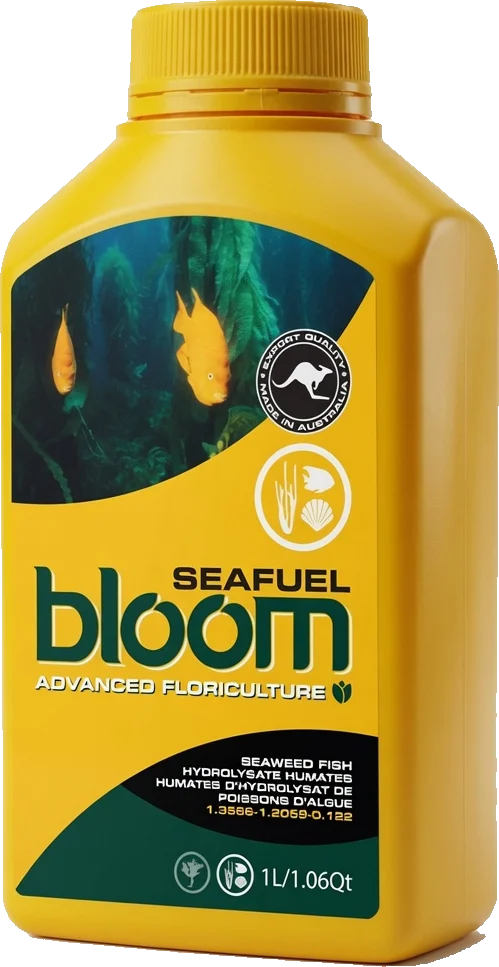
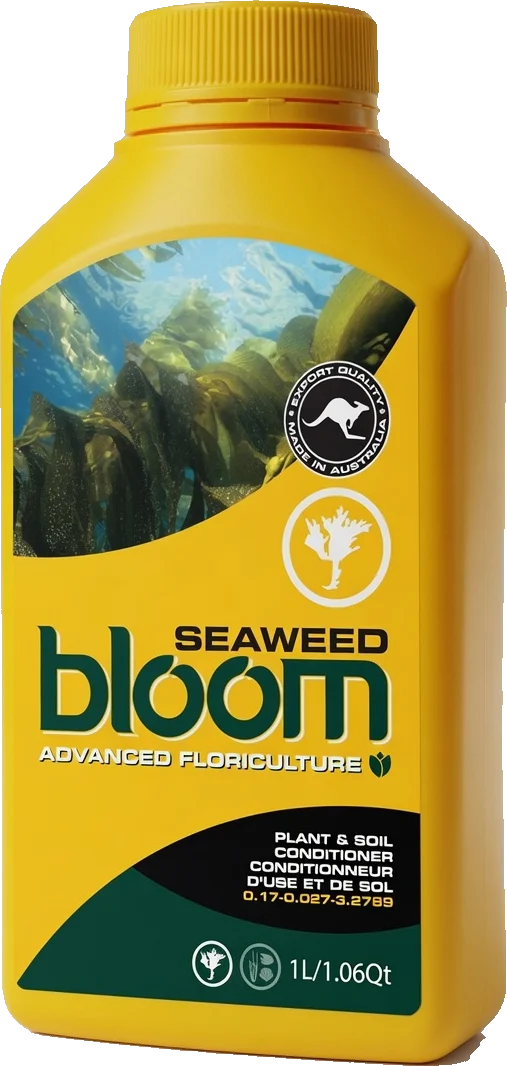
What it does. Seaweed is southern bull kelp; Seafuel is tuna and kelp. 1 ml/L each weekly: Seaweed seedling through the flush, Seafuel clone through late flower.
Reviews of seaweed extracts report effects on growth and stress tolerance across many crops. None of it tests these bottles or Ginate.
How it stacks. Ginate sits in the soil from planting. Seaweed and Seafuel go in the water each week, so they don’t share a bottle or a schedule (our read).
Roots before and after transplant
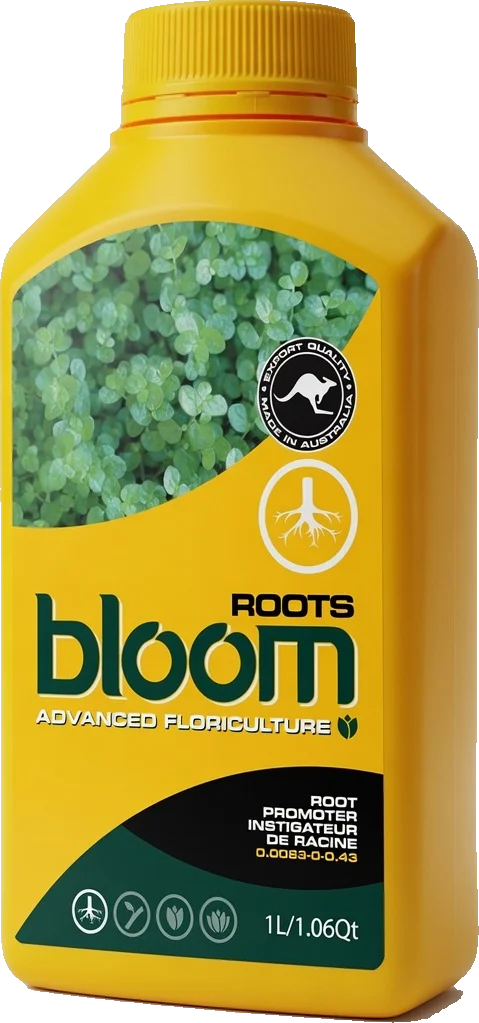
What it does. Roots is amino acids, B vitamins and fulvic acid: 1 ml/L as a cutting dip, or 0.5 ml/L weekly from cuttings and veg through flower.
How it stacks. Gaia’s case studies blend Ginate into the root zone or potting soil. Roots goes in the water once the plant is in that soil (our read).
One bottle per stage
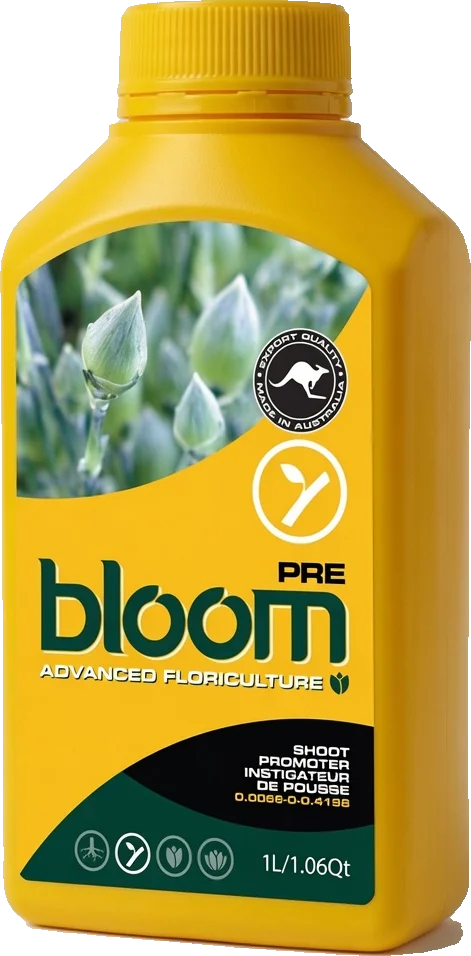
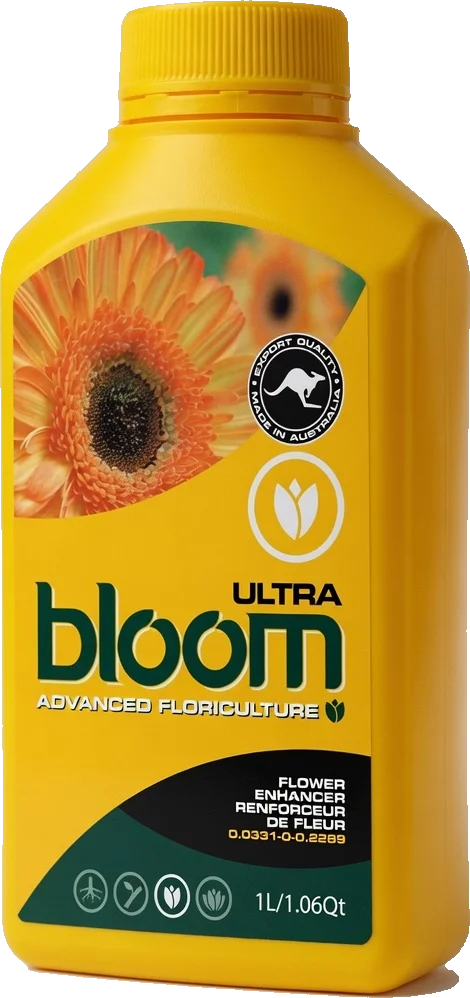
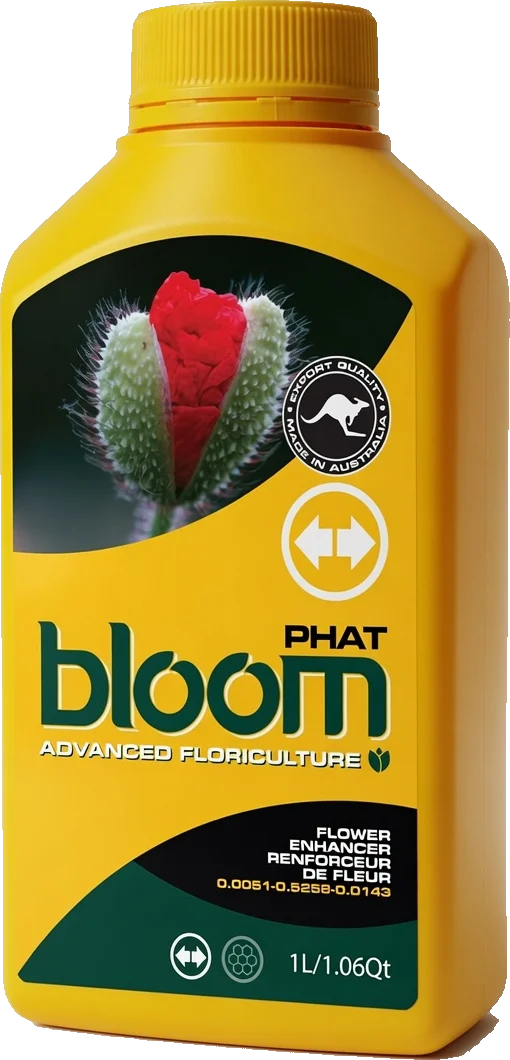
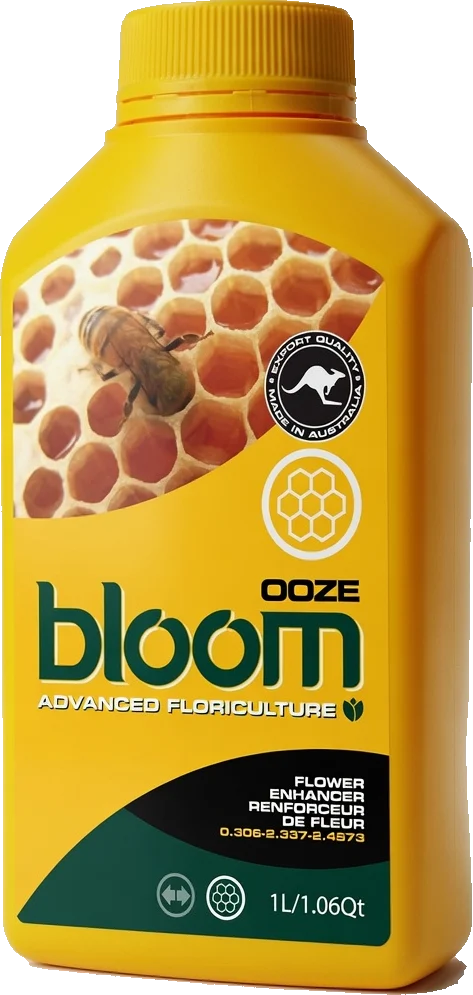
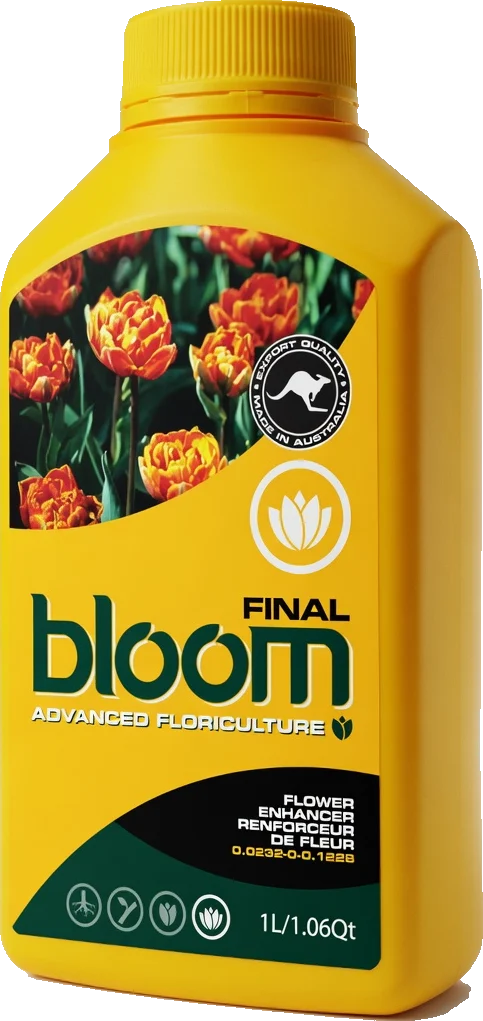
What it does. Pre in mid veg, Ultra at the flip, Phat in flower weeks 3 and 4, Ooze from week 5 to the flush and Final in the last two weeks. Timing tools, so no study is cited for them here.
How it stacks. Ginate’s schedule is yearly, not by crop stage. These go in by the week on top of whatever’s in the soil (our read).
Where each bottle sits in the cycle
Gaia Tech’s timing in grey, Bloom’s in yellow, across shared stages of the grow.
| Stage | Root | Veg | Flip | 3–4 | 5+ | Last 2 | Flush |
|---|---|---|---|---|---|---|---|
| Gaia Tech, per their pages | |||||||
| Ginate (blended in or spread) | |||||||
| Bloom, per Bloom’s weekly feed charts | |||||||
| Roots | |||||||
| Pre | |||||||
| Ultra | |||||||
| Phat (weeks 3 and 4) | |||||||
| Ooze (wk 5 to flush) | |||||||
| Final (with Ooze) | |||||||
| Seafuel | |||||||
| Seaweed · Humate · Sea Minerals | |||||||
| SWTNR | |||||||
| Cal-Mag | |||||||
| Groigen (foliar, as needed) | |||||||
| Florigen (foliar, as needed) | |||||||
| PK (as needed) | |||||||
| Silica | |||||||
Gaia’s product page says Ginate can go on any time of year, best in spring and autumn, with a full first-year rate and smaller rates after. Their pot trials blend it in before planting, so it’s drawn solid at the start and pale after, because it stays in the soil (our read). Bloom’s bars follow its weekly feed charts; pale Bloom bars are tapers or as-needed bottles.
Their line, Bloom’s fit at a glance
Matched on job, not NPK. Ginate’s rates are per acre or blended by volume; Bloom’s are ml per litre on a weekly feed chart. Tap a tag to filter.
Bloom has no soil amendment or dry product. Ginate’s job stays with Ginate.
Spreading a dry product over acreage is a different job to a feed additive.
Both bring humic inputs. Ginate goes in the soil yearly; Humate goes in the feed weekly. Plan the stack, or run one.
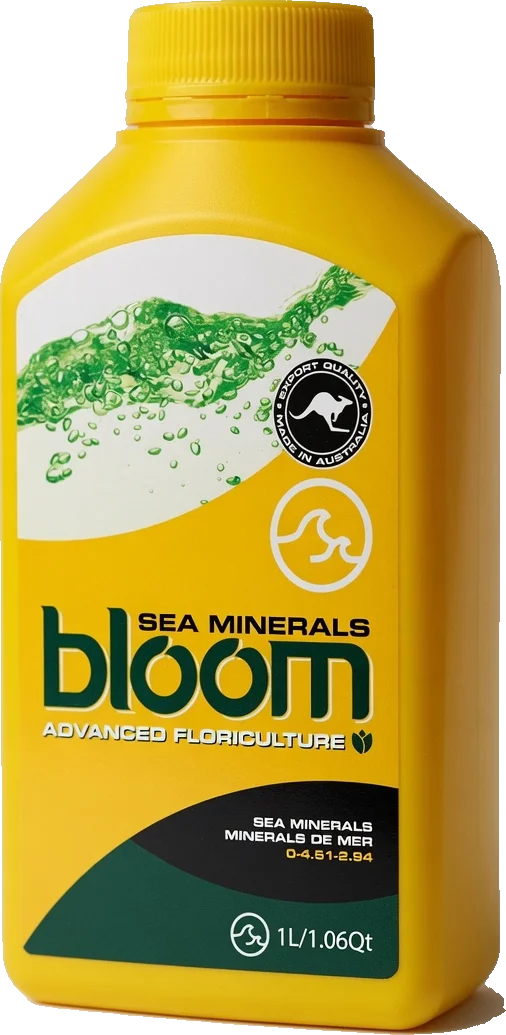
Both list trace minerals. Ginate’s come with the amendment; Sea Minerals goes in the tank.
Two-part bases for veg and bloom, mixed in the tank.
Amino acids, B vitamins and fulvic acid, cuttings through flower.
Southern bull kelp, and a tuna and kelp tonic, through the cycle.
Carbohydrates and potassium in the feed.
One additive per stage, mid veg through the last two weeks.
Calcium and magnesium with iron and zinc, and potassium silicate.
Foliar sprays for veg and the flip, applied outside the feed.
Put it side by side
Where both ranges have a product for the same job, the fair answer is a test in your own room. Here’s what to watch and how to keep it fair.
Keeping it fair
- Same plants. Clones off the same mother, same cultivar, same age.
- Same room. Same light, climate, media, pot size and watering.
- Same base. Keep the base feed and EC the same on both sides.
- One change. Change only the product being tested, and write down what you see each week.
Where the programs complement each other
Dry in the soil, liquid in the water
Ginate is blended into soil or spread over it; Bloom goes in the feed weekly. Two routes to the same root zone (our read). One of the papers on Gaia’s science page looks at mixed organic and inorganic amendments, the same shape of program.
Humic on both sides, so plan the stack
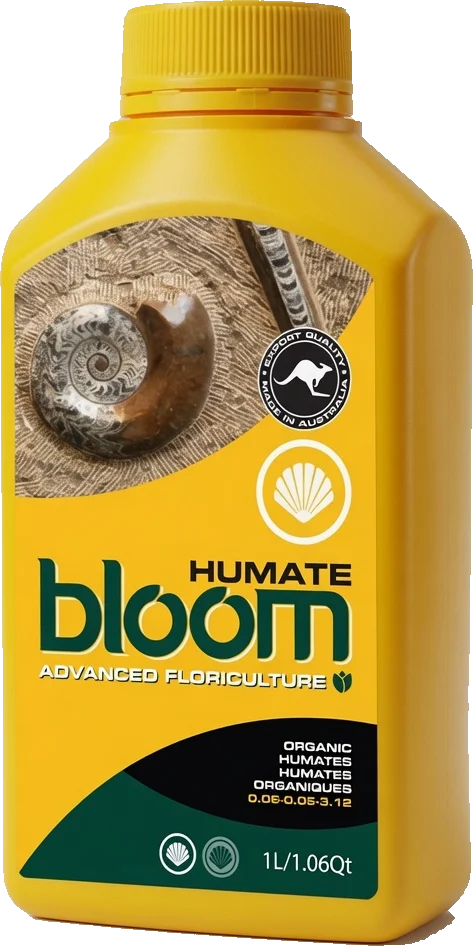
Ginate lists humic substances in its mix and Humate is 10% humic acid at 2.5 ml/L weekly. A grower can run one or both and check it in their own room (our read).
Where soil isn’t the medium
Gaia’s pages and case studies describe soil and soil blends (our read: we didn’t see coco or hydro use). Bloom lists soil, coco and hydro, so a soilless grower works from Bloom’s side of the table.
Already covered
- Humic substances. Ginate lists them in its mix; Humate is Bloom’s 10% humic acid.
- Trace minerals. Ginate lists 50+ trace mineral elements; Sea Minerals is trace minerals from sea water.
Stays exactly as is
- Ginate powder and granular. Applied at the rates on Gaia’s product page.
- Your soil program. Bloom goes in the water at its weekly rates.
- Turf, landscape and acreage work. Bloom has no dry or spreadable product.
Background, science and sources
Who Gaia Tech are
Gaia Technologies LLC (Gaia Tech) is based in Fort Collins, Colorado, and describes itself as a certified WOSB and EDWOSB. Its product is Ginate, which its science page says is made from a natural lignite deposit using a patented process developed by sister company Advanced Environmental Technologies, with 80+% organic matter and 50+ trace mineral elements.
Ginate comes as a powder and a granular, in 3 lb and 35 lb bags, sold through their website, with bulk by contact. Their site says it’s been used on over 200,000 acres, lists customers including golf courses, municipal parks and farms, and names Colorado State University and the University of Wyoming among its collaborators. Their case studies cover lettuce, pepper, hemp, trees, corn, sugar beet and turf.
Sources: Home · Science · Case studies
What each company brings
Gaia Tech: Ginate, a dry lignite-based soil enhancer with humic substances, organic compounds and trace minerals, in powder and granular, for agriculture, landscaping, reforestation and erosion control.
Bloom: one additive for each stage of the crop, seaweed, humic and sea mineral inputs, foliar sprays, and weekly feed charts for soil, coco and hydro. Rates and timing are on every product page.
Cropping Solutions, the other brand under Agricultural Organics, isn’t part of this report.
Dose basis: how each side counts
Ginate’s product page gives 1–1.5 tons an acre in the first year, 0.5–0.7 in the second, 500 lb in the third and 100–200 lb after. Their pot trials blend it in by volume, for example 1 cup per cubic foot for trees. Bloom is ml per litre of nutrient solution on a weekly feed chart.
That’s a dry product on a yearly schedule next to a liquid added weekly, so there’s no shared number to set side by side. A fair test compares the two programs, not the rates.
Mix calculator
Rates as printed on each company’s page (1 US gallon is 3.785 L). Bloom’s rates are per litre of nutrient solution, dosed weekly per its feed charts. Pick a product and your tank size.
Humic and fulvic acids as biostimulantsWell supported
A major review links humic substances to changes in root structure and function tied to nutrient uptake, including more lateral roots.
Why it matters here: Ginate and Humate both bring humic inputs, one dry in the soil and one liquid in the feed. The review doesn’t test either company’s products.
Lignite-based amendments in the fieldEmerging
Gaia’s science page lists two peer-reviewed field papers. Chen et al. (2022) looked at a lignite bioorganic product on sunflower growth, water and nitrogen productivity in saline-sodic farmland in northwest China. Guan et al. (2023) report that mixed organic and inorganic amendments enhanced soil microbial interactions in Tibetan barley.
Why it matters here: they’re single-region field studies, and neither tests Bloom or a liquid feed. The barley paper is the closest to a dry amendment running alongside a separate nutrient input.
Chen et al. (2022), Agricultural Water Management · Guan et al. (2023), Journal of Environmental Management
Sources, all viewed 5 November 2026
Gaia Tech: Home (company, Ginate, customers, collaborators) · Science (production, composition, papers) · Case studies · Ginate 35 lb (forms, applications, rates)
Bloom: Roots · Pre · Ultra · Phat · Ooze · Final · Seafuel · Seaweed · SWTNR · Humate · Cal-Mag · Groigen · Florigen · Sea Minerals · PK · Euro · Grow · Flower · Silica · OrganiShield
Last checked 5 November 2026. Public information only. Gaia Tech is a trusted business partner of Bloom Yellow Bottles; product names belong to their owners. Please confirm current details with the manufacturer. Corrections: nathan@bloomyellowbottles.com. All Fit Reports