
Great White and Bloom
Great White makes root-zone inoculants. Bloom makes weekly additives and base feeds. There’s no product overlap, so this one is about how the two sit in the same program.
Last checked 5 November 2026 · Public information only
This Fit Report is a summary of publicly available information about Great White and its products, taken from their own website, labels and published material as of 5 November 2026. We’ve linked each source so you can check it yourself. Rates are as printed on each company’s own pages; we don’t show prices. It isn’t affiliated with, endorsed by or approved by Great White, and product names belong to their owners. Products, rates and claims change, so please confirm current details with the manufacturer before making any decision. Spotted something out of date? Email nathan@bloomyellowbottles.com and we’ll correct it.
They bring the biology, Bloom brings the feed.
Great White’s range is three inoculants: Great White powder (mycorrhizal fungi, bacteria and Trichoderma), Orca liquid mycorrhizae and King Crab liquid bacteria. They don’t sell a base, kelp, humic or any stage additive. Bloom doesn’t make an inoculant. So nothing lines up head to head, and the two ranges stack in the same tank.
- Stays as is: Great White, Orca and King Crab, on their own schedules.
- Both have one: nothing. No product does the same job on both lists.
- Not on their list: base feed, kelp, tuna, humic acid, cal-mag, silica, stage additives and foliars.
Great White and Bloom in short
Great White, Orca and King Crab, on their own schedules.
Nothing. No product does the same job on both lists.
Bloom’s base, Humate, Roots, Seaweed, Seafuel, Cal-Mag, Silica, stage additives and foliars.
Why each one fits
What the Bloom product does, the research behind that kind of input, and where it sits in a program that already runs.
Humate and Roots where the fungi live
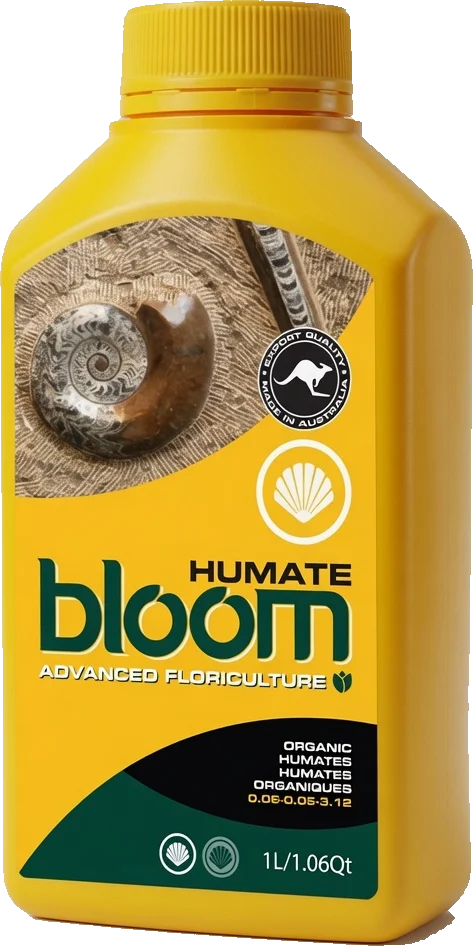
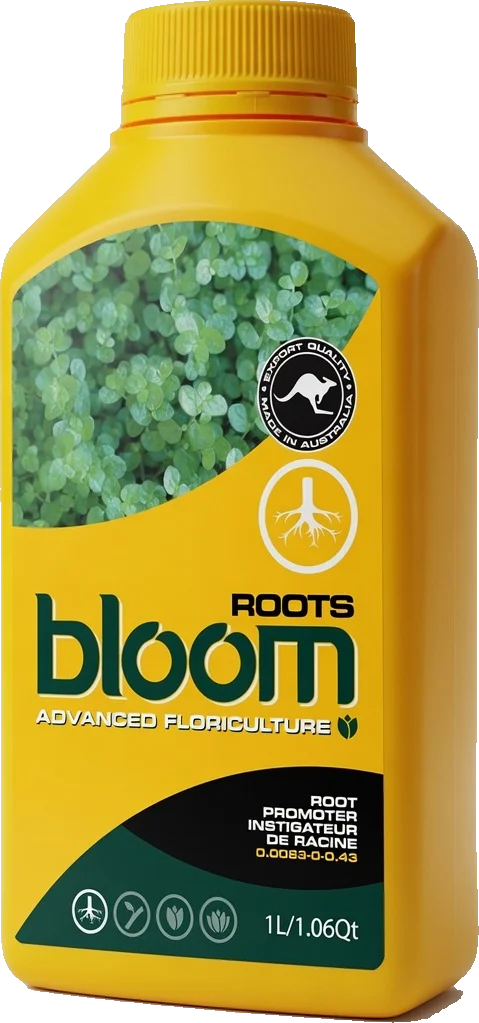
What it does. Humate is 10% humic acid at 2.5 ml/L weekly, seedling through flush. Roots is amino acids, B vitamins and fulvic acid at 0.5 ml/L weekly, or 1 ml/L as a cutting dip.
A major review links humic substances to changes in root structure, including more lateral roots. A separate review finds mycorrhizal fungi help plants take up nutrients and handle stress like drought and salinity. Neither tests these products together.
Canellas et al. (2015), Scientia Horticulturae (review) · Rouphael et al. (2015), Scientia Horticulturae (review)
How it stacks. Great White goes in at the cutting or transplant and every 2–3 weeks after; Humate and Roots run weekly. Our read: same root zone, different jobs, so they sit side by side rather than in place of each other.
A base for the inoculants to work with
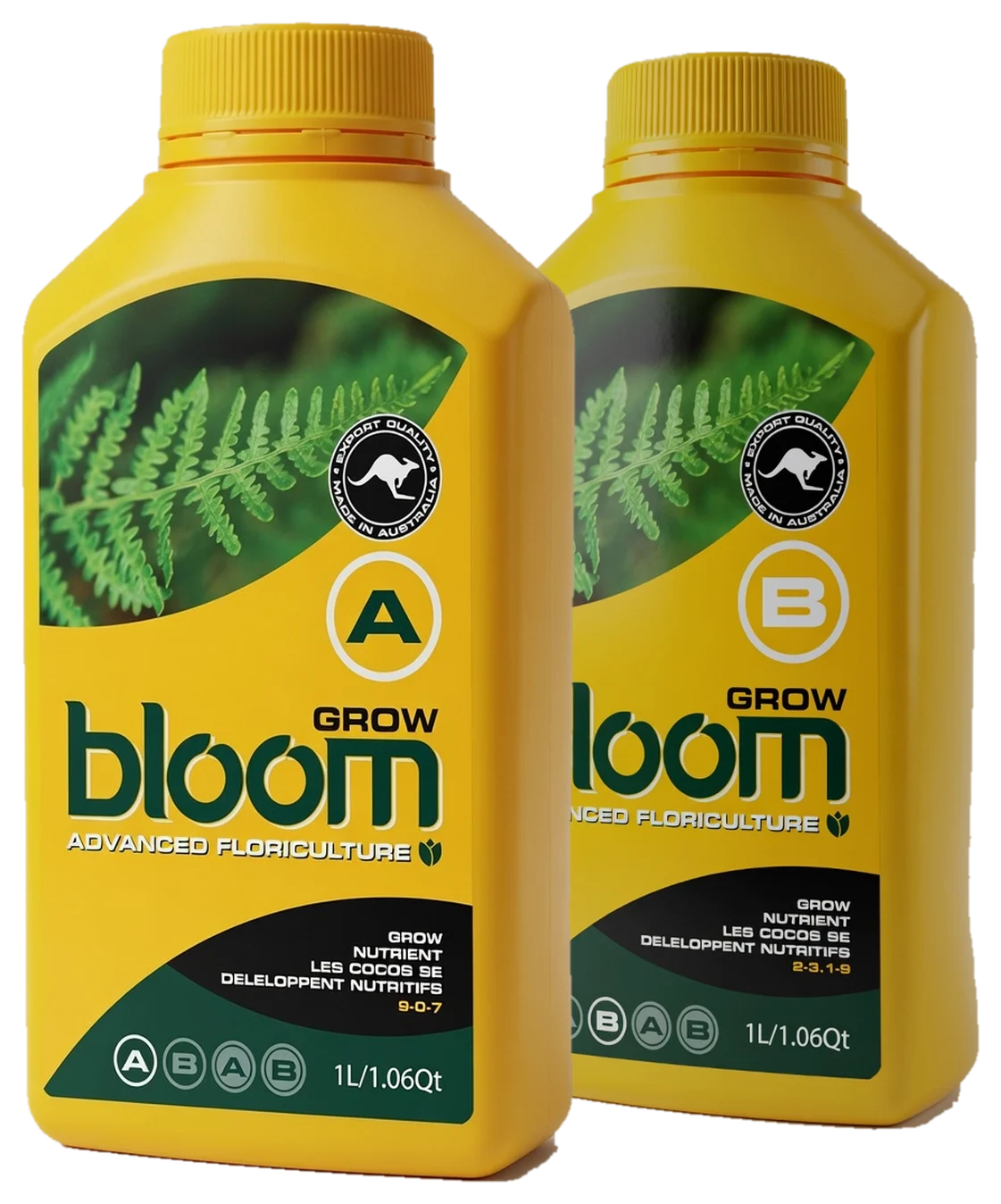
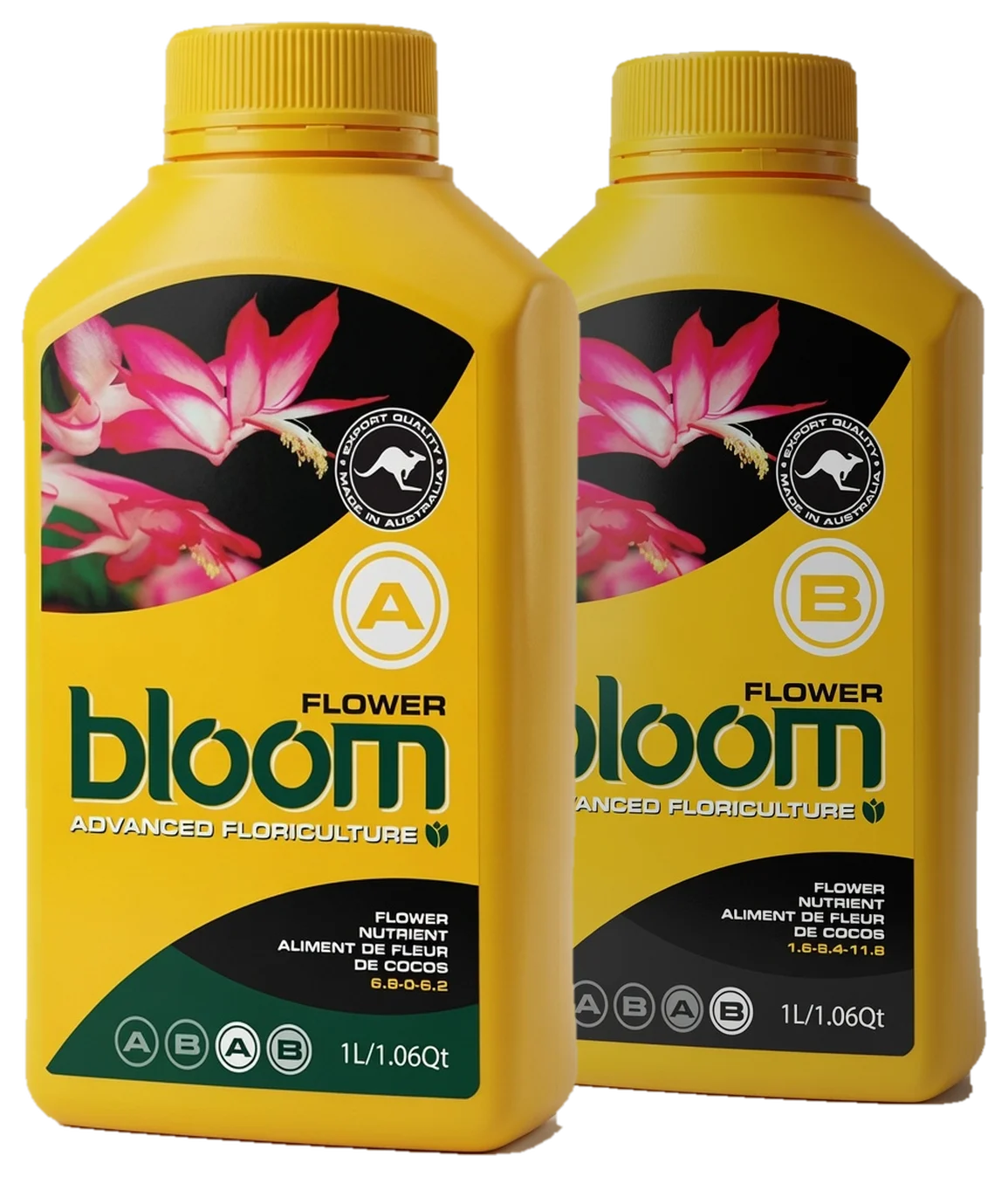
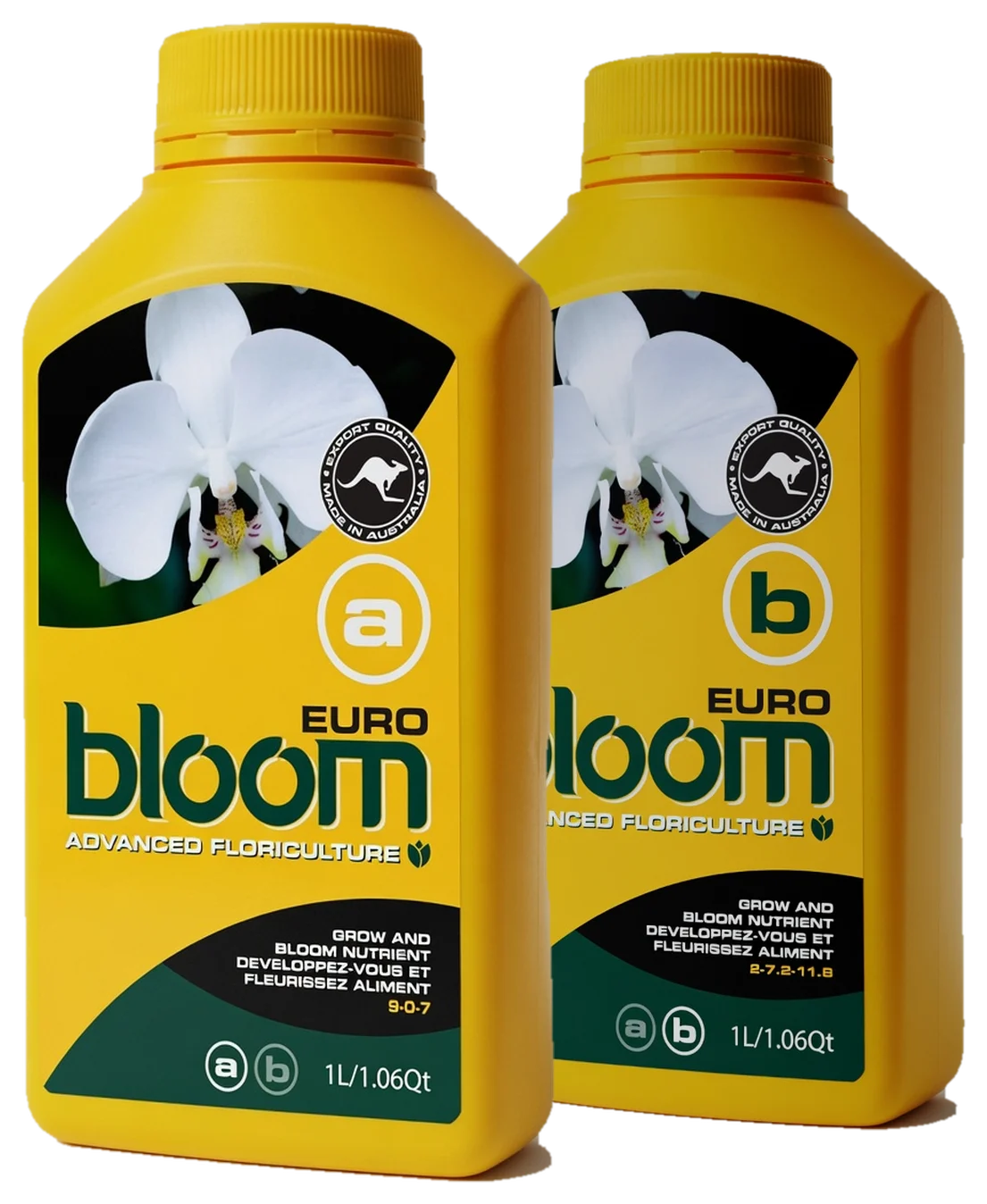
What it does. Euro A+B runs veg to bloom at 1–2 ml/L each part. Grow A+B and Flower A+B split it by stage, changing over at 12/12. Great White sells no base, so the feed has to come from somewhere.
A 2022 review on Bacillus, the main bacteria group in all three Great White products, covers how they free up phosphorus and iron and help plants under stress. Most of it is lab and greenhouse work, not commercial cannabis.
How it stacks. Orca and King Crab go into the reservoir with the regular feed, per their pages. Bloom’s base goes in first, then the inoculant (our read: check each label on mixing order).
Kelp and tuna on top
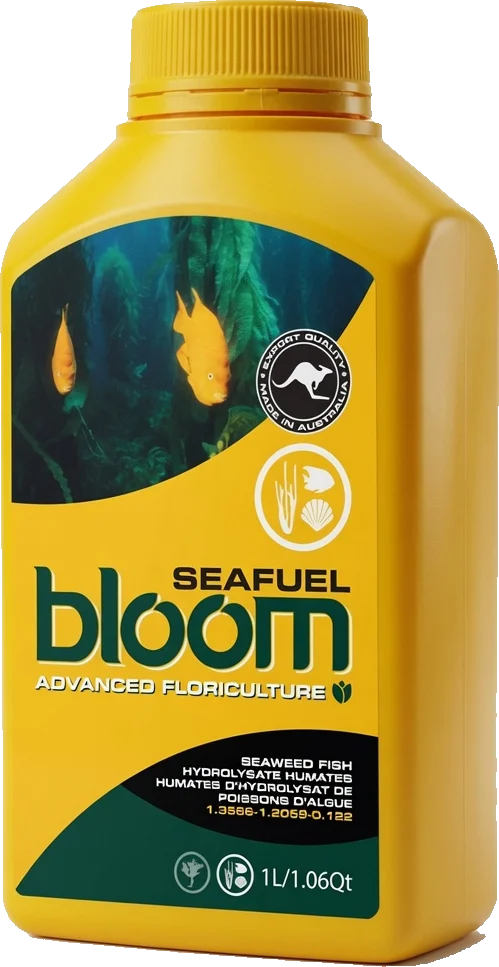
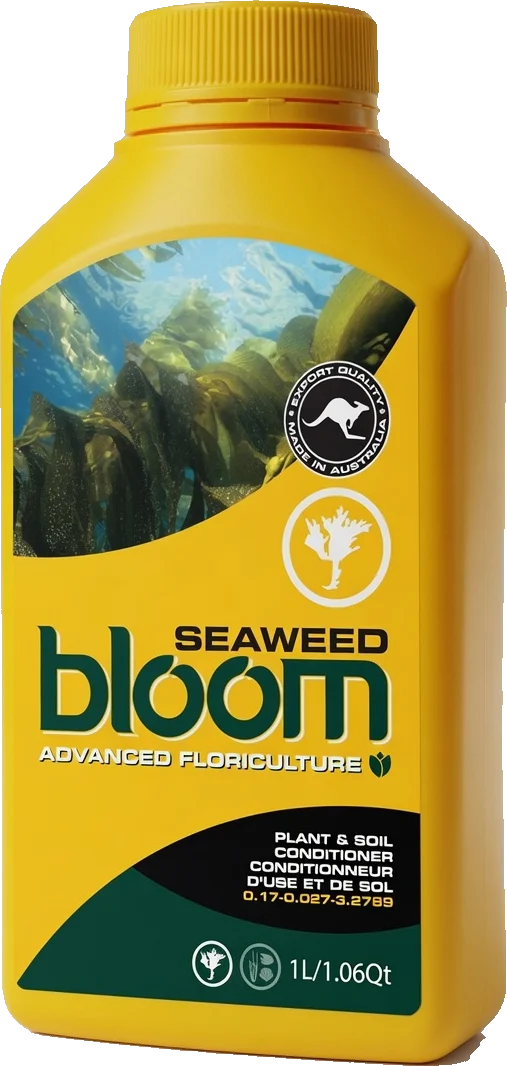
What it does. Seaweed is southern bull kelp; Seafuel is tuna and kelp. Both 1 ml/L weekly: Seaweed seedling through the flush, Seafuel clone through late flower, tapering at the flush.
Reviews of seaweed extracts report effects on root growth, nutrient uptake and stress tolerance across many crops. They don’t test these bottles, cannabis, or seaweed with inoculants.
How it stacks. Weekly tonics on top of the base, with the inoculants on their own rhythm. Nothing here changes the Great White, Orca or King Crab rate (our read).
Where each bottle sits in the cycle
Great White’s timing in grey, Bloom’s in yellow, across shared stages of the grow.
| Stage | Root | Veg | Flip | 3–4 | 5+ | Last 2 | Flush |
|---|---|---|---|---|---|---|---|
| Great White, per their pages | |||||||
| Great White (every 2–3 weeks) | |||||||
| Great White at cutting and transplant | |||||||
| Orca (each reservoir change) | |||||||
| King Crab (weekly) | |||||||
| Bloom, per Bloom’s weekly feed charts | |||||||
| Roots | |||||||
| Pre | |||||||
| Ultra | |||||||
| Phat (weeks 3 and 4) | |||||||
| Ooze (wk 5 to flush) | |||||||
| Final (with Ooze) | |||||||
| Seafuel | |||||||
| Seaweed · Humate · Sea Minerals | |||||||
| SWTNR | |||||||
| Cal-Mag | |||||||
| Groigen (foliar, as needed) | |||||||
| Florigen (foliar, as needed) | |||||||
| PK (as needed) | |||||||
| Silica | |||||||
Timing comes from each Great White product page. Great White goes on at seeds, cuttings and transplant, then repeats every 2–3 weeks at every stage, so the repeat is pale. Orca goes in at every reservoir change, start to finish. King Crab is weekly through veg and bloom. None of their pages mention the flush, so it’s left blank. Bloom’s bars follow its weekly feed charts; pale Bloom bars are as-needed bottles.
Where the programs complement each other
Their inoculants, Bloom’s base and additives
Great White sells no feed, and Bloom sells no inoculant. A Bloom base with Great White, Orca or King Crab is a full program with no doubled-up bottles (our read).
Humate and Roots alongside Great White
Humate and Roots run weekly in the same root zone the inoculants go into at transplant. Different jobs, same place (our read).
One shelf, two jobs
Great White and Bloom both sell through hydro stores. Neither range repeats the other, so a store can stock both without one taking the other’s spot (our read).
Already covered
- Mycorrhizal fungi. Great White powder and Orca liquid.
- Beneficial bacteria. All three products, King Crab on its own.
- Trichoderma. Great White powder.
- Seeds to harvest. Rates for seeds, cuttings, transplant, soil, coco and hydro.
Stays exactly as is
- Great White. Bloom has no microbial inoculant.
- Orca. Same, for reservoirs and drip lines.
- King Crab. Same, weekly through veg and bloom.
- Their rates and schedule. Bloom’s weekly chart doesn’t change them.
Their line, Bloom’s fit at a glance
Matched on job. Great White prints rates in teaspoons or ml per gallon; Bloom prints ml per litre on a weekly feed chart. Tap a tag to filter.
Their inoculant stays. Bloom’s bottles feed around it.
Made for clean reservoirs and drip lines. It stays.
Bacteria only, weekly. It stays on its own schedule.
Two-part bases for the whole cycle, or split veg and bloom.
10% humic acid in the root zone the inoculants work in.
Amino acids, B vitamins and fulvic acid, cuttings through flower.
Southern bull kelp, and a tuna and kelp tonic, through the cycle.
Carbohydrates and potassium, calcium and magnesium, and sea-water trace minerals.
Potassium silicate, labelled 0-0-4, veg through early flower.
One bottle for each stage, from mid veg to the finish.
Foliar sprays for veg and the flip, outside the root zone.
Background, science and sources
Who Great White are
Great White is a brand of Plant Revolution Inc., which says it has been family operated since 1999 and makes its products in the USA. Plant Revolution also runs Plant Success Organics for home and garden and Mycopro Ag for commercial farming. The pages we read don’t give a street address.
The Great White range is three inoculants: Great White powder, Orca liquid mycorrhizae and King Crab liquid bacteria. They sell direct online and through stores and distributors, publish a feed chart and a calculator, and run a commercial program for larger growers. Plant Revolution says its formulas are lab tested against label counts.
Sources: Great White home · Plant Revolution · Commercial · Distributors
What each company brings
Great White: Three inoculants covering mycorrhizal fungi, Bacillus and other bacteria, and Trichoderma, in powder and liquid, with rates for seeds through flower in soil, coco and hydro.
Bloom: one additive for each stage of the crop, seaweed, humic and sea mineral inputs, foliar sprays, and weekly feed charts for soil, coco and hydro. Rates and timing are on every product page.
Cropping Solutions, the other brand under Agricultural Organics, isn’t part of this report.
Dose basis: how each side counts
Great White prints rates per gallon. Great White powder is 1 tsp (3.3 g) per 10 gallons in hydro, or per 2 gallons in soil and coco. Orca is 5 ml per 10 gallons (about 0.13 ml/L) at each reservoir change. King Crab is 1/2 ml per gallon (about 0.13 ml/L) weekly. Bloom prints ml per litre on a weekly feed chart.
These are live-organism counts, not nutrient analyses, so their rates and Bloom’s don’t compare on the same scale.
Mix calculator
Rates as printed on each company’s page (1 US gallon is 3.785 L). Bloom’s rates are per litre of nutrient solution, dosed weekly per its feed charts. Pick a product and your tank size.
Sources, all viewed 5 November 2026
Great White: Home · Great White · Orca · King Crab · Commercial · Distributors · Plant Revolution
Bloom: Roots · Pre · Ultra · Phat · Ooze · Final · Seafuel · Seaweed · SWTNR · Humate · Cal-Mag · Groigen · Florigen · Sea Minerals · PK · Euro · Grow · Flower · Silica · OrganiShield
Last checked 5 November 2026. Public information only. Not affiliated with, endorsed by or approved by Great White; product names belong to their owners. Please confirm current details with the manufacturer. Corrections: nathan@bloomyellowbottles.com. All Fit Reports