
Emerald Harvest and Bloom
Emerald Harvest on the left, Bloom on the right, matched on the job each bottle does. Their bases and cleaners stay. Here’s where the two lines meet, and where Bloom adds a step.
Last checked 5 November 2026 · Public information only
This Fit Report is a summary of publicly available information about Emerald Harvest and its products, taken from their own website, labels and published material as of 5 November 2026. We’ve linked each source so you can check it yourself. Rates are as printed on each company’s own pages; we don’t show prices. It isn’t affiliated with, endorsed by or approved by Emerald Harvest, and product names belong to their owners. Products, rates and claims change, so please confirm current details with the manufacturer before making any decision. Spotted something out of date? Email nathan@bloomyellowbottles.com and we’ll correct it.
One bloom bottle there, one per stage here.
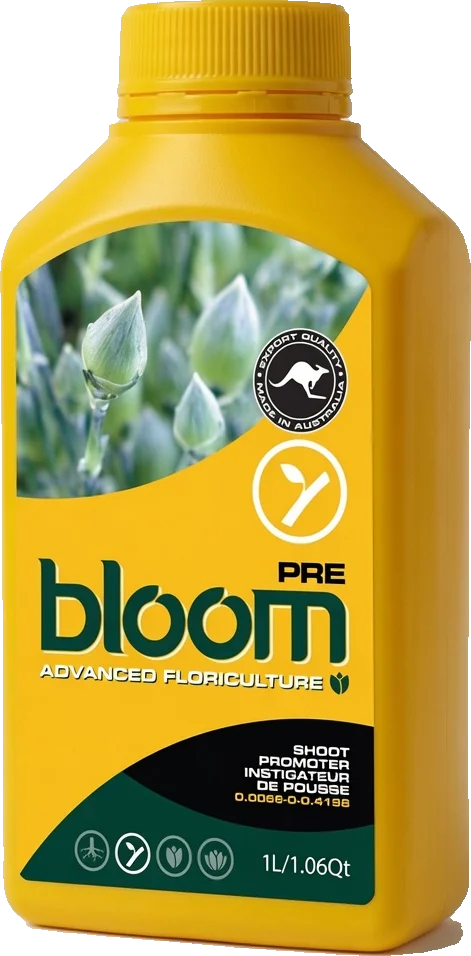
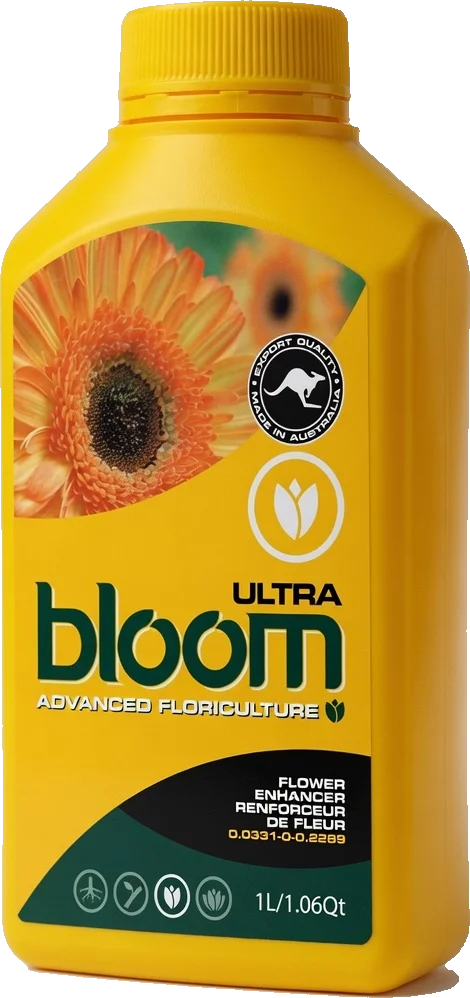
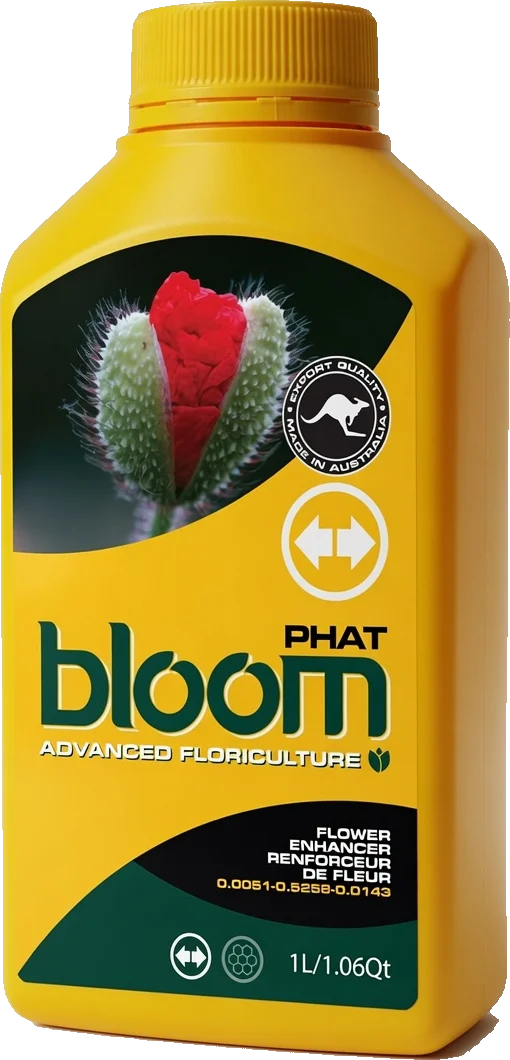
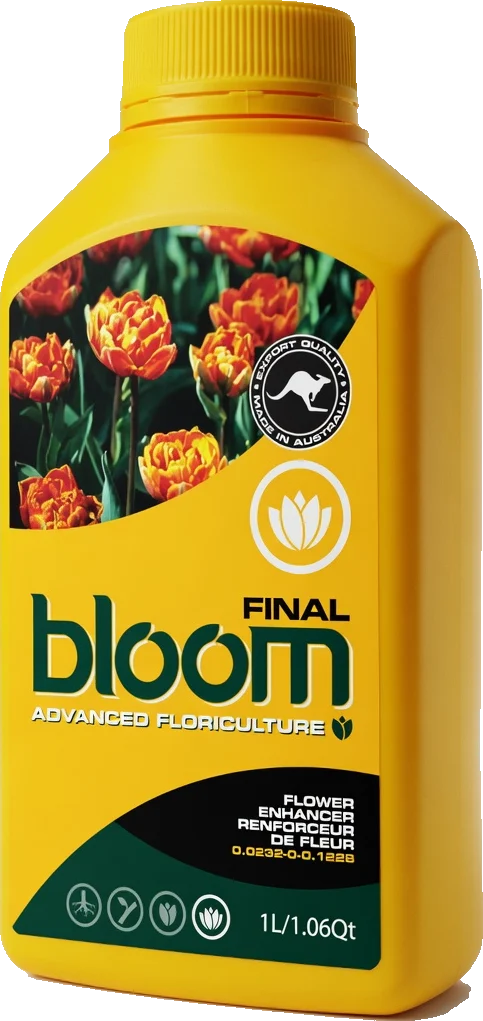
Emerald Harvest runs King Kola as a single booster through budding, flowering and ripening, with Emerald Goddess as an all-life tonic. Bloom splits the same ground into weekly steps: Pre in mid veg, Ultra at the flip, Phat in weeks 3 and 4, Final for the last two. That’s the real difference, and it’s a planning call, not a stack of doubles.
- Stays as is: Cali Pro or Grow Micro Bloom, the dry line, Root Wizard, pH Up and Down, Hydra Clear.
- Both have one: bloom booster, carbs, kelp tonic, cal-mag and silica. Run one of each.
- Not on their list: a mid-veg or finish step, sea minerals, a fish input and a cutting dip.
Emerald Harvest and Bloom in short
Cali Pro or Grow Micro Bloom, the dry line, Root Wizard, pH Up and Down, Hydra Clear.
King Kola, Honey Chome, Emerald Goddess, their Cal-Mag and Sturdy Stalk each share a job with Bloom.
Pre in mid veg, Final at the finish, Seafuel, Sea Minerals and Roots as a cutting dip.
Their line, Bloom’s fit at a glance
Matched on job, not NPK. Emerald Harvest’s product pages point to their feed chart for rates, so their side shows the analysis and the stage. Tap a tag to filter.
Keep your base. Bloom’s additives sit on top of it.
Their page pitches it at commercial-scale growing. It stays, and Bloom’s liquids run alongside.
A microbe product. Nothing in Bloom’s range does this job, so it stays.
Bloom doesn’t make pH adjusters, so yours stay.
Keeps feed lines clean. Bloom has no enzyme product or line cleaner.
Both cover bloom. King Kola is one bottle the whole way; Bloom splits it by week. Pick a side, or plan the stack.
Both put carbohydrates in the tank. SWTNR adds potassium. Run one.
Kelp and humic in one bottle there, two bottles here. Humate is 10% humic acid. Plan the total.
Same job. Theirs goes in on water days only, per their chart. Run one.
Both are potassium silicate. Their chart says never in the same watering as their Cal-Mag. Run one silica.
Pre in veg weeks 2–3, Final for the last two weeks, running alongside Ooze.
Trace minerals from sea water, and a tuna and kelp tonic from clone to late flower.
Amino acids, B vitamins and fulvic acid, from the cutting tray into flower.
Where the programs complement each other
Pre before King Kola, Final at the end
King Kola runs budding to ripening and their list has nothing for mid veg or a finishing step. Pre at 1 ml/L weekly in veg weeks 2–3, and Final for the last two weeks, sit either side of it (our read).
Liquids on top of a dry base
Dry Grow Bloom and Edge are pitched at commercial-scale growing, and Bloom makes no dry products. Seafuel, Sea Minerals and Humate are small weekly liquid doses that can ride on top of a dry base (our read).
Roots at the cut, Root Wizard after
Their list has no cutting dip. Roots goes in at 1 ml/L as a dip, and Root Wizard keeps its two applications. Different jobs, so they can run in the same crop (our read).
Why each one fits
What the Bloom product does, the research behind that kind of input, and where it sits in a program that already runs.
A step in mid veg and at the finish
What it does. Pre goes in during veg weeks 2–3. Final runs the last two weeks, including the flush, alongside Ooze. Both are 1 ml/L weekly. These are timing tools, so there’s no study cited for them here.
How it stacks. King Kola covers budding through ripening on their side. Pre sits before it starts, and Final lines up with their ripening weeks, so plan the last fortnight with both labels in front of you (our read).
Tuna, kelp and sea minerals
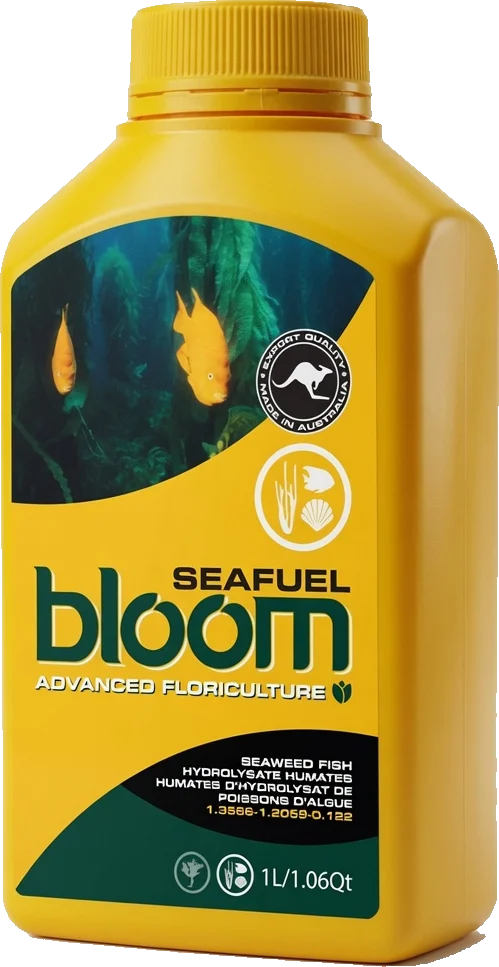
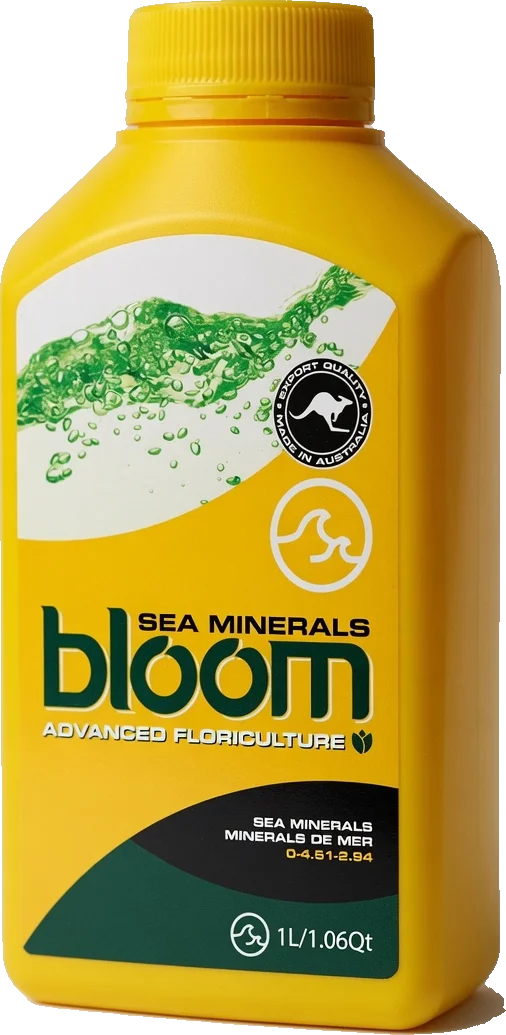
What it does. Seafuel is tuna and kelp at 1 ml/L weekly, clone through late flower, tapering at the flush. Sea Minerals is trace minerals from sea water at 0.13 ml/L weekly, veg to bloom.
A 2023 review of protein hydrolysates, the group fish inputs belong to, links them to nutrient uptake and assimilation. The authors say the mechanisms are still being worked out, and it doesn’t test any product.
How it stacks. Emerald Goddess already carries kelp, so Seafuel adds the fish side rather than more kelp (our read). Sea Minerals is a tiny dose on top of whichever base you run.
A dip at the cut
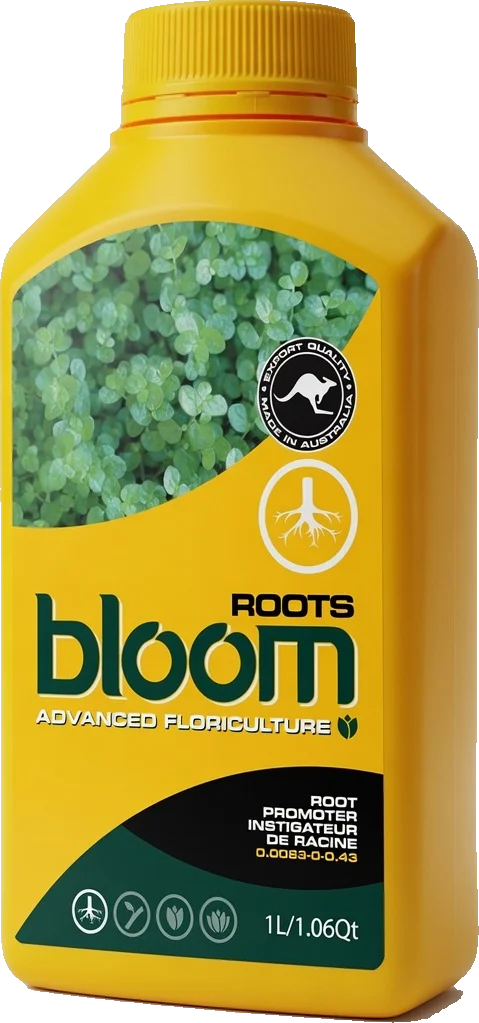
What it does. Roots is amino acids, B vitamins and fulvic acid. It works as a 1 ml/L cutting dip, then 0.5 ml/L weekly through flower, stopping in the final 1–2 weeks.
How it stacks. Root Wizard is a microbe product with two applications a crop, and Roots isn’t a microbe product, so they do different jobs. Our read: run Roots from the cutting and keep Root Wizard on its own schedule.
Where each bottle sits in the cycle
Emerald Harvest’s timing in grey, Bloom’s in yellow, across shared stages of the grow.
| Stage | Root | Veg | Flip | 3–4 | 5+ | Last 2 | Flush |
|---|---|---|---|---|---|---|---|
| Emerald Harvest, per their pages | |||||||
| Cali Pro, grow parts | |||||||
| Cali Pro, bloom parts | |||||||
| Emerald Goddess | |||||||
| King Kola | |||||||
| Cal-Mag (EH) · Sturdy Stalk | |||||||
| Bloom, per Bloom’s weekly feed charts | |||||||
| Roots | |||||||
| Pre | |||||||
| Ultra | |||||||
| Phat (weeks 3 and 4) | |||||||
| Ooze (wk 5 to flush) | |||||||
| Final (with Ooze) | |||||||
| Seafuel | |||||||
| Seaweed · Humate · Sea Minerals | |||||||
| SWTNR | |||||||
| Cal-Mag | |||||||
| Groigen (foliar, as needed) | |||||||
| Florigen (foliar, as needed) | |||||||
| PK (as needed) | |||||||
| Silica | |||||||
Emerald Goddess is shown across the cycle because its page says throughout the life cycle and good for cuttings. King Kola’s page says budding, flowering and ripening. Their feed chart puts Cal-Mag and Sturdy Stalk on water days only, when needed, early veg to late flower, so they’re pale. Honey Chome and Root Wizard pages don’t name a stage, so they’re left off. Placing Cali Pro’s grow and bloom parts is our read. Bloom’s bars follow its weekly feed charts; pale Bloom bars are as-needed bottles.
Put it side by side
Where both ranges have a product for the same job, the fair answer is a test in your own room. Here’s what to watch and how to keep it fair.
Keeping it fair
- Same plants. Clones off the same mother, same cultivar, same age.
- Same room. Same light, climate, media, pot size and watering.
- Same base. Keep the base feed and EC the same on both sides.
- One change. Change only the product being tested, and write down what you see each week.
Already covered
- Bloom boost. King Kola runs budding to ripening, the ground Ultra, Phat and PK split by week.
- Carbs. Honey Chome and SWTNR do the same job. Run one.
- Kelp and humic. Emerald Goddess has both in one bottle; Seaweed and Humate do it in two.
- Cal-mag and silica. Both ranges have them. Run one of each.
Stays exactly as is
- Cali Pro or Grow Micro Bloom. Your base stays.
- Dry Grow Bloom and Edge. Bloom has no dry products.
- Root Wizard. Bloom has no microbial inoculant.
- pH Up and Down. Bloom has no pH adjusters.
- Hydra Clear. Bloom has no enzyme product or line cleaner.
Background, science and sources
Who Emerald Harvest are
Emerald Harvest started in 2015 and is based in Santa Rosa, California. Their About page lists Rob Higgins as CEO, Sharon Higgins as President and Hollee Wark as General Manager. The homepage tagline is “Precision by the pound.”
The range is a 2-part base (Cali Pro), a 3-part base (Grow Micro Bloom), a dry line (Grow Bloom and Edge), four supplements (King Kola, Honey Chome, Emerald Goddess, Root Wizard) and four additives (Cal-Mag, Sturdy Stalk, pH Up and Down, Hydra Clear). Their About page names hydro retail stores as their direct customers, and their distributor page lists Global Garden, Hydrofarm and BFG Supply in the US. Feed charts come in five languages, in ml per litre and ml per gallon.
Sources: Home · About · Distributors · Feed charts
What each company brings
Emerald Harvest: Liquid 2- and 3-part bases, a dry base line, a bloom booster, a carb feed, a kelp tonic, a microbial root product, cal-mag, potassium silicate, pH adjusters, an enzyme line cleaner, and feed charts in five languages.
Bloom: one additive for each stage of the crop, seaweed, humic and sea mineral inputs, foliar sprays, and weekly feed charts for soil, coco and hydro. Rates and timing are on every product page.
Cropping Solutions, the other brand under Agricultural Organics, isn’t part of this report.
Dose basis: how each side counts
Emerald Harvest’s product pages send you to the feed chart for rates, and the chart runs a week-by-week program through veg and a 9-week bloom. Its notes put Cal-Mag and Sturdy Stalk at 0.5–1.25 ml per litre, when needed, on water days only, and never in the same watering. Bloom prints ml per litre on a weekly feed chart.
Because their Cal-Mag and Sturdy Stalk go in on water days and Bloom’s go in weekly, the same number on each side isn’t the same amount over a week. Check how often you water before comparing.
Mix calculator
Rates as printed on each company’s page (1 US gallon is 3.785 L). Bloom’s rates are per litre of nutrient solution, dosed weekly per its feed charts. Pick a product and your tank size.
Seaweed extractsWell supported
Ali, Ramsubhag and Jayaraman (2021) review seaweed extracts as biostimulants, covering effects on growth and yield and on tolerance to stresses like drought, salt and cold.
Why it matters here: Emerald Goddess and their Cal-Mag list kelp extract, and so do Bloom’s Seaweed and Seafuel. The review backs kelp as an input, not either brand’s bottle, so it’s worth knowing how many kelp sources a stack already has (our read).
Bacillus in the root zoneWell supported
Radhakrishnan, Hashem and Abd_Allah (2017) review Bacillus bacteria as plant growth promoters, including making phosphorus and nitrogen more available and helping plants cope with drought and salt.
Why it matters here: Root Wizard lists Bacillus strains, and Bloom has no microbe product. That’s why it sits in the keep column.
Radhakrishnan et al. (2017), Frontiers in Physiology (review)
SiliconEmerging
Deshmukh, Ma and Bélanger (2017) round up silicon research and say there’s no conclusive evidence on exactly how it helps stress tolerance. Most work so far is in grasses like rice.
Why it matters here: Sturdy Stalk and Bloom Silica are both potassium silicate. The evidence is still building, and since they do the same job, a grower would run one (our read).
Deshmukh et al. (2017), Frontiers in Plant Science (editorial)
Sources, all viewed 5 November 2026
Emerald Harvest: Home · About · Distributors · Feed charts · Feed chart, ml per litre (PDF) · Cali Pro · Grow Micro Bloom · Dry Grow Bloom · Edge · King Kola · Honey Chome · Emerald Goddess · Root Wizard · Cal-Mag (Emerald Harvest) · Sturdy Stalk · pH Up and Down · Hydra Clear
Bloom: Roots · Pre · Ultra · Phat · Ooze · Final · Seafuel · Seaweed · SWTNR · Humate · Cal-Mag · Groigen · Florigen · Sea Minerals · PK · Euro · Grow · Flower · Silica · OrganiShield
Last checked 5 November 2026. Public information only. Not affiliated with, endorsed by or approved by Emerald Harvest; product names belong to their owners. Please confirm current details with the manufacturer. Corrections: nathan@bloomyellowbottles.com. All Fit Reports