
Optic Foliar and Bloom
Optic Foliar works on the leaf, Bloom mostly works in the tank. Two foliar jobs overlap. The rest sits side by side in one program.
Last checked 5 November 2026 · Public information only
This Fit Report is a summary of publicly available information about Optic Foliar and its products, taken from their own website, labels and published material as of 5 November 2026. We’ve linked each source so you can check it yourself. Rates are as printed on each company’s own pages; we don’t show prices. It isn’t affiliated with, endorsed by or approved by Optic Foliar, and product names belong to their owners. Products, rates and claims change, so please confirm current details with the manufacturer before making any decision. Spotted something out of date? Email nathan@bloomyellowbottles.com and we’ll correct it.
They spray the leaf, Bloom feeds the root zone.
Every product on Optic Foliar’s list is a spray: a carrier called Transport, nutrition sprays for veg and flower, flower-initiation sprays, late-flower sprays and a bug spray. Bloom’s range is mostly weekly root-zone additives, plus two foliars of its own. So most of it stacks rather than overlaps.
- Stays as is: Transport, the late-flower ATAK and Elium sprays, and the whole spray schedule.
- Both have one: veg and flip foliars. Groigen and Florigen go on lights off; Optic’s sprays go on lights on.
- Not on their list: anything for the tank: base, stage additives, kelp, humic, cal-mag, silica and PK.
Where each bottle sits in the cycle
Optic Foliar’s timing in grey, Bloom’s in yellow, across shared stages of the grow.
| Stage | Root | Veg | Flip | 3–4 | 5+ | Last 2 | Flush |
|---|---|---|---|---|---|---|---|
| Optic Foliar, per their pages | |||||||
| REV (every other day) | |||||||
| Watts (2–3 times a week) | |||||||
| Overgrow RTU | |||||||
| Shift | |||||||
| ATAK and Elium | |||||||
| Evios (as needed) | |||||||
| Bloom, per Bloom’s weekly feed charts | |||||||
| Roots | |||||||
| Pre | |||||||
| Ultra | |||||||
| Phat (weeks 3 and 4) | |||||||
| Ooze (wk 5 to flush) | |||||||
| Final (with Ooze) | |||||||
| Seafuel | |||||||
| Seaweed · Humate · Sea Minerals | |||||||
| SWTNR | |||||||
| Cal-Mag | |||||||
| Groigen (foliar, as needed) | |||||||
| Florigen (foliar, as needed) | |||||||
| PK (as needed) | |||||||
| Silica | |||||||
Timing comes from each Optic Foliar product page. REV runs up to week 6 of flower and Watts up to week 4; Overgrow up to week 6, so it fades. Shift’s main window is the first two weeks of flower, usable to late flower. ATAK and Elium run mid flower to harvest. Evios is weekly or as needed and late-flower safe, so it’s pale (our read). Bloom’s bars follow its weekly feed charts; pale Bloom bars are as-needed bottles.
Why each one fits
What the Bloom product does, the research behind that kind of input, and where it sits in a program that already runs.
Kelp, tuna and humic in the feed
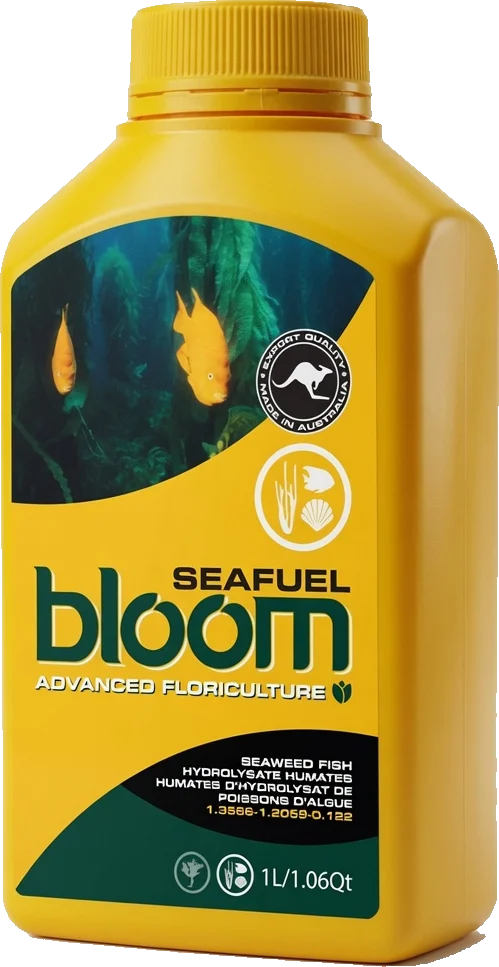
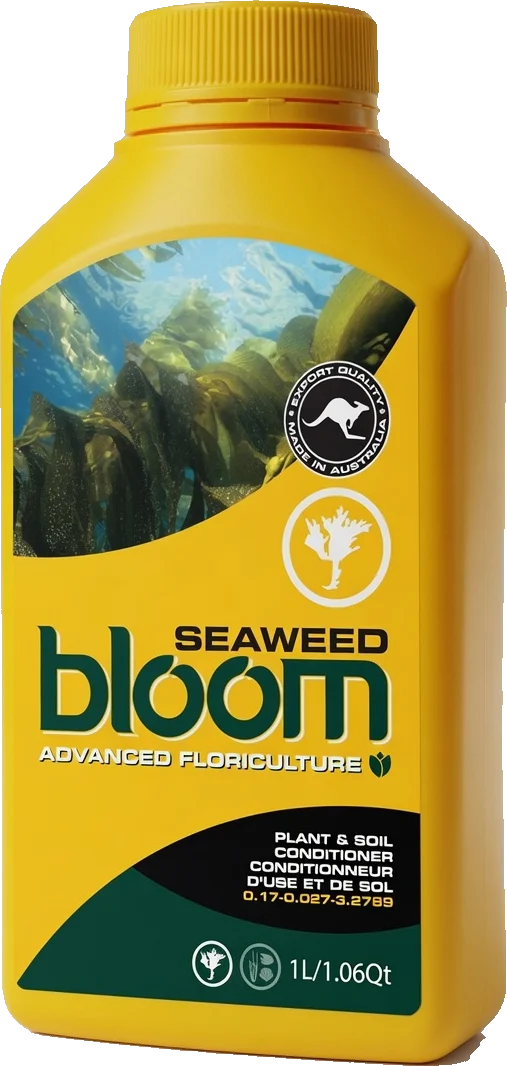
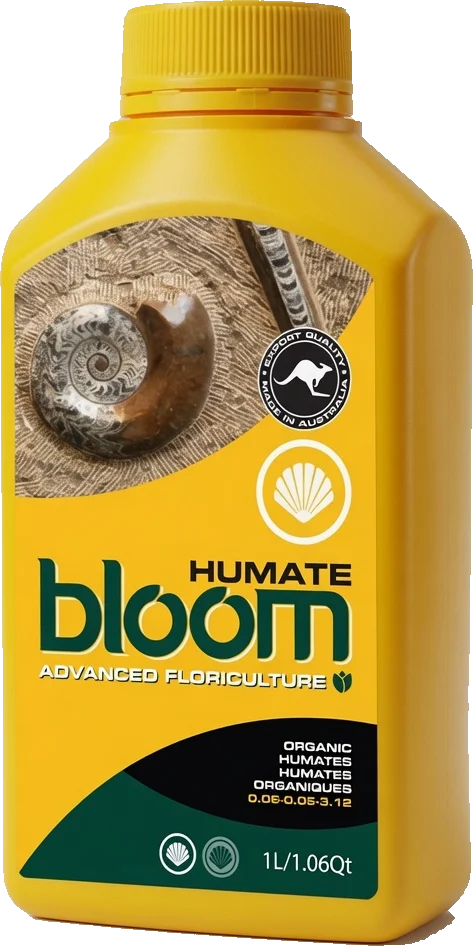
What it does. Seaweed is southern bull kelp and Seafuel is tuna and kelp, both 1 ml/L weekly. Humate is 10% humic acid at 2.5 ml/L weekly, seedling through flush.
Reviews link seaweed extracts to growth and stress tolerance, and humic substances to more lateral roots and nutrient uptake. None test these bottles or cannabis.
Ali et al. (2021), Plants (review) · Canellas et al. (2015), Scientia Horticulturae (review)
How it stacks. These go in the root zone, so they run alongside Optic’s sprays without crossing paths. Overgrow’s page even suggests sea extracts at quarter strength in the spray.
Tank additives for each stage
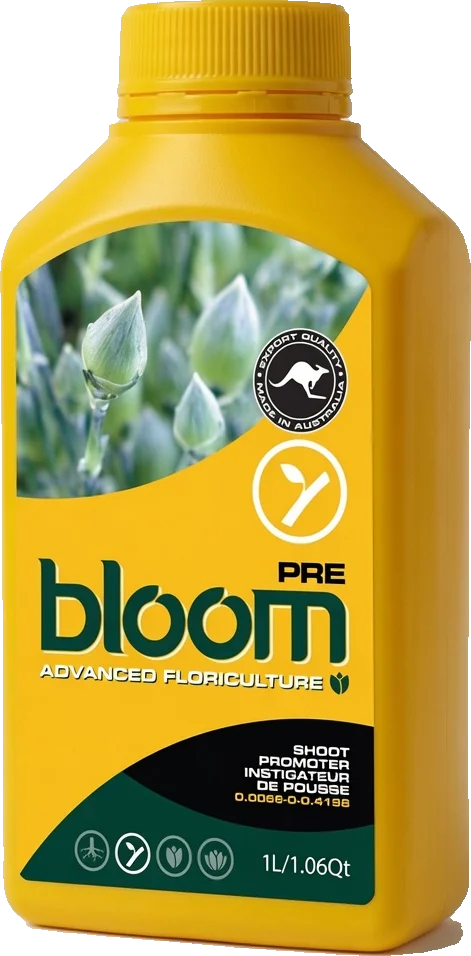
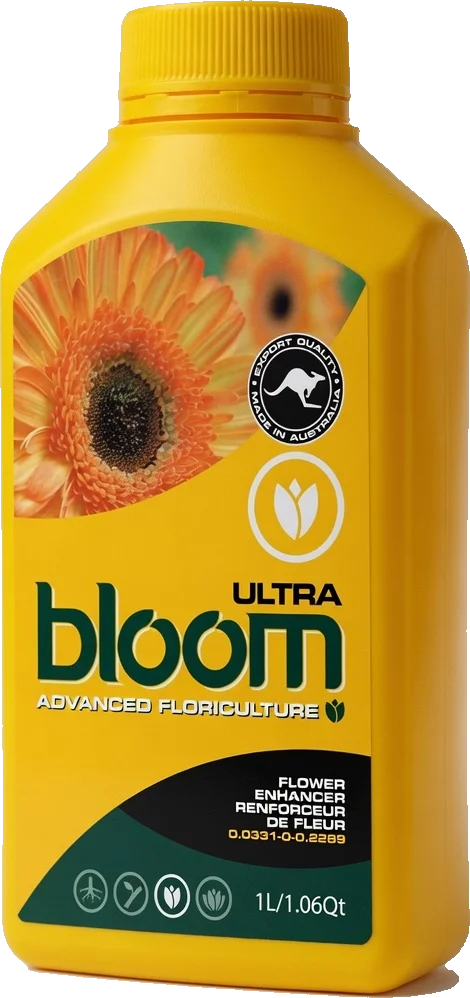
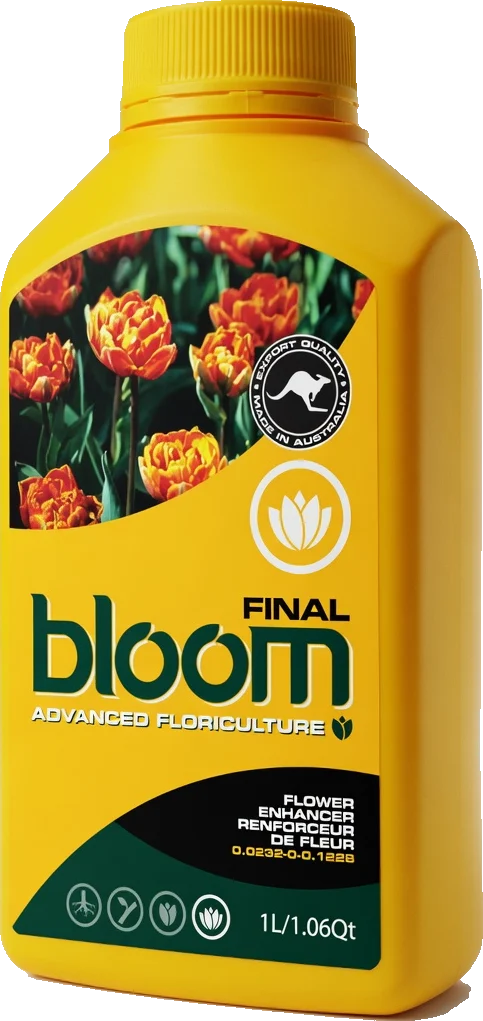
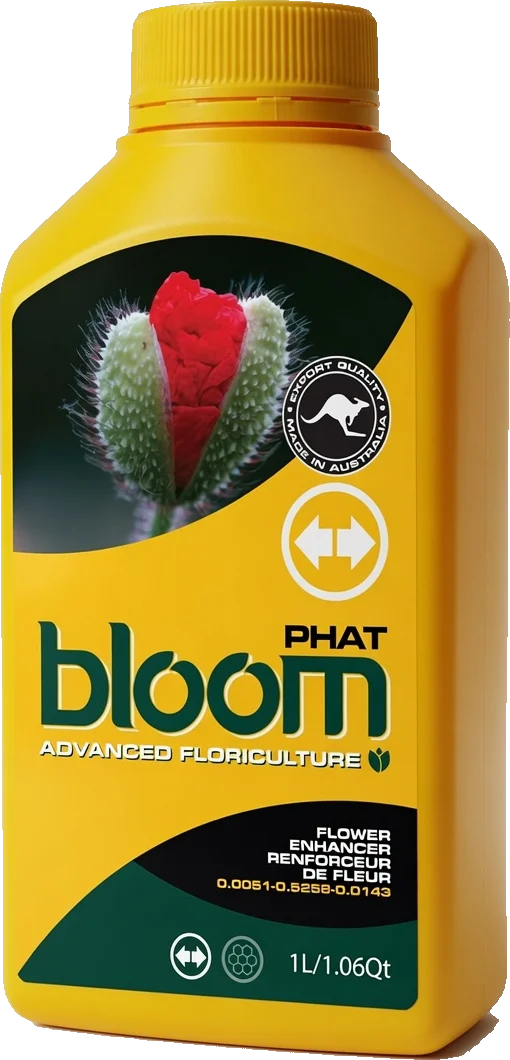
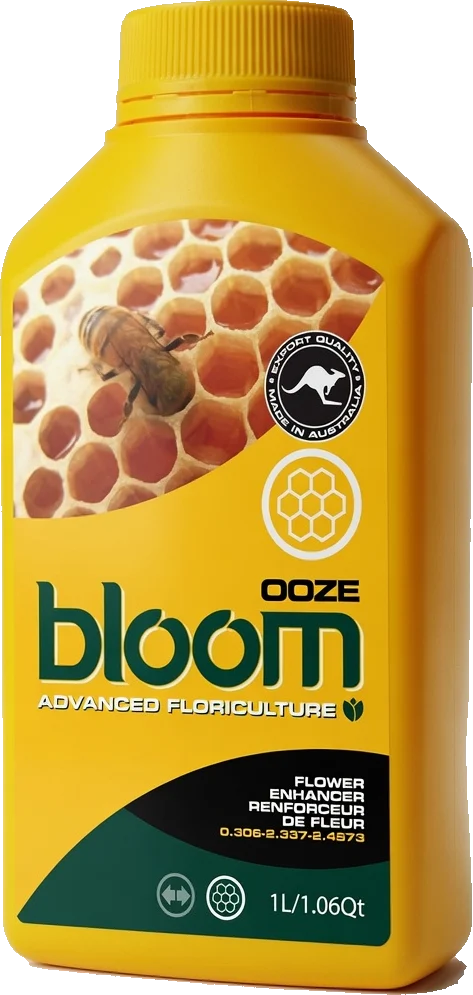
What it does. Pre in mid veg, Ultra at the flip, Phat in flower weeks 3 and 4, Ooze from week 5 through the final flush, overlapping Final in the last two weeks. 1–2.5 ml/L weekly. These are timing tools, so there’s no study cited for them here.
How it stacks. Optic’s sprays run lights on. Bloom’s stage bottles go in the weekly feed, so the two schedules sit together (our read).
Cal-mag, silica and PK
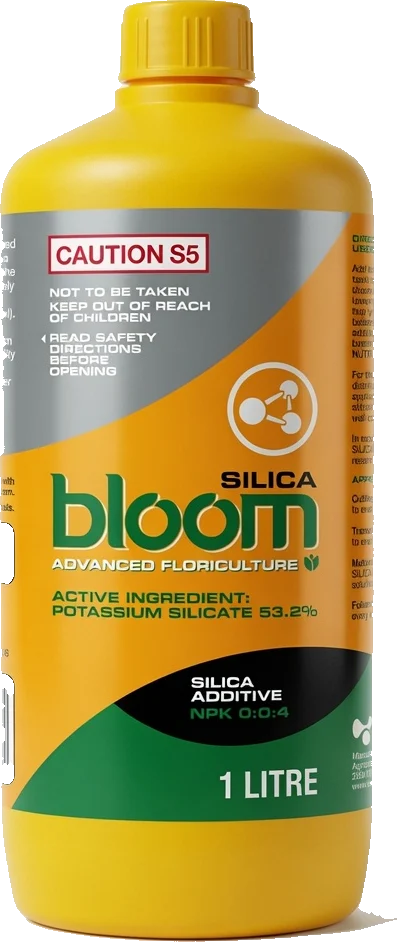
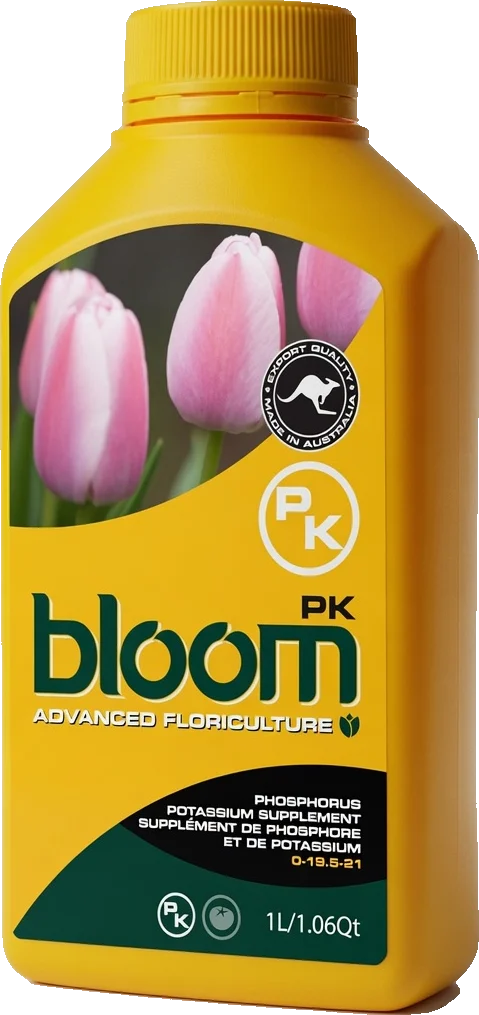
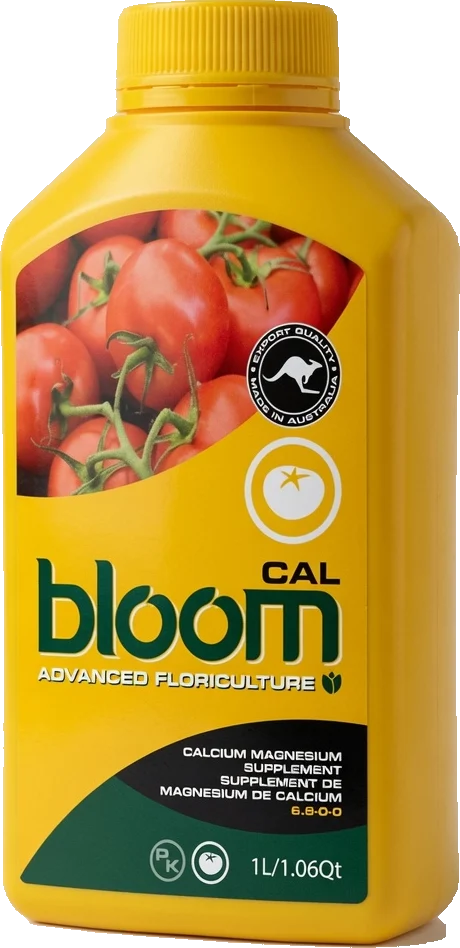
What it does. Cal-Mag at 1 ml/L weekly in soil, coco or hydro. Silica at 0.33 ml/L weekly, added first, veg through early flower. PK at 1 ml/L, an as-needed bottle around flower week 5.
A review of silicon in plants covers its role in easing salinity, drought and other stress. It doesn’t test Bloom’s Silica.
How it stacks. Leaf sprays and the root zone feed different ends of the plant. These are root-zone minerals, so Optic’s spray plan stays as it is.
Their line, Bloom’s fit at a glance
Matched on job. Optic Foliar prints ml per litre of spray; Bloom prints ml per litre of nutrient solution on a weekly chart, and its foliars at 20 ml/L. Tap a tag to filter.
Bloom has no spray adjuvant, so Transport stays.
Both are veg foliars. Optic’s go on lights on; Groigen lights off. Plan the timing, or pick one.
Both feed through the leaf in veg. Overgrow carries on into flower; Groigen stops at the flip.
Both target the flip. Optic says to cut nutrition by half with theirs; check both labels before stacking.
All general foliar feeds. Pick a spray plan that doesn’t double up on the leaf (our read).
Bloom has no late-flower spray, so these stay on the schedule.
Both are pest sprays. Read both labels for crop stage and timing before choosing.
A two-part base for the tank, if you’re after one.
Southern bull kelp, tuna and kelp, and 10% humic acid, in the feed.
One bottle for each stage, mid veg to the final flush.
Calcium and magnesium, potassium silicate, and an as-needed PK bottle.
Roots for cuttings onward; trace minerals from sea water, veg to bloom.
Carbohydrates and potassium in the feed.
Where the programs complement each other
Their sprays, Bloom’s tank
Optic Foliar is spray-only. Bloom’s base, stage additives, kelp, humic and minerals go in the weekly feed, so a grower can run both programs at once.
ATAK and Elium where Bloom’s foliars stop
Groigen and Florigen stop once buds set. Optic’s late-flower sprays pick up from mid flower to harvest, alongside Bloom’s Ooze and Final in the tank.
Two spray plans, one test
REV, Watts and Shift sit near Groigen and Florigen. One goes on lights on, the other lights off, so it’s worth a fair test before running both (our read).
Put it side by side
Where both ranges have a product for the same job, the fair answer is a test in your own room. Here’s what to watch and how to keep it fair.
Keeping it fair
- Same plants. Clones off the same mother, same cultivar, same age.
- Same room. Same light, climate, media, pot size and watering.
- Same base. Keep the base feed and EC the same on both sides.
- One change. Change only the product being tested, and write down what you see each week.
Already covered
- Spray carrier. Transport, mixed into their sprays at 7.5 ml/L.
- Veg and flower nutrition sprays. REV, Watts, Overgrow and Portel.
- Flower initiation. Shift in early flower.
- Late flower and pests. ATAK, Elium and the Evios bug spray.
Stays exactly as is
- Transport. Bloom has no spray carrier.
- ATAK and Elium. Bloom has no late-flower spray.
- Their spray schedule. Bloom’s tank additives don’t change it.
- REV, Watts, Shift and Evios. If they’re working, keep them, or test Bloom’s next to them.
Background, science and sources
Who Optic Foliar are
Optic Foliar makes foliar sprays. Its site gives a mailing address in Delta, British Columbia, Canada, and names founder Dinesh Dholliwar, who oversees international sales. The retailers page says it works with retailers across Canada, the USA, Europe and Australia.
The range is a spray carrier (Transport), nutrition sprays (REV, Watts, Overgrow RTU, Portel), a flower-initiation spray (Shift), late-flower sprays (ATAK and Elium, plus ready-to-use versions) and a plant-extract bug spray (Evios). Product pages link SDS sheets and metals and pesticide analyses.
What each company brings
Optic Foliar: A spray carrier, veg and flower foliar nutrition, flower-initiation and late-flower sprays, a bug spray, and spray directions for every stage from cuttings to harvest.
Bloom: one additive for each stage of the crop, seaweed, humic and sea mineral inputs, foliar sprays, and weekly feed charts for soil, coco and hydro. Rates and timing are on every product page.
Cropping Solutions, the other brand under Agricultural Organics, isn’t part of this report.
Dose basis: how each side counts
Optic Foliar prints rates per litre of spray: 7.5 ml/L of Transport, REV and Watts, and 10 ml/L of Portel, Evios and Elium, with Transport added. Bloom’s Groigen and Florigen are 20 ml/L of spray. Bloom’s other products are ml per litre of nutrient solution on a weekly chart.
Spray rates and tank rates aren’t the same thing, so a spray number and a feed number can’t be compared side by side.
Mix calculator
Rates as printed on each company’s page (1 US gallon is 3.785 L). Bloom’s rates are per litre of nutrient solution, dosed weekly per its feed charts. Pick a product and your tank size.
How leaves take up nutrientsWell supported
Fernández and Brown (2013) review what happens to nutrients sprayed on leaves. Uptake runs through the cuticle and, in at least some species, the stomata, and the result depends on the spray, the weather and the leaf itself.
Why it matters here: both companies sell foliar sprays, and both print their own timing. The review is general and doesn’t test either range.
Fernández and Brown (2013), Frontiers in Plant Science (review)
Sources, all viewed 5 November 2026
Optic Foliar: Home · About · Retailers · Transport · REV · Watts · Overgrow RTU · Portel · Shift · ATAK · Elium · Elium RTU · Evios
Bloom: Roots · Pre · Ultra · Phat · Ooze · Final · Seafuel · Seaweed · SWTNR · Humate · Cal-Mag · Groigen · Florigen · Sea Minerals · PK · Euro · Grow · Flower · Silica · OrganiShield
Last checked 5 November 2026. Public information only. Not affiliated with, endorsed by or approved by Optic Foliar; product names belong to their owners. Please confirm current details with the manufacturer. Corrections: nathan@bloomyellowbottles.com. All Fit Reports