Years building your soil.
Not risking it now.
Living-soil growers won’t pour an unknown bottle into something they spent years building, and fair enough. This is how six of them use Bloom over the top, and a very clear statement of what Bloom is not.

 A living-soil grower’s own run
Why soil growers stay wary.
Fungi, bacteria and everything else in the bed take seasons to build. A harsh input can knock that back far quicker than it built up.
Plenty of bottles lean on the word. Growers who care want to see exactly what’s in it before it goes near the bed.
Nutrients come through the biology on its own schedule. When the plant needs more than the bed can give in a week, the gap shows.
Sits on top of what you built.
Bloom is not USDA-certified organic. It’s made from marine, humic and plant extracts and used over the top of a soil program. Better you hear that from us first.
Six growers in Bloom’s record run teas, living soil or organic programs. They use Bloom the way they’d use any amendment: over the top, carefully, watching what happens. Bloom products are additives over an existing feed, and for a living-soil grower that’s the only acceptable shape.
We don’t overclaim. Phat and Ooze declare boric acid and sodium molybdate as their boron and molybdenum sources, and we’d rather you hear that from us too.

Same base, one with Bloom.
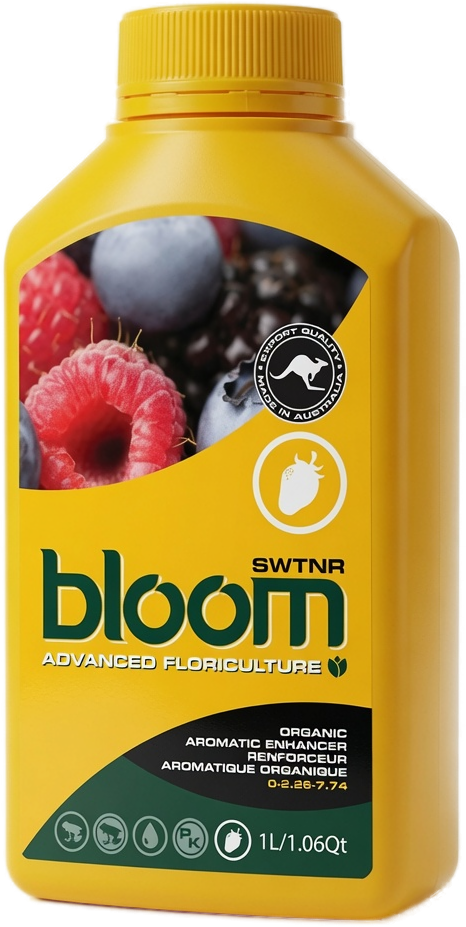
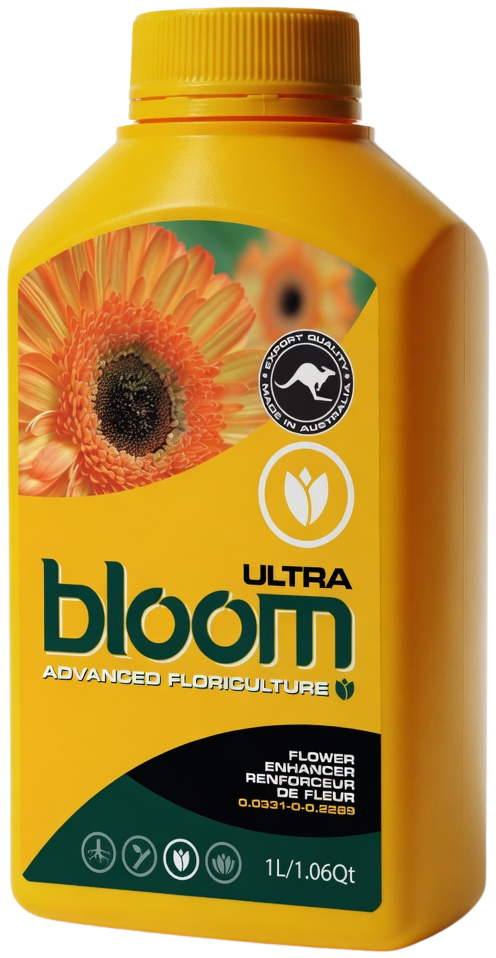
One grower split two plants on the same organic base: one with Bloom on top, one with no other inputs. He ran Roots and SWTNR, then Ultra into flower.

Used their own way.
One dips clones in a 12-gallon Roots batch. One adds Sea Minerals to compost tea. The record shows adaptation, not a schedule.

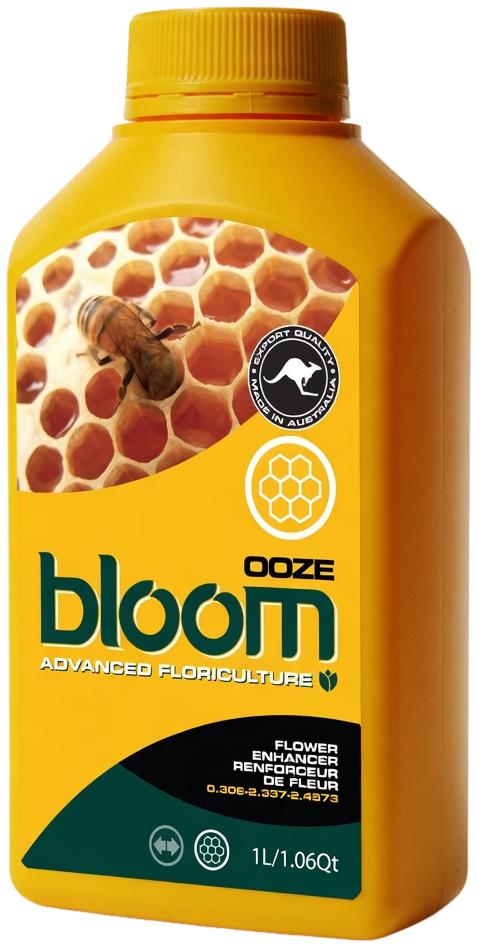
What’s on the label
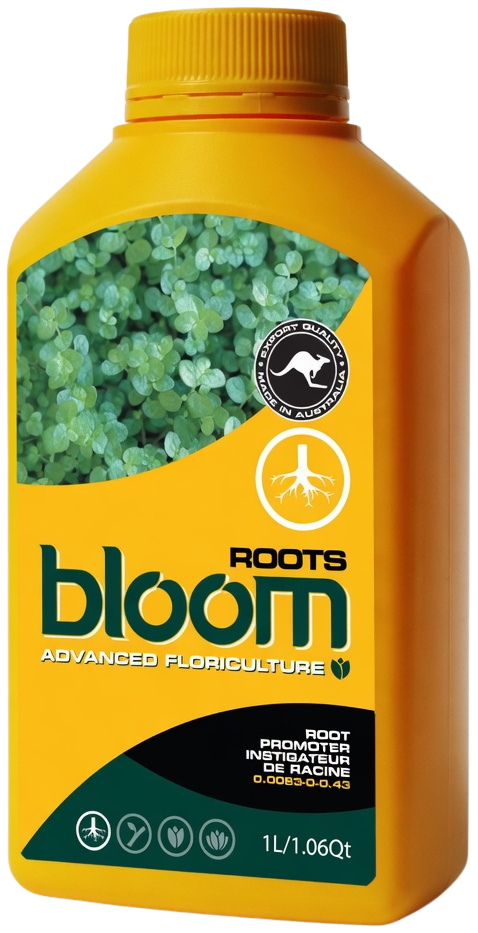
- Roots: derived from Durvillaea potatorum (southern bull kelp). Also contains 0.075% humic acid from leonardite and 0.054% vitamin B1.
- Ooze: 0.306-2.337-2.4573 guaranteed analysis. Derived from molasses, Ahnfeltia plicata, Laminaria japonica, boric acid and sodium molybdate. Also contains 0.075% humic acid and 0.054% vitamin B1.
Want the full input list for any bottle? Ask Nate and you’ll get it.
We can’t yet tell a living-soil grower what this does to their soil biology. That’s the gap, and it’s the one living-soil growers care about most.
Sources
- Bloom grower review records, counted 30 Oct 2026: 6 growers on record run Bloom inside organic, living-soil or tea-based programs.
- Bloom product labels: no organic certification claim; Phat and Ooze declare boric acid and sodium molybdate.
- Bloom product labels, Agricultural Organics (Aust) P/L, Green Fields, South Australia.
Soil growers in their own words.
Quotes come from Bloom’s grower review records. Some are lightly trimmed for length and spelling, with the meaning unchanged. Growers in the trial program agreed to their feedback being shared.

“The products are easy to use and show great results. My favorite trio complements organic gardening fantastically.”@therealbestbudz · Roots, SWTNR, Ultra · 8 Sep 2025

“It’s night and day: more biomass, terpier and smoother.”@squidward_organics · Roots · 5 May 2026

“As additions to a compost tea, the Sea Minerals and that line are bad ass.”@jason_capsaicin_ · Sea Minerals · in compost tea
- “One of the Raspberry Parfait is getting Yellow Bottles and [their organic base], the other is getting [that base] with no other inputs.” @therealbestbudz · Roots, SWTNR · 1 Aug 2025 · the set-up
- “The Yellow Bottles plant is really showing off… Ultra has really taken over and made a big difference in such a short time frame.” @therealbestbudz · Ultra · 31 Aug 2025 · two weeks into flower
- “I used Ooze in my regimen the last few rounds and noticed a real difference: same clone, same soil and tea.” @aficionadoestates · Ooze · 16 Oct 2024
- “Roots works best as a dip. I mix a 12-gallon batch and dip my teens roots and all. Cuts the smell too.” @white_buffalocultivationco · Roots · 22 Nov 2024
- “Living soil. Full Bloom line. Making monsters.” @thehouseitsgreen · Ooze, Final
Growers’ own results, individual results vary.
Not every tired bed is a feed problem.
Rule these out first. Bloom sits on top of the soil, it doesn’t replace looking after it.
Fresh amendments still breaking down and tying up nitrogen for a while. Give the bed time to cook.
The top of the bed staying too wet. Water less often and let the mulch layer breathe.
Not enough air in the brewer, or it’s brewed too long. A healthy tea smells earthy, not off.
Living soil questions.
Is Bloom certified organic?
No. It’s made from marine, humic and plant extracts, but it isn’t USDA-certified organic and we don’t claim it is.
Will it hurt my soil biology?
We can’t tell you what it does to soil biology yet, and we won’t pretend to. Growers in the record add it carefully over the top and watch. Start small on one plant.
Can I put it in my compost tea?
One grower adds Sea Minerals to his tea. Everything else goes in the water you already give. The living soil chart lays out the program.
Not sure it fits your grow? Talk to Nate.
Tell us how your bed is built and what you feed it now, and we’ll tell you straight whether anything is worth adding.