Cuttings sitting there
doing nothing.
Slow strikes and seedlings that sulk set the whole run back. Roots is the bottle growers try first, because you know inside a week whether it’s working. Here’s what 20+ of them found.

 Day ten, still no roots
Why young plants stall early.
Until it strikes, it’s living off what’s stored in the stem and leaves. Every day it waits, it’s running down that tank.
Move a plant before its roots can hold the plug together and it spends the next week repairing instead of growing.
Oxygen, temperature and moisture at the root decide how fast new roots push out. Get those wrong and no bottle will save it.
The one growers try first.
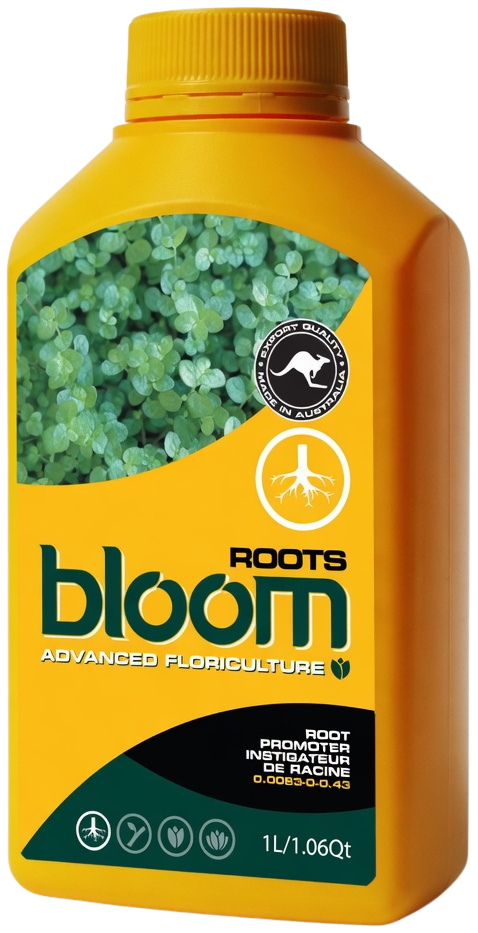
Bloom Roots is a southern bull kelp extract growers use from cuttings through early veg, as a feed and as a dip. It has more growers on record than anything in the range bar Ooze: 20+ with a Roots quote, counted 30 October 2026.
Narrow job, fast feedback. That’s why it’s the easiest bottle to trial. Several growers run it on clones and seedlings only, rather than across the whole cycle. It’s an additive over your base feed, not a base, and nobody in the record swapped their base to run it.

Dip it at the strike.
A dip puts the kelp straight onto the cut and the plug. One grower mixes a 12-gallon batch and dips his teens roots and all.

Feed it while roots build.
In the feed, it backs the root zone through the weeks when the plant is putting down its foundation.
What’s on the label
The label lists one seaplant, Durvillaea potatorum (southern bull kelp), plus 0.075% humic acid from leonardite and 0.054% vitamin B1. That’s the whole label, and we don’t claim anything beyond it. Full week-by-week rates are on the feed charts.
Most of what’s here is growers describing what they saw. One grower compared plants with and without Roots in the same room; his words are below.
Sources
- Bloom grower review records, counted 30 Oct 2026: 20+ growers have a Roots quote on record.
- Bloom Roots product label: the seaplant is Durvillaea potatorum, southern bull kelp.
- Product labels and Agricultural Organics company history: made in Australia by Agricultural Organics; sold in the US for 26 years.
Roots in their own words.
Quotes come from Bloom’s grower review records. Some are lightly trimmed for length and spelling, with the meaning unchanged. Growers in the trial program agreed to their feedback being shared.

“The roots definitely helped. The three plants I used them on are roughly 6–10 inches taller than the ones I didn’t. Same PPFD, EC and water times; the only difference was the Bloom.”@apollos_oasis · Roots · 10 Feb 2026
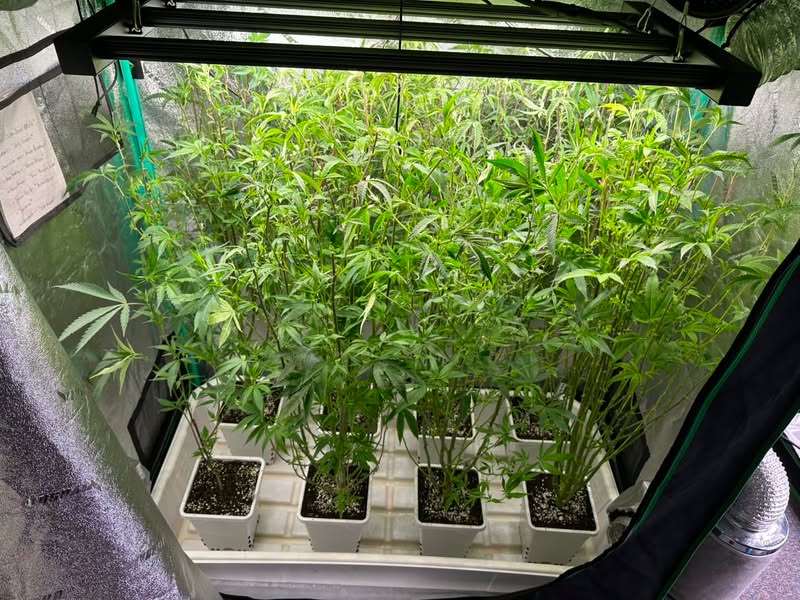
“I love the smell of Roots, it’s my go-to. I double down on clones and they’re typically rooted in 4–7 days.”@deogrow · Roots · 28 Jun 2025
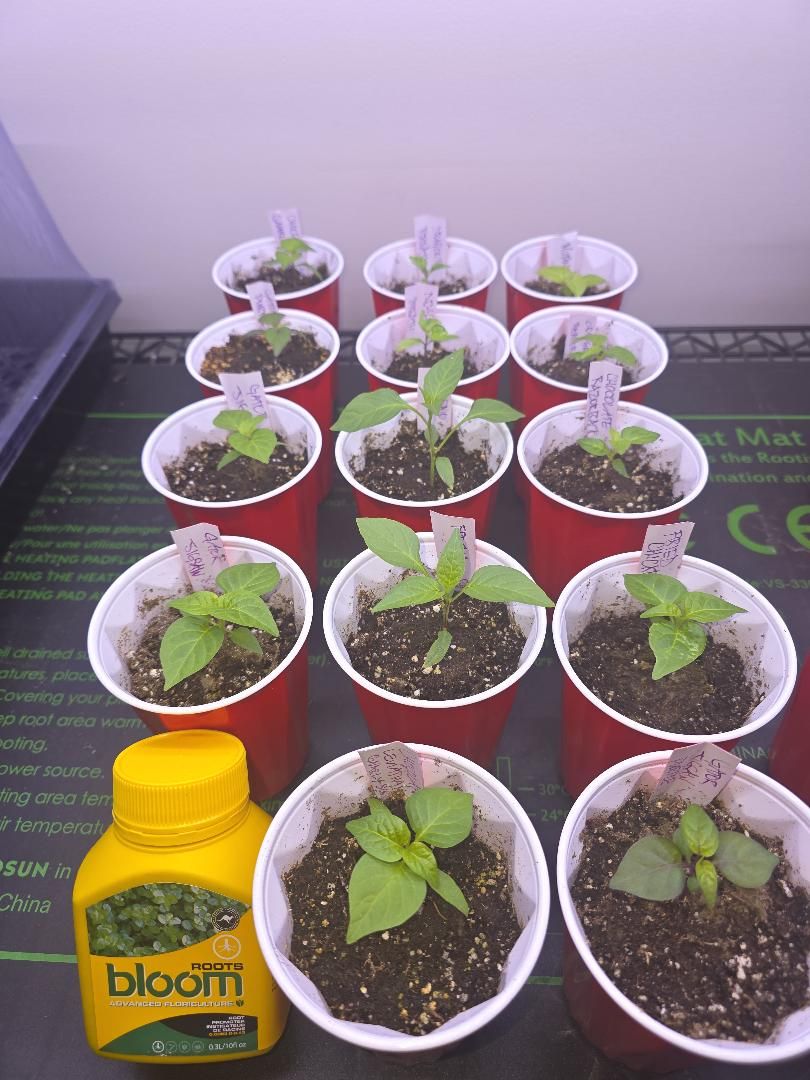
“Day 10 since switching to Bloom. The seedlings only got Roots and they’re really happy. The growth in the tent is nuts, they’re popping!”@highvoltagepeppers · Roots · 10 Dec 2025
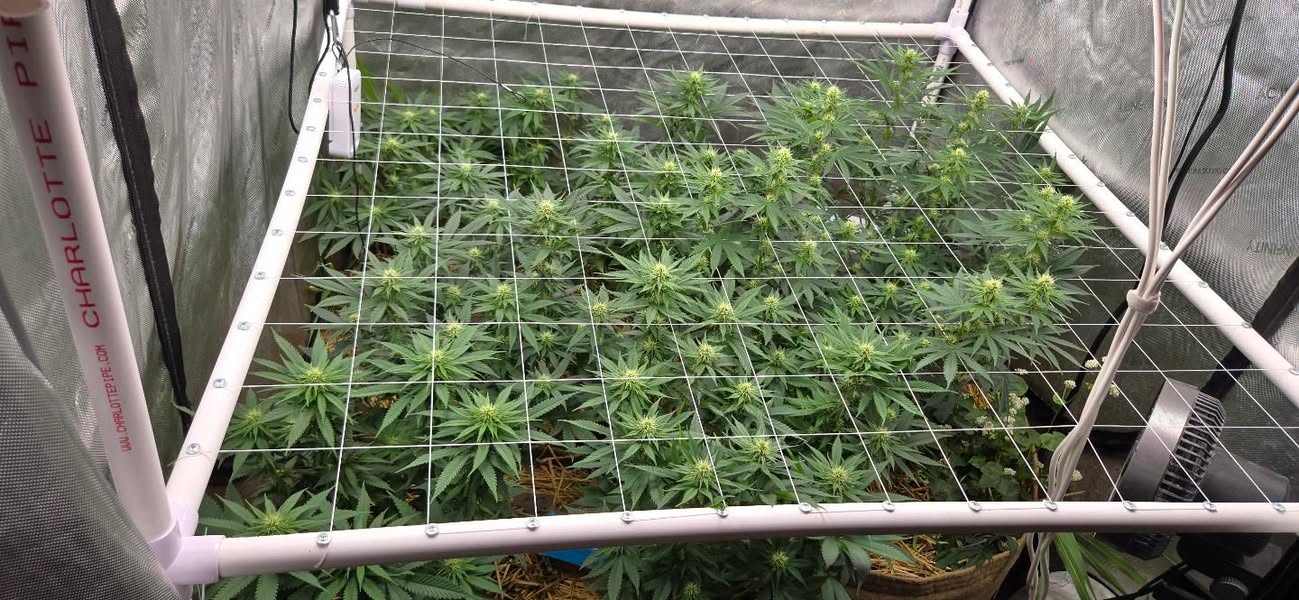
“Roots and Sea Minerals have been key to getting my plants this happy: zero signs of shock or setback.”@squidward_organics · Roots, Sea Minerals · 8 Sep 2025
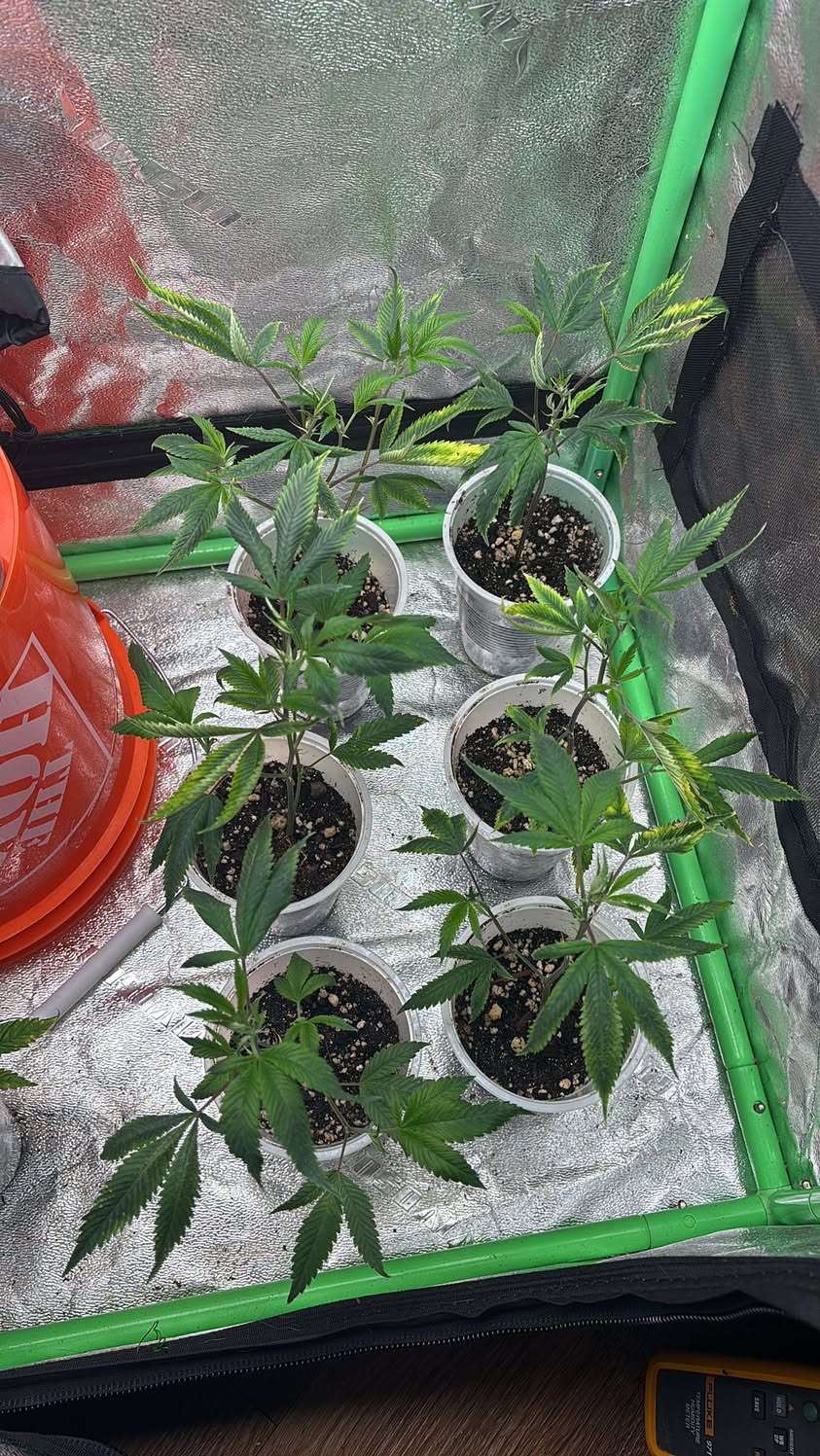
“Still using Roots and Seafuel in my cloning regime and they love it.”@griffbain13 · Roots, Seafuel · 13 Oct 2025
- “Roots works best as a dip. I mix a 12-gallon batch and dip my teens roots and all. Cuts the smell too.” @white_buffalocultivationco · Roots · 22 Nov 2024
- “I’ve been feeding Bloom to my herb garden and house plants and everything’s thriving. I feed Bloom to anything with roots!” @karmapharma · Roots · 15 Aug 2025
Growers’ own results, individual results vary.
Not every slow strike is a feed problem.
Rule these out first. Roots helps, but it can’t fix the setup.
Too wet, too warm or a dirty blade. Clean cuts, a lighter misting and better airflow under the dome.
The cutting eating its own stores before it strikes. Normal for a few days. Keep the light gentle.
Light too far away or too weak. Bring it closer before you change anything in the water.
Roots questions.
Dip or feed, which is better?
Both get used. The dip goes on at the strike at 1 ml/L. In the feed it’s 0.5 ml/L through early veg. Plenty of growers do both.
Do I keep running it through flower?
Most growers in the record run it on cuttings, seedlings and early veg. The feed charts show where it sits in the full run.
Can I use it with my current nutrients?
Yes. Keep your base and add Roots on top. You don’t need the whole Bloom line to use it.
Not sure it fits your grow? Talk to Nate.
Tell us how you’re cloning and what you’re striking into, and we’ll tell you straight if Roots is worth a go.