
A lot of growers reach for seaweed because they’ve heard it’s “full of hormones” — auxins for roots, cytokinins for shoots. The actual research says something more interesting: it almost never is. Here’s what the data shows, and why that’s good news, not bad.
The Hormone Myth, and Why It’s So Sticky
Seaweed products have been marketed as hormone sources for decades, and it’s an easy story to believe — kelp extracts have been shown, again and again, to improve rooting, stress tolerance and yield. The assumption is that something in the bottle must be acting like a synthetic plant hormone. But when researchers actually measured the hormone content of seaweed extracts against the concentrations known to trigger a plant hormonal response, the numbers didn’t support the theory.
The thresholds, as published by the European Biostimulants Industry Council (EBIC): a plant needs roughly 100 nanomolar (nM) of auxin, 10 nM of cytokinin, or 100 nM of brassinosteroid before a physiological hormone response kicks in. Below that, the hormone is present but not doing hormone-level work.
What’s Actually in the Bottle
Here’s where it gets concrete. One of the most-cited commercial seaweed extracts, Kelpak, has had its own hormone content independently measured and published: brassinolide at 384.72 to 793.23 picograms per millilitre. Converted to the same units as the EBIC threshold, that’s roughly 1.65 nM at the high end of the range — about 60 times below the 100 nM level needed for a brassinosteroid response, undiluted, before a grower even mixes it into a tank.
It’s not an outlier. A separate study measured the auxin (IAA) content of six different commercial seaweed extracts made from Ascophyllum nodosum and Laminaria species: every one of them came in between 9.70 and 32.43 nM — three to ten times below the auxin threshold, again undiluted.
Measured hormone levels vs. the response threshold
Source: Stirk et al., Journal of Applied Phycology 26(1):561–567 (2014); Ertani et al., Frontiers in Plant Science 9:428 (2018); thresholds per EBIC’s 2023 white paper on seaweed-based biostimulant mode of action.
The industry’s own technical body put it plainly: “very low (if any) phytohormones are found in seaweed extracts,” and when they are present, they sit “far below the threshold levels required for physiological effects,” particularly at the application rates growers actually use. This isn’t a knock against seaweed extracts — it’s the honest answer to a question the marketing around this category has mostly dodged.
So What’s Actually Doing the Work?
If it isn’t hormone content, researchers point to two things instead. First, seaweed extracts can switch on a plant’s own cytokinin-signalling pathway — triggering genes the plant already carries rather than supplying the hormone directly. Second, the bulk of a brown seaweed extract by weight isn’t hormone at all; it’s a mix of polysaccharides, polyphenols and trace minerals, and research has consistently found that the whole extract performs where isolated fractions of it do not. In other words, seaweed’s benefit looks like it comes from the whole package working together — nutrient and stress-signalling support — not from one hormone doing the heavy lifting.
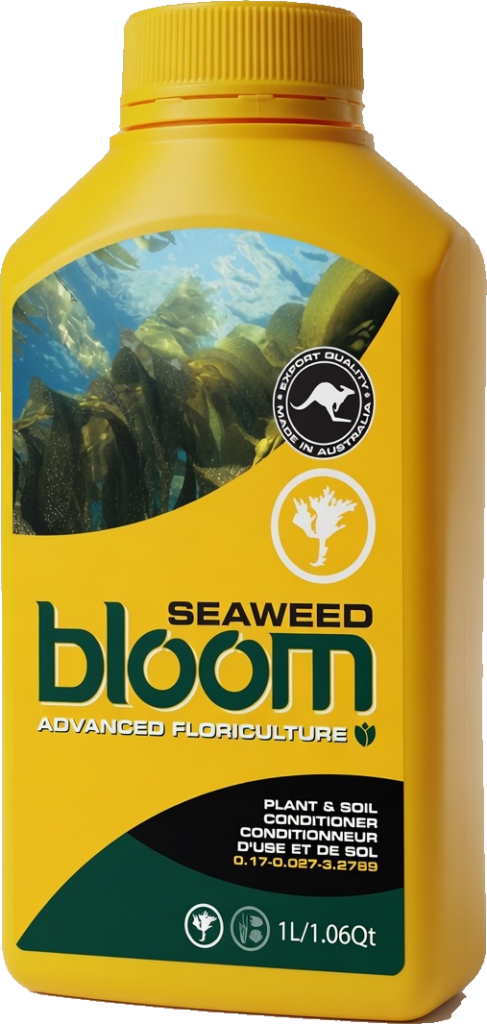
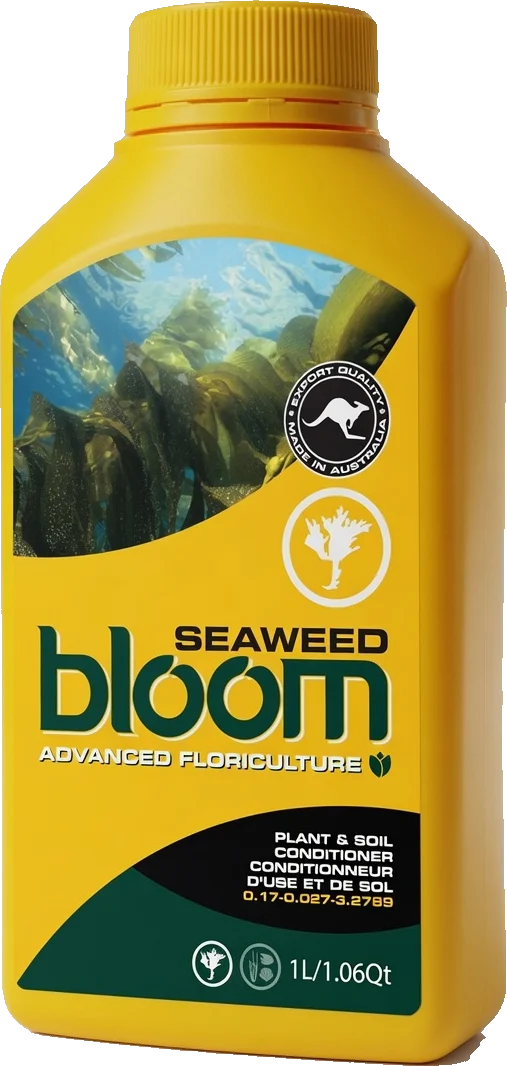
Where Bloom Seaweed fits: our label (derived from Durvillaea potatorum, used at 1 ml/L) declares a guaranteed analysis of 0.17% Nitrogen, 0.027% available Phosphate and 3.278% soluble Potash — and no hormone figure, because there isn’t a meaningful one to put there. That’s not a gap in the label. It’s consistent with everything the research above actually shows about this category.
None of this makes seaweed extract less useful — the opposite, really. It means the nutrient and stress-tolerance support growers see isn’t a fluke of a lucky hormone dose that varies wildly batch to batch. It’s a more dependable mechanism than that. When you’re choosing a seaweed input, that’s the question worth asking: not “how much hormone is in here,” but what’s being delivered in terms of nutrients and trace elements in the whole extract.
Sources: European Biostimulants Industry Council, Recent insights into the mode of action of seaweed-based plant biostimulants (2023) · Stirk et al., Journal of Applied Phycology 26(1):561–567 (2014) · Ertani et al., Frontiers in Plant Science 9:428 (2018) · Depuydt et al., Journal of Applied Phycology 32(1):573–597 (2020).