
Three Labs Measured the Same Hormone in Seaweed Extract and Got Three Different Numbers
Cannabis & Indoor Hydro · Science & Education
Search “seaweed extract hormones” and you’ll find a number almost immediately — usually presented as settled fact. The honest answer is messier: three separate measurements of auxin (IAA) in seaweed extracts, each from a legitimate lab, come back in units that don’t even convert cleanly into each other. One report measured roughly 50 mg of IAA per gram of dry extract. A different commercial product’s own testing put it at 6.63 mg per gram. A third, measured by UPLC on yet another preparation, came back at 25–35 nanograms per gram — a unit a thousand times smaller than the other two. The researchers who compiled these numbers attribute the spread to “method of extraction and processing, as well as the geographical location” of the raw seaweed.
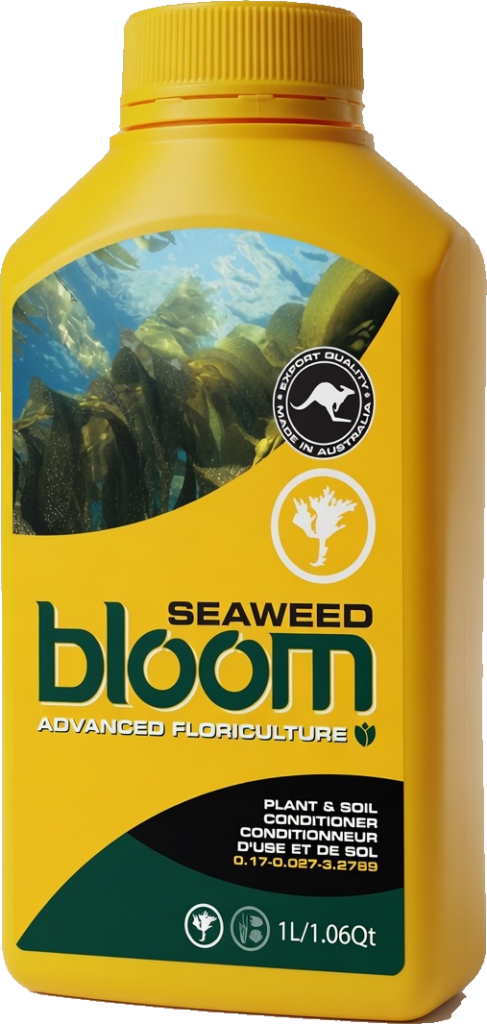
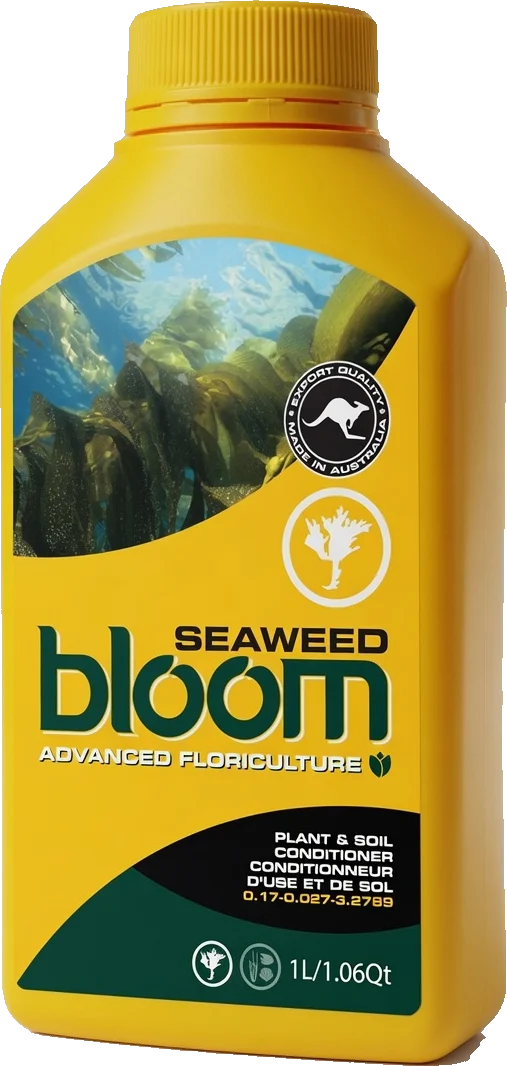
That’s not a footnote. It’s the reason Bloom Seaweed’s label (Guaranteed Analysis 0.17-0.027-3.278, derived from Durvillaea potatorum) and Bloom ROOTS (0.0083-0-0.43, same declared species) don’t carry a hormone figure at all — and why no competitor’s fertilizer label does either. A guaranteed analysis is a legal promise about what’s measurably in the bottle. Hormone content in a seaweed extract isn’t a number any two labs agree on, so it isn’t a number anyone can guarantee.
Three real measurements of the same compound class, from three real sources, reported on three incompatible bases. That’s not evidence the hormone content doesn’t exist — it’s evidence that nobody has agreed on how to weigh it.
If it’s not the hormone dose, what is it?
The research that’s actually replicated points somewhere else: signaling, not dosing. Root-applied Ascophyllum nodosum extract has been shown to switch on the cytokinin-responsive ARR5 promoter and induce three specific cytokinin-synthesis genes (IPT3, IPT4, IPT5), and to shift two microRNAs (miR827, miR2111b) involved in how a stressed root responds to low phosphate and salinity. None of that requires the extract to be carrying a hormone dose large enough to act like a growth regulator on its own — it requires the extract to be triggering the plant’s own hormone-signaling machinery. The industry’s own trade body, EBIC, states it plainly in a 2023 white paper: published research over the past decade has “demonstrated that plant hormones are not responsible for the plant biostimulant effects observed in crops,” because any natural phytohormone in a seaweed extract sits “far below the threshold levels required for physiological effects” once you account for real-world application rates.
Why a hydro grower should care
If you’re dosing by the milliliter and chasing a specific hormonal effect — more roots, faster veg, a bigger stretch — a seaweed input isn’t the tool for that job, no matter what any bottle implies. Dedicated plant-growth regulators exist, are labeled with actual concentrations, and are regulated as such. The replicated research above was done on Ascophyllum nodosum extract, not on Durvillaea, and it points at the plant’s own stress responses rather than a hormone dose from the bottle. That’s a narrower finding than “contains plant hormones,” and it’s specific to the extract that was tested.
It also means two “seaweed extract” products can behave very differently in your reservoir without either one being mislabeled, because neither carries a hormone figure to compare in the first place. The variable that actually separates products — extraction method, processing, and where the seaweed was harvested — is exactly the one no label is required to spell out in detail. Bloom’s label spells out what it can guarantee: the species, the percentage, and nothing it can’t back with a number.
We don’t print a hormone number for Bloom Seaweed or Bloom ROOTS because the research doesn’t support one that would mean anything on a label. That’s not a gap in our testing — it’s the current state of the whole category.
There’s a cleaner example of the same problem from a different product entirely. Kelpak, a commercial extract made from a different kelp species, has had its own hormone content independently measured: brassinolide at 384.72 to 793.23 picograms per milliliter. Convert that to the same molar units EBIC uses for its threshold, and even the high end of that range sits roughly 60 times below the 100 nanomolar activity threshold — before the product is diluted for use. That’s a real, published number, from a real competitor’s product, and it still lands nowhere near the dose a hormone would need to act as one. If the best-measured example in the category comes in 60-fold under threshold, a figure quoted without its unit or its dilution isn’t telling you anything you can act on.
Next time a seaweed product’s marketing leans hard on hormone content, ask which lab measured it, in what unit, and on what basis. If the answer isn’t on the label, it’s not a number you can actually use — it’s a number somebody picked because it sounded impressive out of context.