
A surprising amount of broadacre “remineralization” thinking traces back to one source: a 1960s-era US patent for applying dried sea solids as a soil fertilizer, built on claims about dramatically healthier crops and longer-lasting soil fertility. It still circulates in input-efficiency and regenerative-ag circles today. Run the actual recommended rate through the math, and it tells a different story than the pitch does.
What the patent actually recommends
US Patent 3,071,457, “Process of Applying Sea Solids as Fertilizer,” recommends a rate of 550 to 2,200 pounds per acre for most crops, with 1,100 lb/acre specified as the right amount for tomatoes, reapplied at 550 lb/acre annually for four years. The claims attached to it are substantial: 25% more vitamin C in tomatoes, 40% more vitamin A in carrots, nearly 20 more bushels of corn per acre, and a large reduction in corn smut.
Here’s the part that doesn’t usually make it into the pitch: dried sea solids are not a trace-mineral concentrate in any meaningful sense. Seawater’s dissolved solids are overwhelmingly sodium and chloride — the two ions together account for roughly 85.8% of everything dissolved in seawater, with magnesium, sulfate, calcium and potassium making up most of what’s left. Evaporate seawater down to a dry solid and that ratio doesn’t change; it’s still mostly table salt with trace amounts of everything else riding along.
What that rate means on real ground
Run 1,100 lb/acre through the conversion and it comes out to about 1,233 kg of sea solids per hectare. At sodium’s roughly 30.7% share of total sea salts, that’s 379 kg of sodium per hectare — and roughly 680 kg of chloride alongside it, for a combined salt load in the neighborhood of a full tonne per hectare. At the top end of the patent’s range, 2,200 lb/acre, the sodium load climbs to 758 kg/ha. That’s not a trace-mineral top-dress. It’s a genuine salt application, at a scale that would raise real questions about soil structure and salinity on most broadacre ground, delivered in the name of “remineralizing.”
And on the efficacy claims themselves, the honest answer is that no independent peer-reviewed study was found replicating them. The vitamin-content figures and yield numbers trace back to a 1976 trade book and the patent text itself — and a patent is an examination for novelty, not a test of whether something actually works. That’s not the same as saying the claims have been disproven; it’s that nothing independent and peer-reviewed has confirmed them either, which is a meaningfully different, more honest position to hold.
85.8% Na + Cl
The alternative to a bulk rate
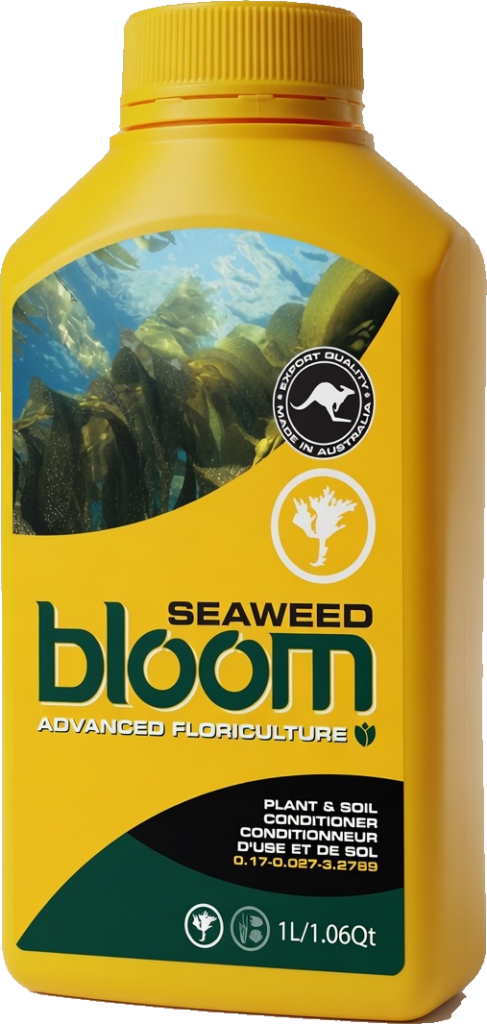
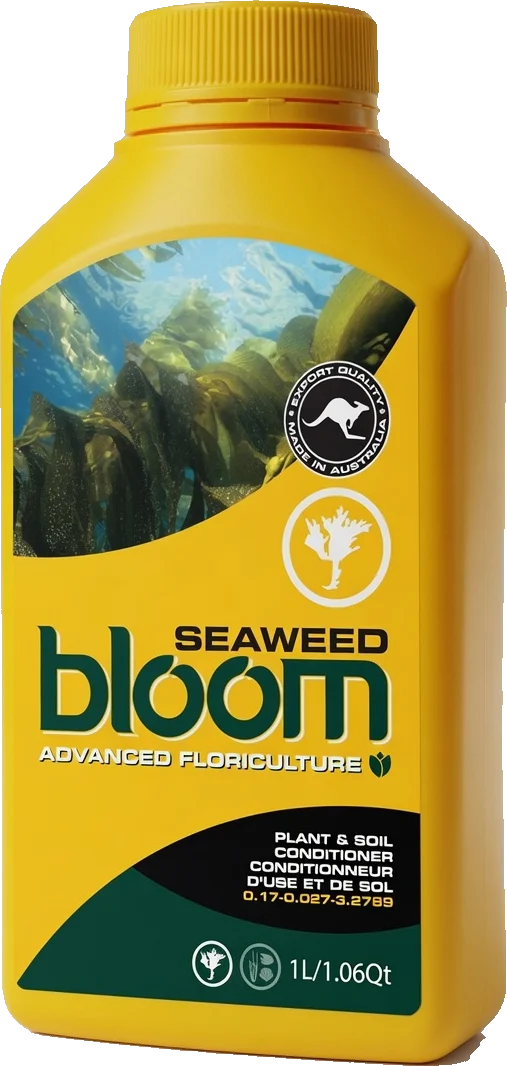
This isn’t a case for or against any particular broadacre input — it’s a case for running the arithmetic before adopting a method built on a decades-old patent rather than a modern trial. A tonne of sea-solids-equivalent salt per hectare is a real, measurable soil input with real, measurable consequences, whatever the vitamin claims attached to it turn out to be. Bloom’s own seaweed-derived input, by comparison, is declared at a gram-and-milligram scale on its label — 0.17-0.027-3.278 from a single named input, Durvillaea potatorum, at a stated foliar or fertigation rate rather than a ton-per-acre soil amendment. Different tool, different scale, different job — but the contrast is worth having in mind the next time a “just add sea minerals” pitch shows up without a rate attached to it. For the field-scale evidence behind that declared rate, see our breakdown of the largest seaweed-extract meta-analysis ever run. The rate is where the real story always is.
That’s the broader lesson worth carrying into any input-efficiency conversation at field scale: a rate without an independent trial behind it is a story, not a recommendation, no matter how specific the numbers sound or how long the method has been circulating. Sodium and chloride tonnage is easy to compute from any sea-solids rate because seawater’s composition is well documented and doesn’t change from one patent to the next. What’s genuinely hard to find, in this specific case, is a modern, independently run field trial confirming the yield and nutrient-content claims that made the method appealing in the first place. Until that exists, the honest framing for anyone weighing it is “unreplicated,” not “proven” and not “debunked” — just a rate that’s worth running through the arithmetic before it goes on real acreage.
Related reading: The Metals Ceiling Isn’t One Number, on another field-scale regulatory number that isn’t what it first appears to be.
Sources: Murray MR. US Patent 3,071,457, “Process of Applying Sea Solids as Fertilizer.” Chemical composition of seawater, OCN 623 course notes, School of Ocean and Earth Science and Technology, University of Hawai’i at Mānoa (2018). Boyd CE. “Typical chemical characteristics of full-strength seawater.” Responsible Seafood Advocate, Global Seafood Alliance (2020). Guaranteed analysis per Bloom Seaweed label artwork.