
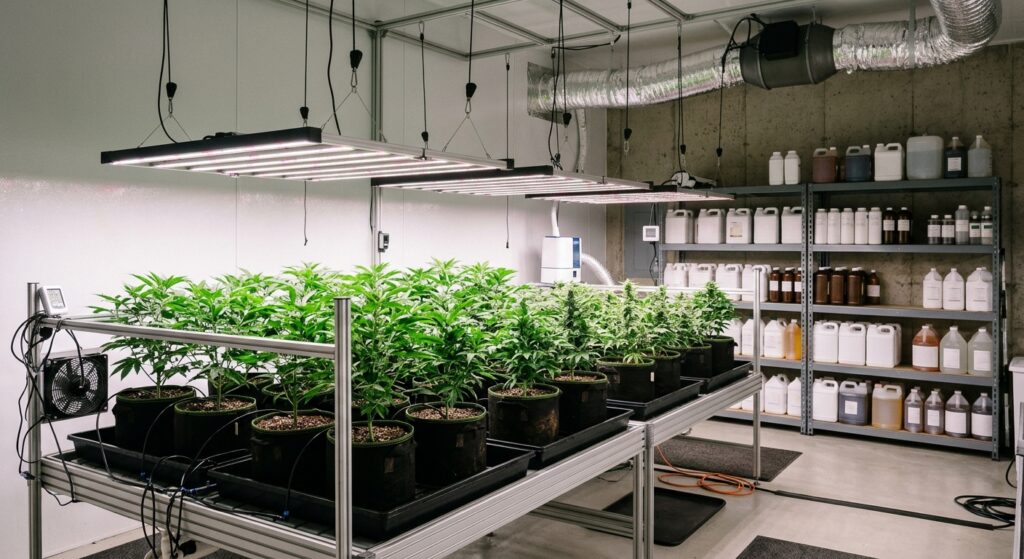
Stocking up before the season turns is a different exercise for an indoor grow room than it is for a backyard bed, and it’s not the first time this project has looked at which bottles actually hold up waiting in the cabinet. Lights go up, cycles stack back to back, and the shopping list for the next run gets written before the current one is even finished. The question that doesn’t get asked enough: does every bottle on that list age the same way sitting in the cabinet between now and when it actually gets used? It doesn’t — and the difference isn’t marketing, it’s chemistry.
Two different kinds of “ingredient,” two different shelf lives
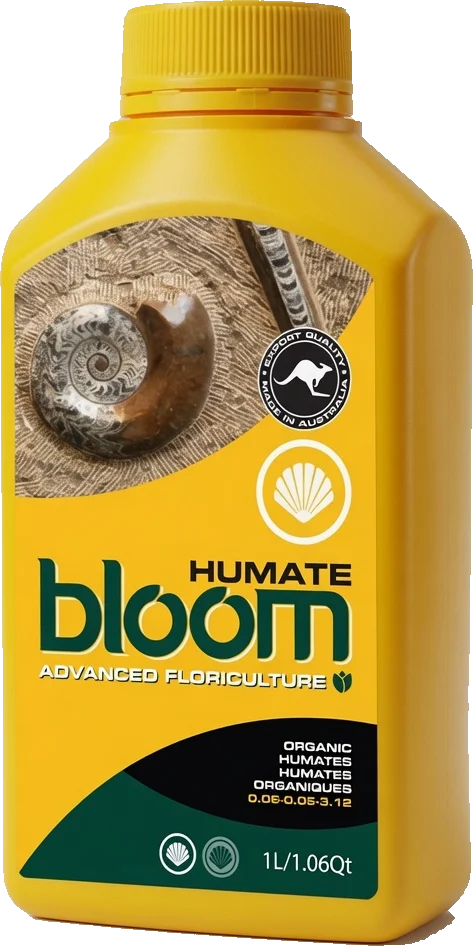
Bloom Humate‘s guaranteed analysis is short: 3.12% soluble potash, derived from potassium hydroxide, with 10% humic acid derived from Leonardite as the non-plant-food addition. Leonardite is a form of lignite — coal that never finished coalifying — and the humic acid in it is geologically old material that was already resistant to breakdown before it ever went into a bottle. Humic substances are well documented in soil science as some of the most microbially and chemically stable organic material there is; that’s the same property that lets them persist in soil and peat for centuries rather than being consumed in a season. A concentrate built on that chemistry isn’t fighting a clock the way a biologically derived input is.
Compare that to anything built around an enzyme-processed marine hydrolysate — the kind of product that’s doing active biochemical work, which is exactly why it has a program and a feed rate in the first place. That’s not a knock on those products; it’s the same reason they work. It’s also the reason they’re the ones worth buying closer to when you’ll actually use them, rather than laying in a season’s worth at once.
What’s actually settled on Humate’s label
Two numbers on Humate’s label have been corrected on this site before, so it’s worth stating the right ones plainly: the humic acid content is 10%, not the 20% that circulated on an older sheet, and the working rate is 2.5 ml/L of nutrient solution, not the 0.5 ml/L figure that showed up elsewhere. Both of those corrections matter more, not less, for a stock-up decision — buying ahead on the wrong rate means either running out faster than planned or sitting on more bottle than the room will use.
Where OOZE and PHAT actually sit on this spectrum
Nate’s gotten the same question from a few growers heading into the season turn: can OOZE and PHAT go on the same deep-stock list as something like Humate? The honest answer is no, and not because of anything wrong with either bottle — it’s where they sit in a cycle. Both are used in a defined window late in a run, not across the whole thing, which means a bottle bought today has to survive longer in the cabinet before it’s ever opened than one that goes into weekly use right away. That’s a reason to buy them closer to the week they’ll actually be mixed, from the freshest stock on the shelf, rather than laying one in now for a cycle that’s still weeks out. Their own label chemistry hasn’t been fully verified in this project yet, so this isn’t a claim about a specific guaranteed-analysis figure or shelf date for either product — it’s a timing habit, not a number.
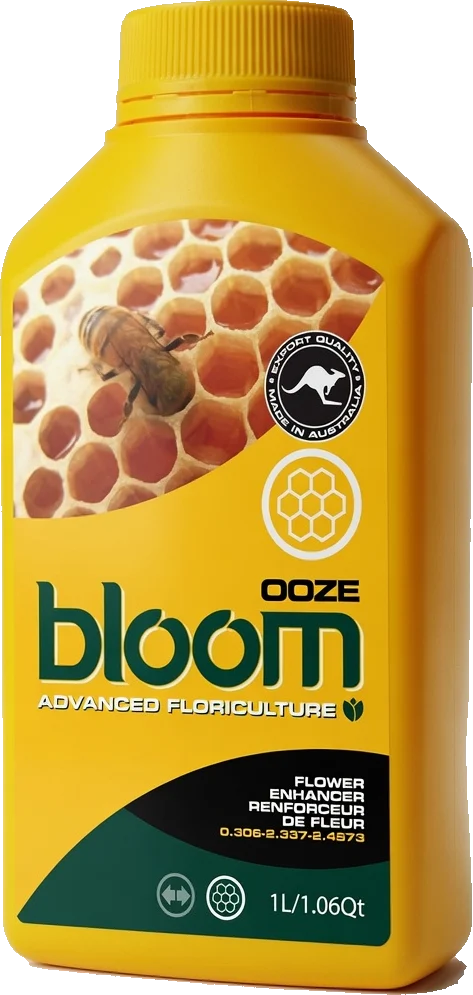
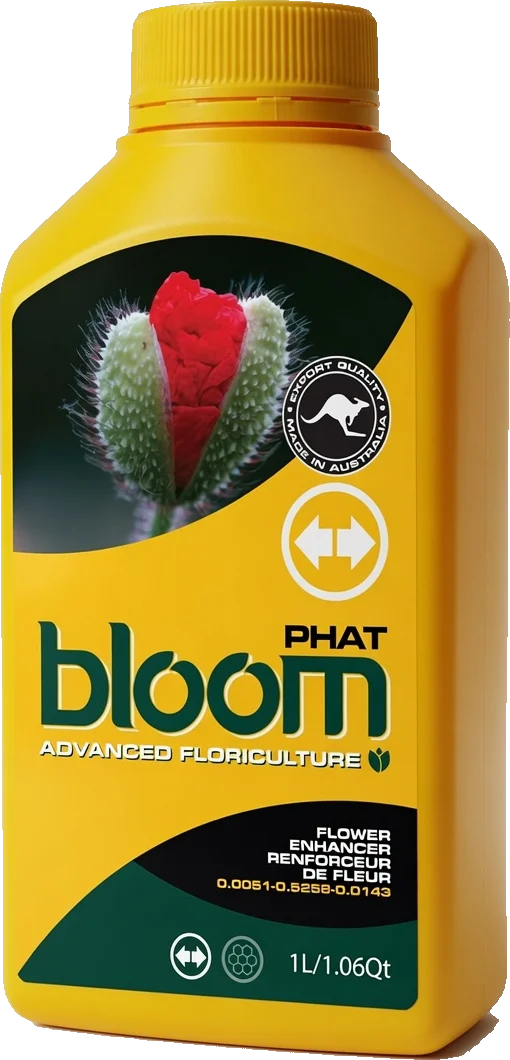
Both used in a defined late-cycle window — buy these two closer to the week they’ll be mixed, not months ahead.
The practical split
Put together, the stock-up list for a season turn doesn’t have to be one-size-fits-all. A mineral, humic-acid-based product like Humate is about as close to “buy it and forget the clock” as a liquid input gets — the chemistry that makes it work is the same chemistry that keeps it stable sitting in a cabinet. A reservoir or foliar product built around a biological hydrolysate is doing real work precisely because it isn’t inert, so it belongs on a rolling restock rather than a deep-stock shelf. And anything used only in a short, defined window late in a cycle — OOZE and PHAT included — is worth buying in smaller batches, timed to when it’s actually going into the mix, rather than all at once for a season that hasn’t started yet.