
Same Fish, Different Rate: Why Groigen and Florigen Get Sprayed, Not Fed
Seafuel, Groigen and Florigen all trace back to the same marine base — Southern Blue Fin Tuna hydrolysate. So why does Seafuel go into the reservoir at 1 ml/L while Groigen and Florigen get mixed at 20 ml/L and sprayed on the leaves? The rate isn’t a typo. It’s a different delivery job entirely.
Two different jobs: a bath versus a wetting
A reservoir dose sits in continuous contact with the root zone for the life of that feed — the roots are bathed in that 1 ml/L solution for days, with the whole volume available to draw from the whole time. A foliar spray is a single wetting event: the solution lands on the leaf surface, has to cross the cuticle through stomata or the small fraction of leaf tissue that actually absorbs foliar inputs, and then it’s gone — evaporated, run off, or absorbed, usually within hours. A root-zone feed and a foliar spray aren’t two strengths of the same action; they’re two different absorption problems, which is why comparing their ml/L numbers directly doesn’t tell you much on its own.
Leaf surfaces also aren’t built to absorb the way roots are. Roots have root hairs and a specialized epidermis evolved for nutrient uptake across the whole surface, continuously. A leaf’s outer cuticle is a waxy barrier evolved mainly to keep water in and pathogens out — the entry points for a foliar spray are mostly the stomata and small cuticle imperfections, not the whole leaf surface acting like a root. That’s a structural reason foliar programs lean on a stronger mix applied briefly rather than a weak mix sitting in constant contact, the way a reservoir feed does.
Reservoir feed vs. foliar spray — two different jobs
General foliar-vs-root agronomy reasoning — not a Bloom-specific absorption trial.
What’s actually declared on each label
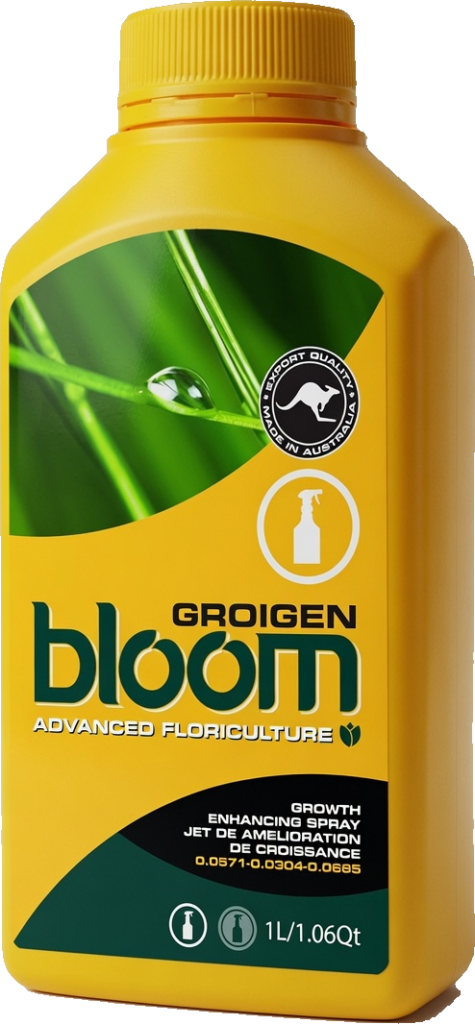
Seafuel: derived from Durvillaea potatorum (seaplant extract) and Hydrolized Blue Fin Tuna (Fish Hydrolysate), with 0.075% humic acid from Leonardite, dosed at 1 ml/L into the reservoir. Groigen: Fish Hydrolysate (Southern Blue Fin Tuna), sea water and Porphyra abyssicola, plus thiamine (B1) — applied as a 20 ml/L foliar spray. Florigen shares that same base at a higher potassium ratio, also a 20 ml/L foliar spray, used weeks 1–4 of flower. Groigen and Florigen’s own guaranteed-analysis figures aren’t confirmed against a label in our records yet, so we’re not printing numbers for either of them here — only the application method and rate, which are settled.
Porphyra abyssicola, the other declared marine input in Groigen and Florigen, is in the same genus as the red seaweed used to make nori — a thin, sheet-forming red alga, structurally about as far from a brown kelp like Durvillaea as seaweeds get. Pairing a red-algae extract with a fish hydrolysate in a foliar product, rather than in the reservoir boosters, isn’t an accident of formulation; it’s consistent with building a spray meant to be absorbed quickly through leaf tissue rather than metabolized slowly in a root zone over days.
The practical takeaway
If you’re used to thinking in reservoir math, 20 ml/L looks like twenty times the dose. It isn’t — it’s a spray-strength mix meant to wet a leaf surface once, not to top up a tank that roots sit in for days. Mixing a foliar product at reservoir strength wastes product without doing the reservoir’s job, and mixing a reservoir product at foliar strength into your tank would do the opposite — overfeed a system that was never designed to pull it in through a one-time leaf wetting. It’s also why swapping Groigen or Florigen into the reservoir in place of Seafuel, or trying to spray Seafuel at reservoir strength as a foliar feed, isn’t a safe shortcut even though all three share a marine base — each rate was set for the delivery method printed next to it, not for the ingredient list alone. Reading the rate next to the application method, not just the number by itself, is what actually tells you how a product is meant to work.
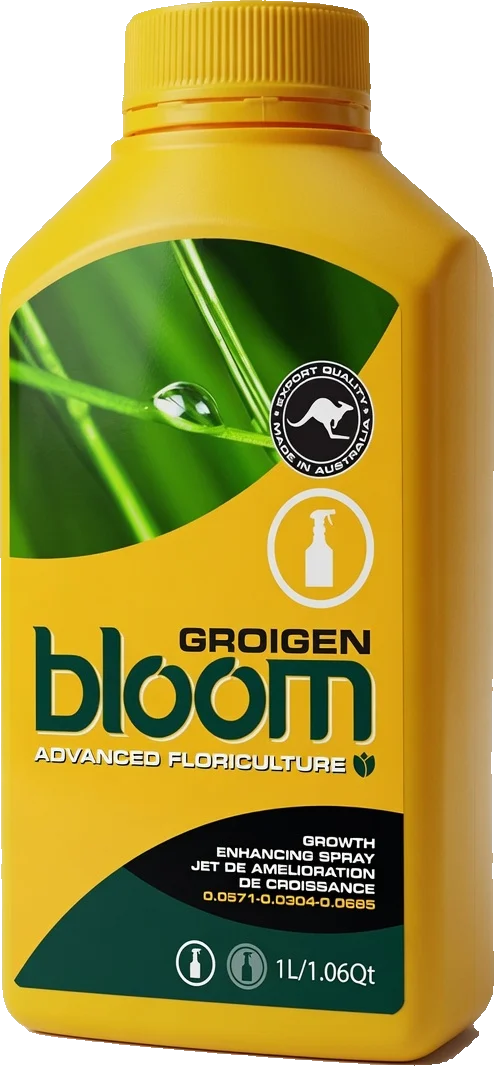
Groigen — 20 ml/L foliar
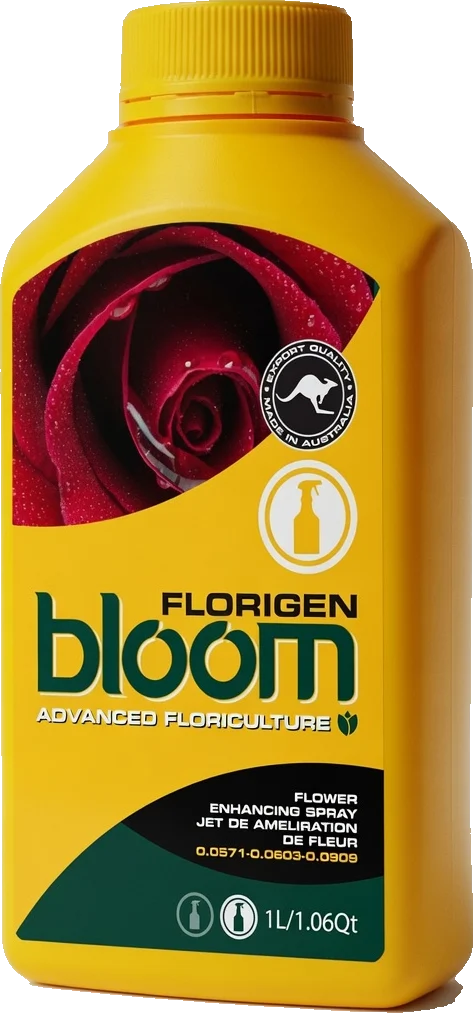
Florigen — 20 ml/L foliar, weeks 1–4
Sources: Bloom Seafuel, Groigen and Florigen label artwork and ingredient declarations, per this project’s verified label facts and sourced fish-input research. Foliar vs. root-zone absorption framing is general plant-physiology reasoning, not a controlled Bloom trial.