
The Home Fish Ferment Recipe With No Nitrogen Number At All
Home & Backyard Garden · Science & Education
Fish Amino Acid, or FAA, is one of the better-documented home ferments out there — it’s a real university extension publication, not a forum recipe. Fish scraps and brown sugar, layered 1:1 by weight, left to break down for two to six months, diluted 1:1,000 before use. It’s a workable method with a real paper trail.
But read that extension publication closely and there’s something missing that most growers assume is there: a number.
What the method actually tells you to check
The University of Hawaiʻi publication on Natural Farming Fish Amino Acid lays out the recipe in real detail — the fish-to-sugar ratio, the fermentation accelerants, the breathable cover, the two-to-six-month timeline, the 1:1,000 dilution rate. What it doesn’t give you anywhere is a nitrogen percentage, an amino-acid breakdown, a pH reading, or any pathogen testing. The one quality check the publication actually describes is a smell test: finished FAA, it says, “will have a sweet, slightly fishy odor.”
That’s not a criticism of the method — it’s an honest reading of what’s published. A sugar-driven ferment can turn out well. It can also turn out differently batch to batch, because nothing in the method measures what actually happened inside the jar. You’re trusting your nose, not a number.
What a declared label actually commits to
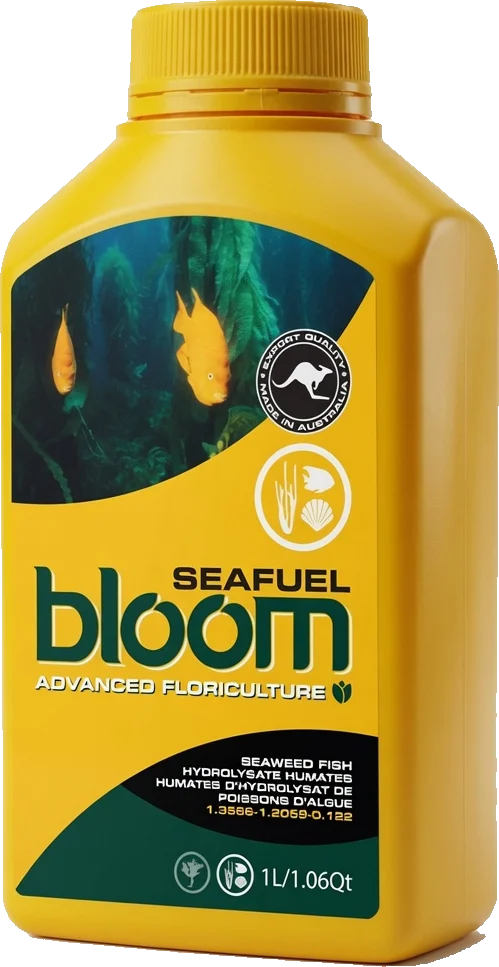
Compare that to what’s printed on a Bloom Seafuel label. It declares Durvillaea potatorum seaplant extract and hydrolyzed blue fin tuna fish hydrolysate, with 0.075% humic acid (from Leonardite) listed as a non-plant-food ingredient. (Its N-P-K figures aren’t consistent across label printings, so we don’t quote them until they’re confirmed.) The product’s own safety data sheet adds a pH range of 4–5, a specific gravity of 1.2–1.4, and confirms it’s biodegradable. None of that is a guess you make by smell after the jar’s been sitting for a season; it’s a number somebody measured and put on a document.
This isn’t an argument that a backyard ferment can’t work — plenty of gardeners run one for years without trouble. It’s an argument about what you actually know while you’re using it. One jar comes with a smell test. One bottle comes with a guaranteed analysis and a safety data sheet.
pH is the one number that actually matters, and it’s the one nobody’s checking
The published safety literature on home fish ferments — fish silage documentation from the FAO, not a gardening forum — is specific about what actually keeps a fermenting fish mixture from putrefying: the acidity has to sit at pH 4 or lower, and if acid and fish aren’t mixed thoroughly, an untreated pocket can rot even while the rest of the batch looks fine. That’s the real control variable in this kind of ferment. The FAA method doesn’t rely on added acid at all — it runs on sugar fermentation and time — and the publication never asks the grower to check a pH reading at any point. The entire safety check is “does it smell right.”
The honest trade-off
A home FAA batch costs almost nothing and uses up fish scraps that would otherwise go in the trash — that’s a real upside, and it’s why the method has stuck around in home-garden circles for decades. What it doesn’t give you is consistency you can plan a feeding schedule around. If this week’s batch smells a little different from last season’s, there’s no number to check it against, because the method never asked for one. A declared product doesn’t remove the judgment call entirely — growers still decide dose and timing — but it removes the part of the judgment call that a smell test was never built to answer.
If you’re going to run a home batch anyway, the fix is simple and doesn’t require buying anything: keep a cheap pH strip in the shed. A reading that drifts well above the pH 4 ceiling documented for safe fish silage is worth paying attention to, even if the jar still smells “right.” It won’t give you a nitrogen percentage, but it will tell you whether the one documented safety control in this kind of ferment is actually holding — which is more than the smell test alone can promise.