
The Vermicompost Study That Found Almost No Risk — and the One Pathogen It Did Flag
Specialty Niche Growers · Science & Education
Specialty collections — bonsai, orchids, terrariums — tend to attract growers who like making their own inputs. Worm castings, compost tea, a fermented brew steeped in a jar on a shelf next to the collection. The good news, from an actual study: a survey of 60 vermicompost and vermicompost-tea samples from smallholder farms found only one potentially pathogenic isolate across the entire set — a strain of Salmonella enterica serovar Typhimurium — and it showed up at counts the researchers described as below the generally accepted infective dose. Their conclusion: the products presented a low risk overall.
That’s a genuinely reassuring number, and it deserves to be printed alongside the less reassuring one. A separate, frequently-cited finding from compost-tea research states the risk isn’t inherent to the brewing process — it’s additive-dependent. When compost carrying low background levels of Salmonella or E. coli was used to make a tea, the pathogens only grew when nutrient additives were included in the brew. The additives studied specifically named in that research: soluble kelp, fish hydrolysates, humic acid, and rock dust — exactly the category of ingredients a specialty-collection grower might add to a home ferment to make it “stronger.”
Plain vermicompost tea, in the one study that actually sampled a real batch of it, came back low-risk. The risk shows up specifically when nutrient additives — kelp, fish hydrolysate, humic acid — go into the brew. The ingredient that’s supposed to boost the tea is the same one the research flags.
Two findings, read together
Read side by side, the picture isn’t “compost tea is risky” or “compost tea is safe” — it’s narrower and more useful than either headline. The base process, done plainly, tested low-risk in the one survey that actually sampled real farm batches. The risk the other research documents shows up specifically at the step where a grower adds nutrient-rich extras to make the brew do more. For a small, enclosed system — a terrarium, a tightly potted bonsai, an orchid mounted with no soil buffer at all — that’s a meaningfully different stake than a backyard compost pile, because there’s no large volume of soil microbiology around to dilute or outcompete whatever grows.
Where a bottled input sidesteps the question entirely
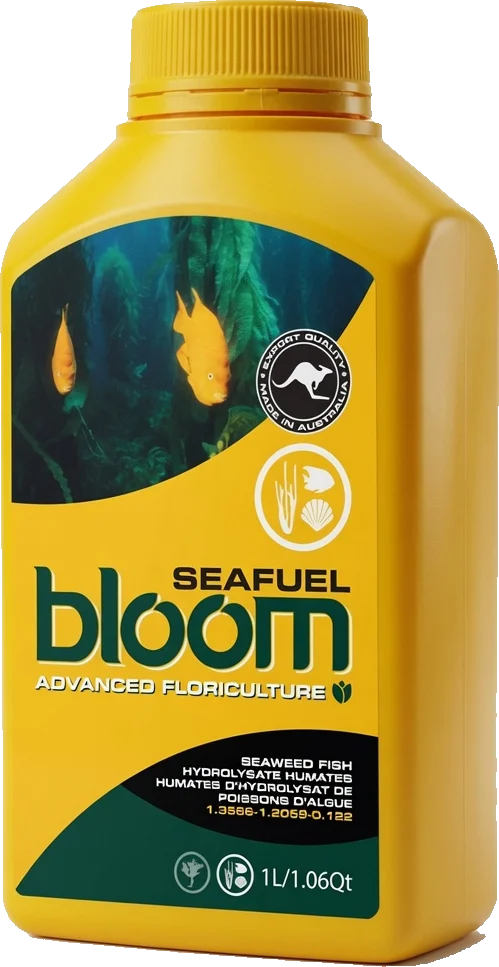
Bloom Seafuel (derived from Durvillaea potatorum seaplant extract and hydrolyzed Blue Fin Tuna fish hydrolysate, with 0.075% humic acid from Leonardite as a declared non-plant-food ingredient) is the same category of ingredient named in the additive-risk research — fish hydrolysate, humic acid — but it arrives already processed, stabilized, and dosed at a declared rate rather than fermented fresh in a jar on a shelf. There’s no brewing step, no multi-day fermentation window where conditions can go either way, and no odor-based judgment call about whether a batch is “done.” You measure a dose into the reservoir and you’re finished — the fermentation risk the additive research describes simply isn’t part of the process.
That’s not a claim that a home-brewed tea is dangerous — the 60-sample survey says the opposite, for the base process. It’s a narrower point: once you start adding the ingredients that make a tea more potent, you’ve entered the part of the research that actually flags risk, and a small, unflushed specialty setup is exactly where that risk has the least room to dilute itself out.
If you’re brewing your own tea for a bonsai pot or a terrarium, the plain base process has real safety data behind it. The step where people usually add kelp or fish hydrolysate to boost it is the step the research says to watch.
It’s also worth being honest about what the broader research does and doesn’t establish. University extension guidance on compost tea notes plainly that direct links between foodborne illness and compost tea “have not been established in peer-reviewed medical literature” — so none of this is a documented outbreak history. It’s a mechanism: additives give a small existing pathogen population something to grow on, in a process with no pasteurization step and no pH control to stop it if conditions tip the wrong way. For a houseplant or a backyard bed, a pathogen bloom that doesn’t get eaten raw is mostly an inconvenience. For a terrarium or an orchid mount handled constantly by hand, it’s a different conversation.
Either path — a careful home brew or a bottled, pre-processed input — can have a place on a specialty bench. The honest difference is that one of them asks you to manage a fermentation step correctly, and the other one doesn’t ask you to manage anything at all.