
Read the “Derived From” Line Before You Buy: Why Bloom Names the Species
Home & Backyard Garden · Brand & Experience
Pick up almost any “seaweed extract” bottle at a garden center and flip it over. Most labels tell you what it’s for. Fewer tell you what it’s actually made from. By US fertilizer-labeling rules, every product has to carry a “Derived From” line naming the raw material behind its guaranteed analysis — but naming a real species, instead of a vague category, is a choice a company makes about how much it wants you to be able to check its work.
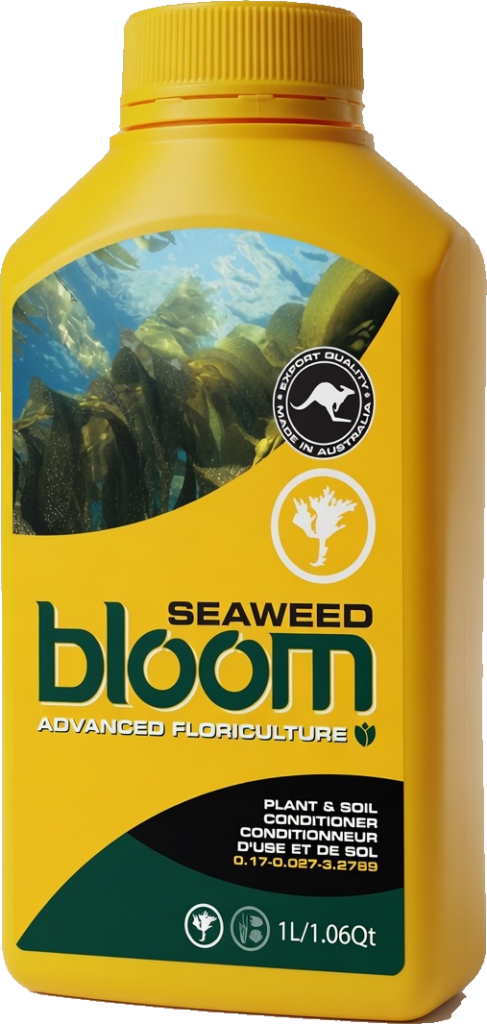
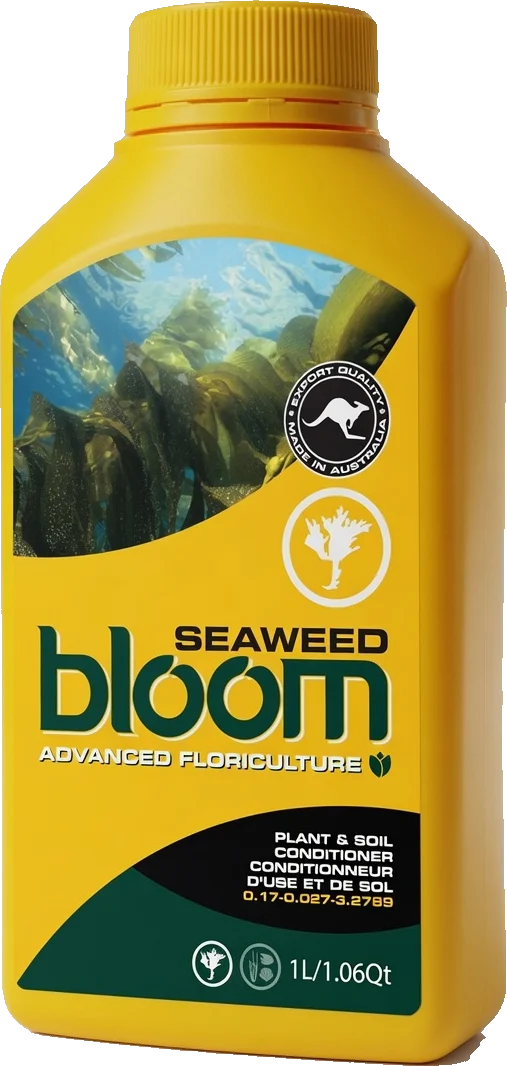
Bloom’s labels name the species. Not “seaweed extract” in general — Durvillaea potatorum, specifically, a cold-water brown kelp harvested off southern Australia. It’s the declared input behind both Bloom ROOTS (Guaranteed Analysis 0.0083-0-0.43, derived from Durvillaea potatorum seaplant extract) and Bloom Seaweed (0.17-0.027-3.278, Durvillaea potatorum, the only input declared). Same kelp, two different concentrations, two different jobs — one is a light root-zone treatment, the other is the general-purpose seaweed feed.
A label that just says “kelp extract” could legally be almost any brown seaweed species, harvested anywhere, at any concentration. A label that says Durvillaea potatorum, with a percentage next to it, is one you can actually go look up.
What else is on the line
The naming doesn’t stop at the main input. Bloom’s labels also declare the “non plant food” ingredients and their exact percentages — the stuff that isn’t feeding the plant in the N-P-K sense, but is doing something else in the bottle. ROOTS carries 0.075% Humic Acid (derived from Leonardite) and 0.054% Thiamine Hydrochloride — vitamin B1. Bloom Humate, a completely different product built around potassium hydroxide (its Guaranteed Analysis is 0-0-3.12, Soluble Potash derived from Potassium Hydroxide), carries that same humic acid at a much higher 10% — because in Humate, the humic acid isn’t the side ingredient, it’s the point.
None of that is marketing copy — it’s the legally required analysis block, just read in full instead of skimmed. The same ingredient, humic acid from Leonardite coal, shows up across more than one Bloom product at wildly different concentrations because it’s doing a different job in each one. That only means anything to you as a shopper if the label actually says what’s in the bottle and how much.
Why this matters more in the backyard than in a reservoir
A hydro grower dialing nutrients by the milliliter already has to think in label numbers. A backyard gardener usually doesn’t — until they’re standing in the aisle comparing two “kelp feed” bottles with no real way to tell which one is actually seaweed extract and which one is mostly water with a pinch of kelp meal stirred in. The species name and the percentage are the only two things on the label that let you make that comparison honestly.
Bloom’s Seaweed label also carries a printed garden-rate table, scaled down from the hydro dose for people watering tomatoes and lawns instead of running a reservoir:
That range exists because the label is specific enough to scale down in the first place. A product that only says “kelp extract” with no species and no clear percentage doesn’t give you much to scale anything from — you’re following the marketing copy on the front of the bottle, not the analysis on the back.
Bloom’s been printing these same label details since the earliest artwork we still have on file — the species name, the percentage, the “derived from” line that actually says something. That’s not a new marketing angle. It’s just what the label has always had to say, if you take the time to read it.
Next time you’re comparing feeds in the garden aisle, skip the front of the bottle for a second and read the back. If it names a species and a percentage, you can look both of those up. If it doesn’t, you’re trusting the front label on faith — and that’s a different product than the one with the receipt printed right on it.