
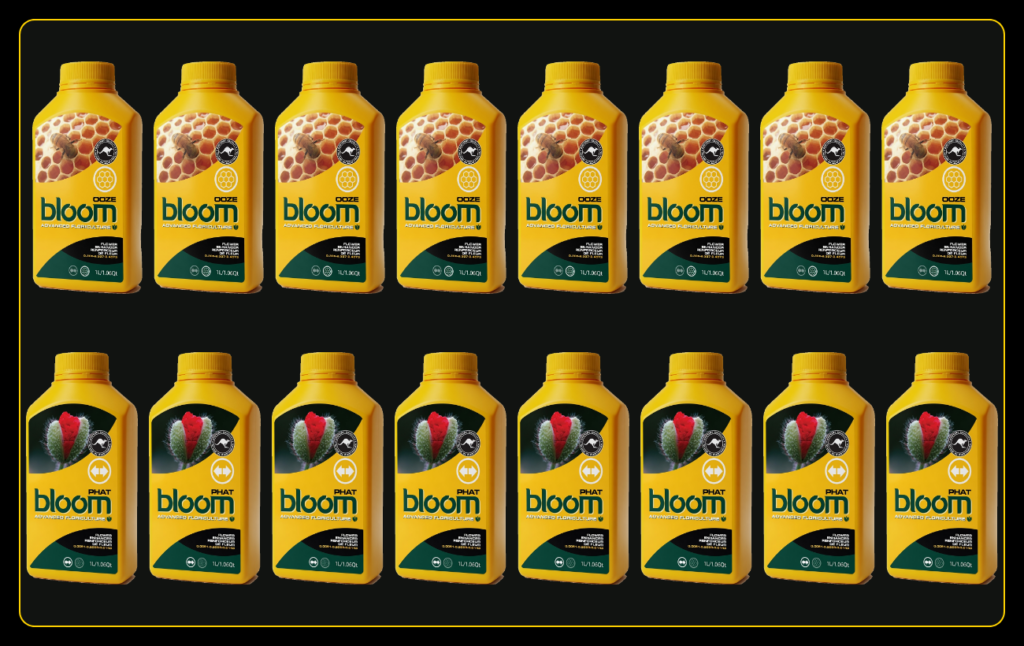
Overstock & Seasonal Push
Maximizing Terpene Production in the Final Stretch: What Actually Moves the Needle
Most of what happens to terpene content in the last few weeks of flower has nothing to do with any single bottle — it’s decided by what the plant is doing in response to light, timing, and finishing inputs working together. Here’s the honest version of that story, and where OOZE and PHAT actually fit into it.
If you’ve spent any time in a grow forum, you’ve seen the terpene debate: it usually gets flattened into “which product boosts terpenes the most,” as if the answer were a single magic additive. That framing sets growers up to be disappointed no matter what they buy, because terpene production isn’t a light switch — it’s the plant’s own response to a stack of conditions in the finishing stretch, and inputs only work when they’re layered into that stretch correctly.
The short version: terpenes are secondary metabolites — the plant makes more of them under the right combination of light, temperature swing, and the resources to actually build them. No single bottle overrides a program that’s missing one of those pieces. What a finishing product can do is make sure the plant has what it needs to respond well once those conditions are in place.
Why the “one bottle fixes it” framing fails growers
Independent growers and craft operations are usually running the same base nutrient salts as the much larger cultivation facilities down the road — same base program, same ceiling. The gap that actually shows up in the jar isn’t decided by who has the fancier base nutrient. It’s decided by what gets layered on top of that base program during the specific windows when the plant is doing the work: mid-flower resource allocation, and the finishing stretch heading into flush.
That’s the part that gets missed. A finishing layer isn’t a replacement for a good base program, and it isn’t a shortcut around one either — it only earns its place if it’s timed to the stage the plant is actually in.
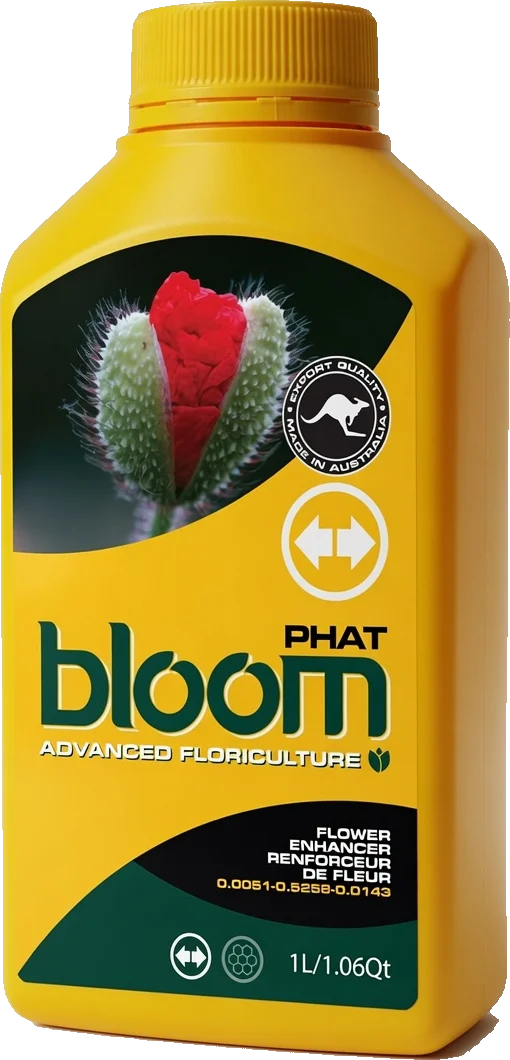
PHAT
Positioned for the mid-flower stretch, layered into an existing feed program.
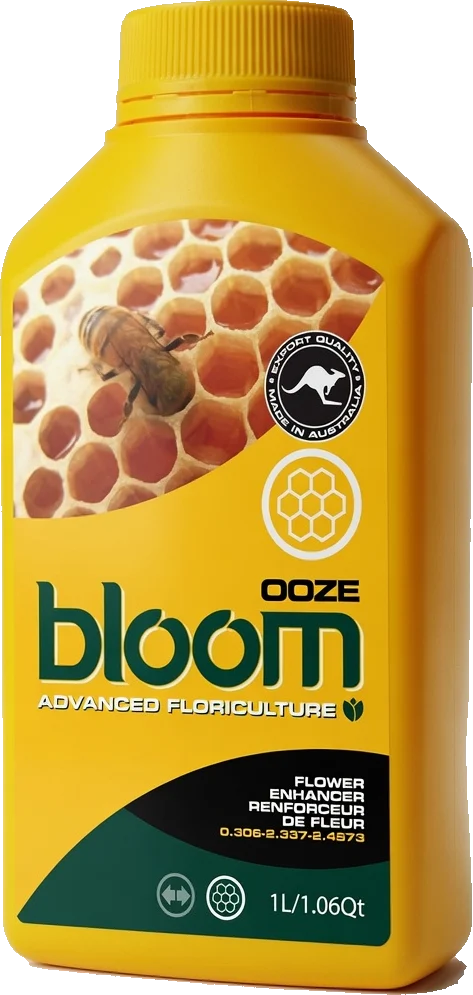
OOZE
Bloom’s own labeling positions it as a flower-finishing product, carried through late flower and flush.
The mechanism: stacked, not swapped
OOZE and PHAT are built to stack on top of whatever base program a grower already runs — nothing gets ripped out to make room for them. That matters more than it sounds: the biggest objection to trying a finishing layer is usually “I don’t want to retrain my whole feed schedule,” and this removes that objection instead of arguing around it.
This is the shape of it: PHAT enters the program in mid-flower, OOZE carries the finishing stretch through late flower and into flush — layered onto the base program a grower is already running, not replacing any piece of it.
Proof, not a marketing adjective
The FROST trial is the published, SC Labs PhytoFacts-verified terpene trial behind this program — real lab verification, not an internal claim. You can see the trial write-up at bloomyellowbottles.us/frost/.
We’re not going to restate specific figures here that belong on that page — go read the trial directly rather than take a summary’s word for it.
We’re also not going to hand you a dose rate or a guaranteed-analysis number in this post. Bloom’s own label is the only source we’ll ever build a claim on, and where a figure isn’t fully settled across our own label artwork, we’d rather say nothing than print something we can’t stand behind. If you want exact application rates, the printed feed chart and the bottle label are the two sources that matter — not a blog post.
Why this is a Bloom answer, not a trend answer
Bloom’s been making this call in the US market for 26 years, formulated and manufactured in Australia. That’s not a story we lead with to sound established for its own sake — it’s context for why the OOZE + PHAT pairing exists as a layer rather than a gimmick: it’s been refined against real feedback for two and a half decades, not launched to chase a trend.
Same base. Different finishing stretch.
OOZE and PHAT are in stock now and ready to layer into whatever program you’re already running. No rip-and-replace, no guesswork about where they fit — just the two products that carry mid-flower through flush.
As always: this post uses only figures and claims Bloom can verify against its own label artwork and published trial data. No dose rate, guaranteed-analysis figure, or grower quote in this post has been invented or assumed.