
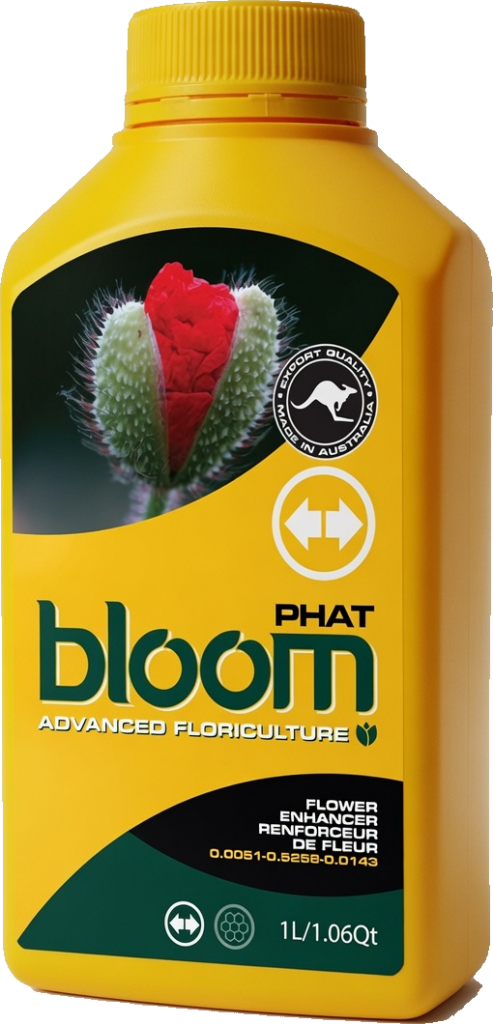
Every terpene figure in our published finishing comparison — the one behind the “4.2× the myrcene, 2.1× the linalool” numbers growers have seen us cite — traces back exactly to a real SC Labs PhytoFacts report, two flower samples from the same commercial cultivation partner, same cultivar, same room, one batch finished with PHAT and one with OOZE. We’ve checked every number against the lab document line by line. They’re accurate. But there’s a number in that same report we don’t usually bring up, and leaving it out makes the story sound cleaner than it actually is.
The number we leave out of the headline
The two samples in that report — lab-labeled “Poseidon” and “Eros,” not names we chose — came back with total cannabinoids of 36.2% and 27.32% respectively. That’s close to a nine-percentage-point gap, on two batches we’ve described as the same cultivar grown in the same room at the same time. Terpene totals between the two samples were nearly identical — 1.94% and 1.95% — which is the match that makes the terpene comparison worth citing in the first place. The cannabinoid numbers don’t match nearly as well, and we haven’t been saying so.
This doesn’t undo the terpene comparison. The lab numbers for limonene, linalool and myrcene are real measurements on real flower, and the multiples we’ve cited — 4.2× the myrcene, 2.1× the linalool — are correct transcriptions of what the report says. What it does mean is that finishing protocol almost certainly isn’t the only thing that varied between these two plants. Cannabinoid accumulation and terpene accumulation aren’t locked to the same clock in a cannabis plant, and a nine-point cannabinoid spread is the kind of thing that shows up when something else — timing of harvest, a few days’ difference in trichome maturity, plant-to-plant variation within a room — is also in play.
Why we’re printing the asterisk now instead of letting it sit
A two-sample comparison was never a controlled trial, and we’ve tried not to oversell it as one — it’s one grower’s real result, not a replicated study. But “same cultivar, same room” is doing some quiet work in how that comparison reads, implying the only thing that changed was the finishing line. The cannabinoid gap says that’s probably not the whole picture, and a brand that’s built a whole piece of its library on “the label wins” and “what verified actually means” doesn’t get to apply that standard everywhere except its own best data point.
What this means if you’re running your own comparison
If you’re testing a finishing change in your own room — PHAT, OOZE, or anything else — a single two-plant split is a start, not a conclusion, and it’s worth pulling the full cannabinoid panel alongside the terpene numbers rather than just the figures that make the clean story. If the cannabinoid totals land close together, that’s actually a better sign your split was clean than the terpene numbers alone. If they don’t, like ours didn’t, it doesn’t mean the test failed — it means you’re looking at more than one variable, and the honest move is to say so rather than quietly drop the number that complicates things.
It’s also worth saying why two-sample lab comparisons are common in this industry in the first place, rather than treating that as an excuse. A full replicated trial — multiple rooms, multiple cultivars, a controlled finishing variable with everything else held constant — costs real money and takes a full flowering cycle at minimum, and most of the finishing data circulating among growers and brands comes from exactly this kind of real-world, small-sample comparison rather than anything a university runs. That’s not a reason to stop citing it. It’s a reason to say plainly what kind of evidence it is: directionally useful, grounded in real lab numbers, and not a substitute for a larger, controlled test. A grower reading any finishing comparison — ours or anyone else’s — is better served asking for the full panel than taking a headline multiple at face value.
We’d rather a grower catch us printing the caveat than catch us not printing it. The terpene data stands. The asterisk stands next to it now, too.