
It’s Not the Smell That Decides: What Actually Makes a DIY Brew Safe
Compost tea, fish ferments, kelp steeps — growers have been brewing their own inputs for decades, and most of the advice floating around comes down to one test: does it smell right? The actual research measures something else entirely, and it’s worth knowing what.
The number one myth, and the real one
University of Hawai’i’s extension guide to fish amino acid (FAA) ferments — the Korean Natural Farming method of layering fish waste with brown sugar for two to six months — is explicit about how doneness is judged: by smell. “FAA, when completely fermented, will have a sweet, slightly fishy odor.” That’s the entire quality check in the published method. No pH reading, no amino-acid figure, no pathogen test, no shelf-life spec. The odor is the instrument.
Separately, FAO’s own technical guidance on fish silage says plainly what actually controls whether a fish ferment is safe or rotting: acidity. “The acidity of the mixture must be pH 4 or lower to prevent bacterial action.” Below that threshold, the fish’s own gut enzymes break the material down cleanly. Above it, bacteria get the opening they need — and the failure isn’t always even across the batch. If the acid and fish aren’t mixed thoroughly, FAO notes a “pocket of untreated material will putrify” while the rest of the bucket smells fine. A ferment can pass the smell test in the parts you stirred and fail it in the parts you didn’t.
The additive problem nobody expects
Here’s the counterintuitive part. Compost tea on its own — just compost, aerated in water — is generally fine. USDA’s Agricultural Research Service tested it directly and found that “when compost with low numbers of Salmonella and E. coli is used to make compost tea, the pathogens only grew when additives were included.” The additives studied were exactly the inputs growers reach for to make a tea more potent: soluble kelp, fish hydrolysates, humic acid, molasses, rock dust. Feeding the brew a nutrient boost doesn’t just feed the plant later — it feeds whatever bacteria are already in the compost, right then, in the bucket.
University of Arizona Cooperative Extension puts the same finding plainly: these formulations “are often supplemented with nutrient additives, including molasses, yeast, humic acid, soluble kelp, and fish hydrolysates,” and “addition of nutrient additives and water can cause pathogen proliferation.” To be fair to the method, the same extension source is honest that “links between foodborne illness and compost tea have not been established in peer-reviewed medical literature” — this isn’t a reason to panic about every batch. A separate survey of 60 vermicompost tea samples from smallholder farms found only one sample with a potentially pathogenic organism, at counts below the infective dose. Most DIY tea is probably fine most of the time. But “probably fine” and “controlled” are different claims, and the additive finding is the one DIY methodology doesn’t have an answer for: the moment you add the thing that makes the tea more effective, you’ve also made it a better growth medium for whatever’s already living in it.
None of this says a home brew can’t work — the research doesn’t support that either. What it does say is that the variable that matters is invisible: pH, mixing uniformity, and what you added, not what you smelled. That’s also exactly why a manufactured fish input controls those variables as part of the process rather than leaving them to a backyard bucket — Bloom Seafuel’s own safety data sheet, for example, lists its pH at 4–5, the same band the fish-silage research flags as the line between clean autolysis and spoilage, measured and held rather than guessed at.
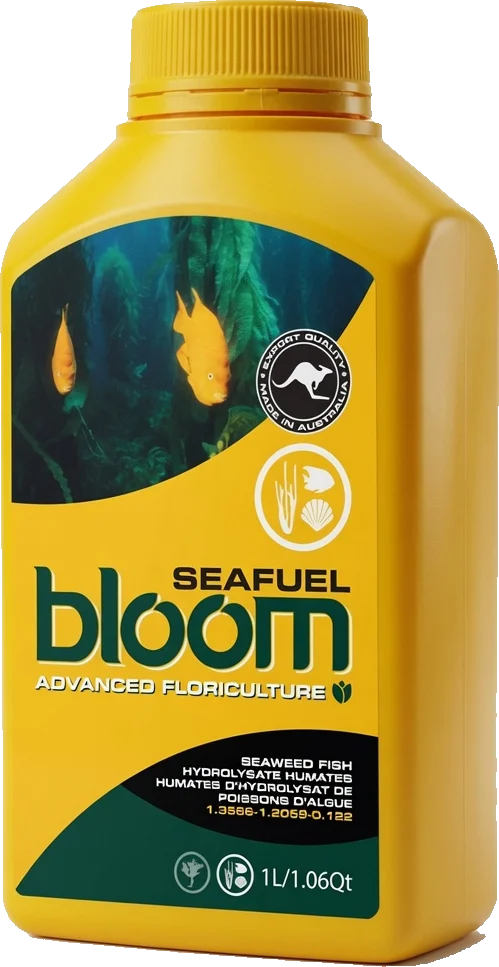
A controlled pH is a process decision, not a guess — the same number that separates a safe ferment from a risky one.
What this means at the bucket
If you’re running your own ferments or teas, the actionable takeaway from the research isn’t “stop” — it’s “measure the thing that actually matters.” A cheap pH strip tells you more about a fish ferment than your nose does. Mixing thoroughly, so there’s no pocket of fish sitting above pH 4 while the rest of the bucket reads fine, matters more than how long it’s been sitting. And if you’re adding kelp, fish hydrolysate or humic acid to a compost tea to make it stronger, know that you’re also raising the stakes on how clean your starting compost and water were — the additive doesn’t just feed your plants, it feeds everything else in the bucket too, for better or worse.
That’s the honest version of a story that usually gets told as “fermented is better” or “fermented is dangerous.” It’s neither. It’s a chemistry and microbiology problem with a known answer, and the answer is a number on a test strip, not a smell in the air.