
The Water Test We’d Tell You to Run Before Ours
Commercial & Broadacre Ag · Brand & Experience
Before a biostimulant goes on anything at field scale — ours included — there’s a cheaper, more consequential test that most growers skip: what’s already in the irrigation water. FAO’s own irrigation-water-quality guidance lays out the bands plainly. Salinity (EC): no restriction below 0.7 dS/m, severe restriction above 3.0. Chloride: no restriction below 4 me/L, severe above 10. Sodium, measured as SAR: no restriction below 3, severe above 9. Boron: no restriction below 0.7 mg/L, severe above 3.0. None of those numbers come from a fertilizer label. They come from the water source itself, and they apply before anything else gets added to it.
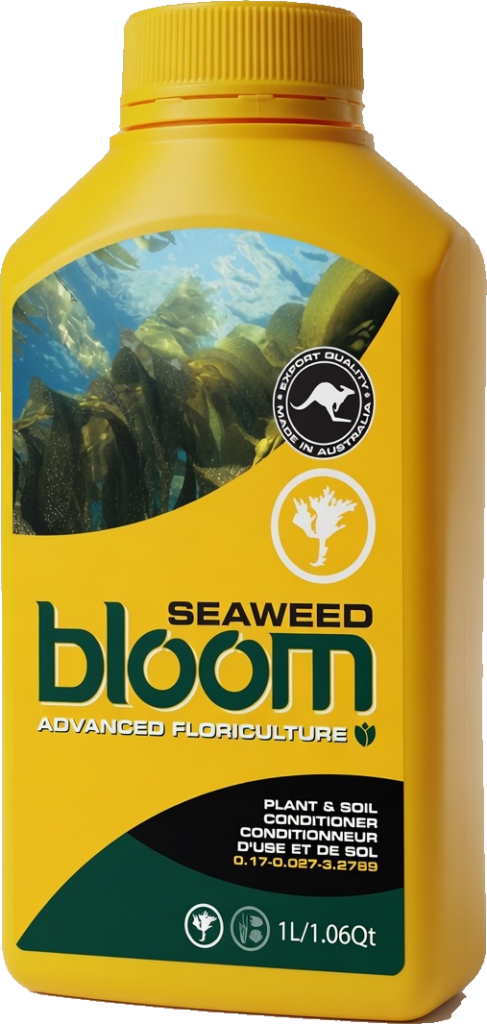
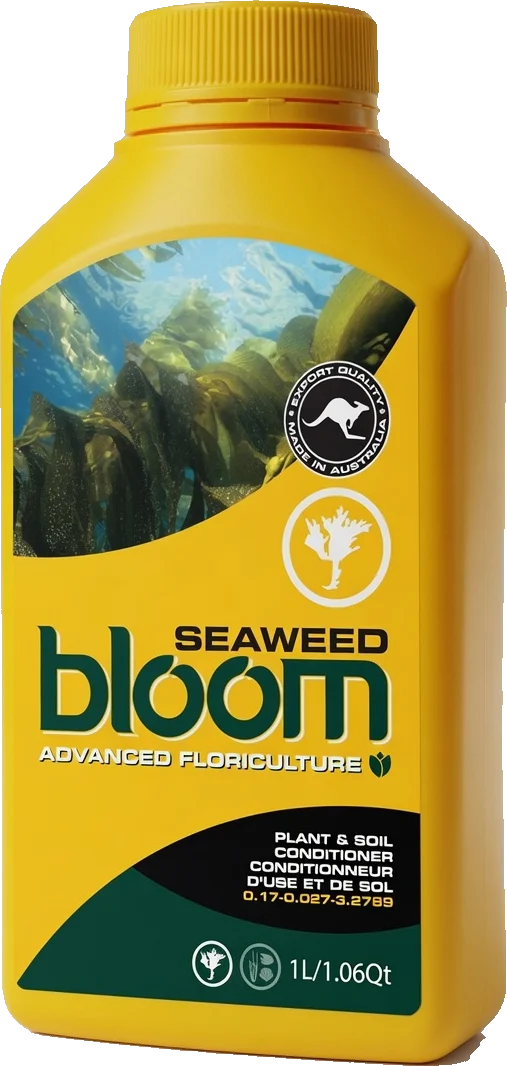
That matters because a biostimulant’s dose rate is calculated against clean water. Bloom Seaweed’s label (0.17-0.027-3.278, derived from Durvillaea potatorum) declares a 1 mL/L hydro rate and a printed garden-rate table for broader use — both numbers assume the water doing the diluting isn’t already carrying a salinity or chloride load of its own. If the source water is already in FAO’s “severe” band on chloride or SAR, no dose rate on any label fixes that. The input and the water are two separate problems, and a bottle only ever solves one of them.
A dose rate on a label is calculated against water that doesn’t already have a problem. If yours does, the fix is a water test, not a different fertilizer.
The four bands, side by side
Why we’d rather say this than not
It would be easier, from a sales standpoint, to let growers assume a biostimulant input is the variable that matters most. At field scale it usually isn’t. A pivot or a center-pivot well pulling water that’s already pushing 4–10 me/L chloride or an SAR of 3–9 is operating in FAO’s own “slight to moderate” restriction band before a single gallon of any product goes into the tank. Scaling up the input doesn’t move those numbers — only a different water source, blending, or treatment does. A grower who tests water first and finds it clean gets more out of whatever biostimulant they choose next. A grower who skips the test and blames the bottle when results are inconsistent is often diagnosing the wrong variable.
This isn’t a claim that Bloom Seaweed corrects water chemistry — it doesn’t, and no seaweed extract does. It’s an honest acknowledgment that the input and the water are separate line items on a field audit, and only one of them is something a bottle can touch.
What a water test actually tells you to do next
A lab water test comes back with numbers, not a verdict, and the next step depends on where those numbers land. Inside the “no restriction” bands, the biostimulant’s own label rate applies as written — nothing to adjust. Inside the “slight to moderate” range on chloride or sodium, growers typically look at blending a cleaner source into the irrigation supply, timing applications around rainfall, or adjusting how much leaches past the root zone, none of which is a change to the biostimulant dose. Past the “severe” threshold on any one of these bands, the honest conversation is about the water source itself — a different well, a different blend ratio, or treatment — before anything about input selection becomes the relevant question again. A well that tests clean in spring and drifts into the moderate band by late summer, as many do once an aquifer draws down or a surface source concentrates under evaporation, is worth testing more than once a season, not just at planning time.
None of that changes what’s printed on a Bloom Seaweed label. The 1 mL/L hydro rate and the printed garden-rate table are still the numbers to run — they were never meant to compensate for water quality in the first place, any more than a feed chart for any other input is. What changes is which problem you’re actually solving on a given field, and that’s a question only a water test answers.
Run the water test before you run the trial. It costs less than a season’s worth of product, and it tells you whether the thing you’re troubleshooting is actually the fertilizer.
We’d rather a grower know this before buying a case of anything — ours included — than find out after a disappointing season that the bottleneck was never on the shelf.
Related reading: The Nitrogen You Forgot to Count, on another input-accounting gap worth closing before planning season. On the SAR number specifically, see the SAR math that diluting seawater can’t fix — why that one band doesn’t respond to dilution the way EC does.