
The Nitrogen You Forgot to Count
Commercial & Broadacre Ag · Science & Education
Most seasonal nitrogen budgets are built around the obvious line items — starter, sidedress UAN, anhydrous, maybe a late foliar pass. What tends to get filed somewhere else entirely is the nitrogen riding along in anything else with a guaranteed analysis: a calcium amendment, a micronutrient carrier, a specialty blend. If the label carries a nitrogen percentage, that percentage is nitrogen going onto the field whether it gets counted against the budget or not. It doesn’t stop being nitrogen because the bag says “calcium” on the front.
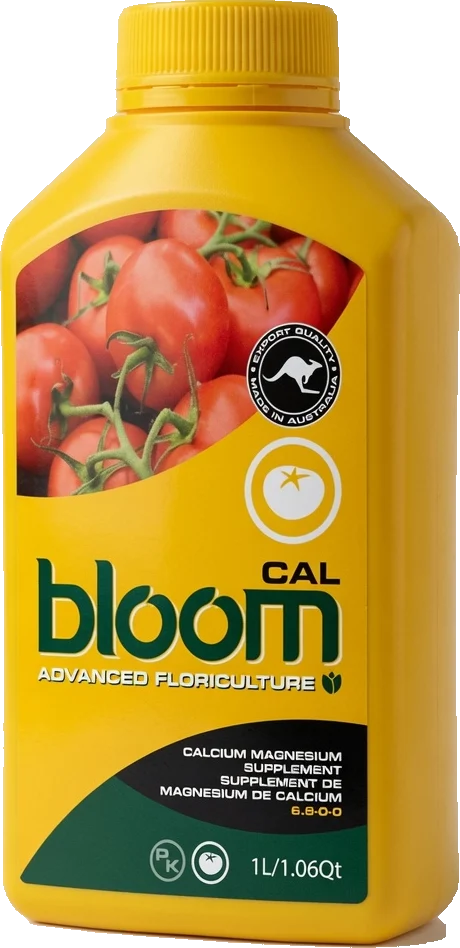
Here’s a clean, label-verified example of the math, using our own Cal product’s guaranteed analysis — worth saying up front that Cal itself is formulated for hydroponic use, not a field input, so this isn’t a recommendation to spread it. It’s a worked chemistry example anyone can apply to whatever calcium-nitrate-based product is actually in their shed. The label reads: Total Nitrogen 5.2% (all nitrate nitrogen), Calcium 5%, Magnesium 1.4%, Iron 0.5% (chelated, DTPA), Zinc 0.036% (chelated, EDTA) — derived from calcium nitrate, magnesium nitrate, iron DTPA and zinc EDTA. That 5.2% is the number a nitrogen budget needs, and it’s easy to walk right past it looking for the calcium.
Any guaranteed analysis with a nitrogen percentage on it is a nitrogen source. That’s not a footnote on the label — it’s arithmetic, and it goes in the same column as everything else applied to the field.
The math most budgets skip
5.2% nitrogen means 5.2 lb of N in every 100 lb of product — 0.052 lb N per pound. Run that against illustrative field tonnages (not a usage recommendation, just the arithmetic any calcium-nitrate carrier produces): at 50 lb of product per acre, that’s 2.6 lb N/acre. At 150 lb/acre, 7.8 lb N/acre. At 300 lb/acre, 15.6 lb N/acre. None of those numbers show up on a fertilizer invoice labeled “nitrogen.” They show up on an invoice labeled “calcium” or “micronutrient,” which is exactly how they end up missing from the season total.
The form matters as much as the amount
On the Cal label, all 5.2% is nitrate nitrogen — not ammoniacal, not urea. That’s not a quality statement, it’s a timing one. Nitrate is immediately plant-available, which also means it’s immediately leachable; it doesn’t carry urea’s volatilization risk, but it carries its own loss window in wet or over-irrigated conditions. A calcium-nitrate carrier applied right before a heavy rain event is behaving exactly like any other nitrate source on the field — because chemically, that’s what it is. Filing it under “micronutrient program” instead of “nitrogen program” doesn’t change which bucket it belongs in when you’re planning around a rain forecast or a leaching-risk window.
Why this is worth five minutes at planning time
A corn program budgeting 150 to 220 lb N/acre for the season can lose track of 5 to 15 lb/acre without ever doing anything wrong — the number was just never added in because it arrived wearing a different label. That’s not a large share of the total, but it’s exactly the kind of gap that makes an N-use-efficiency number look worse than the program actually is, or makes a late-season N test read differently than expected. Reading every label’s guaranteed analysis line by line, not just the one marked “fertilizer,” is the whole fix. No new product, no new practice — just an honest tally of a number that was on the bag the whole time.
A guaranteed analysis is a nutrient budget, not a brand feature. Read the nitrogen line on everything that touches the field this season, not just the bag with “fertilizer” printed on the front.
We’re citing our own Cal label here because it’s a number we can show you exactly as printed — and because it’s formulated for hydroponic use, there’s no angle in it for us to oversell on a field program. That’s the point: the arithmetic doesn’t care whose bottle it’s on. If a product has a nitrogen percentage, it’s part of the budget. Count it.
Related reading: The Water Test We’d Tell You to Run Before Ours, on another input-accounting question worth settling before planning season, and ROOTS Barely Registers as a Nitrogen Source — and the Label Still Splits It Two Ways, on the opposite end of the nitrogen-disclosure spectrum.