
The Metals Ceiling Isn’t One Number
Commercial & Broadacre Ag · Brand & Experience
Every Bloom label points growers to the same line: metals information is available at aapfco.org/metals.htm. It reads like a footnote. It isn’t. The framework behind that link doesn’t set one metals ceiling for fertilizer products — it sets a different one depending on how much nutrient the label guarantees, and that single design choice means two products with identical real-world metals content can be held to very different numbers.
AAPFCO’s Heavy Metals Labeling Aid gives two kinds of limit. For a low-phosphate specialty fertilizer making no micronutrient claim, the ceiling is flat: arsenic 10 ppm, cadmium 20 ppm, lead 100 ppm, full stop. But where a product’s label guarantees a percentage of phosphate (P₂O₅) or a micronutrient like iron, manganese or zinc, the ceiling is no longer flat — it’s expressed per percent of that guarantee: 2 ppm arsenic, 4 ppm cadmium and 20 ppm lead for every 1% of P₂O₅ declared; 13, 12 and 140 ppm respectively for every 1% of Fe, Mn or Zn.
That scaling isn’t a food-safety number getting looser as a product gets “riskier.” It’s a labeling-math artifact of pegging the ceiling to declared nutrient content rather than to an absolute figure — and it means the ceiling a broadacre blend operates under and the ceiling one of Bloom’s own boosters operates under aren’t the same kind of number at all.
Why this matters at field scale
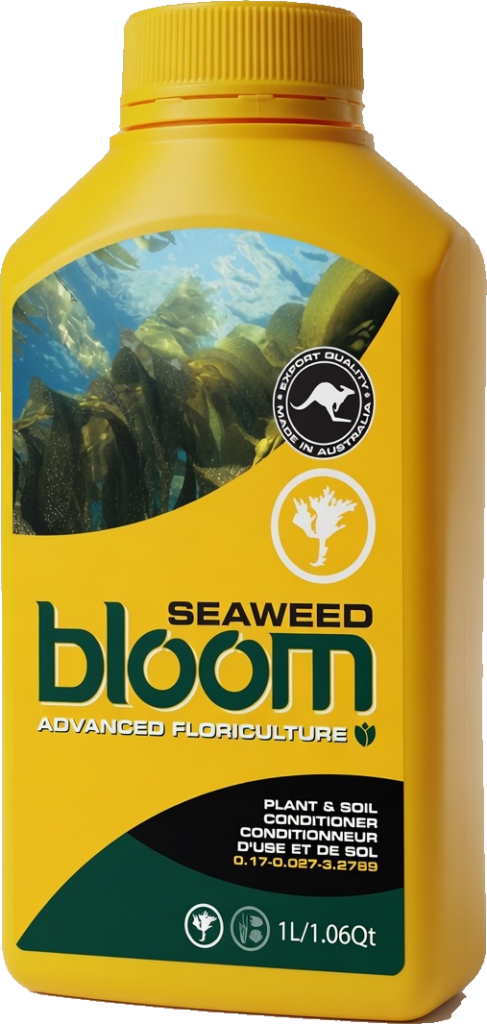
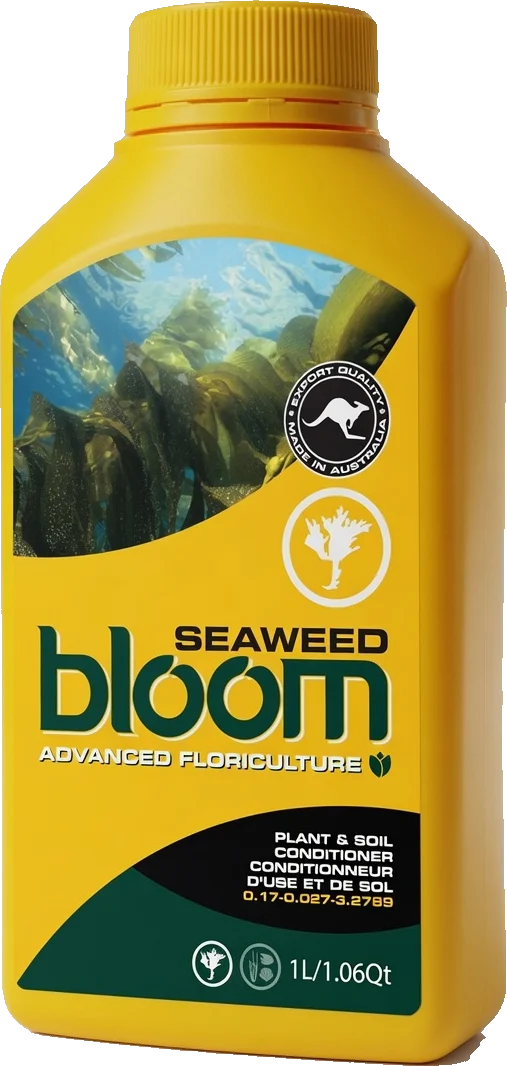
A broadacre operation routinely works with straight fertilizers carrying substantial guaranteed P₂O₅ or Fe/Mn/Zn — a 10% phosphate blend isn’t unusual. Run that through the scaling rule and its arsenic ceiling rises to 20 ppm, its cadmium ceiling to 40 ppm, its lead ceiling to 200 ppm — double the flat specialty number, purely because the nutrient guarantee on the label is ten times larger. A single-purpose booster like Bloom Seaweed, declaring 0.027% P₂O₅ with no micronutrient guarantee at all, doesn’t generate a meaningful multiplier either way — its guarantee is too small to move the scaled number off the flat floor, so it’s held to the strict 10/20/100 ppm ceiling with no scaling allowance in either direction.
Neither number is a measurement of what’s actually in either bottle. AAPFCO’s framework doesn’t require routine metals testing disclosed on the label at all — it caps what’s allowed, it doesn’t report what’s present. The honest reading of the aapfco.org/metals.htm line on a Bloom label, then, isn’t “here’s how much metal is in this bottle.” It’s “here’s the regulatory ceiling this specific guarantee operates under, and it’s a different ceiling than the one on the 10% phosphate blend in the shed next to it.”
The metals ceiling scales with what a label guarantees, not with what a product actually delivers in the field. That’s worth knowing before comparing two “metals-compliant” products and assuming compliance means the same thing on both labels.
What this doesn’t claim
This isn’t a statement about any Bloom product’s actual metals content — none is declared on any Bloom label, and this piece doesn’t invent one. It’s a statement about the structure of the regulation itself, sourced directly from AAPFCO’s own published labeling aid, read alongside the P₂O₅ figure Bloom’s own Seaweed label already declares. A broadacre buyer comparing a specialty booster against a bulk-blend fertilizer on “metals compliance” alone is comparing two numbers built on different rules — and the rule, not the product, is usually the more interesting story.
Reading a metals line without assuming more than it says
The practical habit worth picking up is checking what a product’s label actually guarantees before reading anything into its metals ceiling. A high-guarantee blend with a wide scaled allowance isn’t necessarily carrying more metal than a low-guarantee booster held to the flat floor — the allowance describes what the rule permits, not what a lab would find if it tested the bag or the bottle. Two products can both be fully compliant while sitting under ceilings that differ by a factor of ten or more, purely as a function of the nutrient percentage printed above the metals line, and neither number tells a buyer what’s actually present without an independent assay to go with it.
Related reading: A 70-Year-Old Patent Still Shapes How Some Growers Think About “Sea Solids” at Field Scale, on another field-scale regulatory arithmetic case.
That’s a case for reading the whole label, not just the one line everyone skips past. The guaranteed analysis a product carries doesn’t just describe what it feeds a crop — on a strict reading of AAPFCO’s own framework, it also quietly sets the terms for a metals ceiling most growers never notice is scaled at all.