
A “Live” Tea and a Sterile One Don’t Behave the Same in the Greenhouse — Here’s the Study That Shows Why
Compost tea gets talked about in two completely different registers in a cut-flower or ornamental greenhouse: as a nutrient boost, and as something that might help a bench of cuttings fight off fungal pressure. Those are separate claims, and they deserve separate evidence. One study worth knowing about tested the second claim directly, by comparing a tea that still had its living biology intact against the exact same tea after it had been sterilized — and the difference between the two tells you something real about where a tea’s effect actually comes from.
The sterilization test
Researchers working with aerated municipal waste compost teas, supplemented with various organic additives, ran a side-by-side comparison on fungal mycelial growth: the raw, unsterilized tea against a sterilized version of the identical formulation. The raw teas reduced fungal mycelial development by between 21% and 61%, depending on the specific additive mix. The sterilized version of the same teas, tested against the same fungal growth, did essentially nothing — the paper describes the sterilized teas as “ineffective” at reducing fungal growth.
That gap is the whole finding. If the suppression came from a chemical compound in the brew — a tannin, an acid, anything that would survive sterilization — the sterilized version should have performed close to the same as the raw one. It didn’t. Killing the living microbial population in the tea removed almost all of its measured effect on fungal growth. Whatever a compost tea is doing to compete with or crowd out fungal growth on a surface, it is doing it biologically, not chemically.
Why that matters more than it sounds like it should
A biological effect is a different kind of thing to rely on than a chemical one, and that cuts both ways. It means the same tea recipe, brewed by two different people with two different compost sources, two different aeration setups and two different incubation times, can land very differently — because the organisms doing the work vary by “geological region, sources of starting material, and incubation time,” per the same body of extension research on home and commercial tea production. It also means the additives commonly stirred into a brew to feed that biology — molasses, soluble kelp, humic acid, fish hydrolysates — aren’t incidental extras. They’re there specifically because a thriving microbial population is the entire mechanism, and an additive-starved tea is a weaker tea by the same logic that makes a well-fed one stronger.
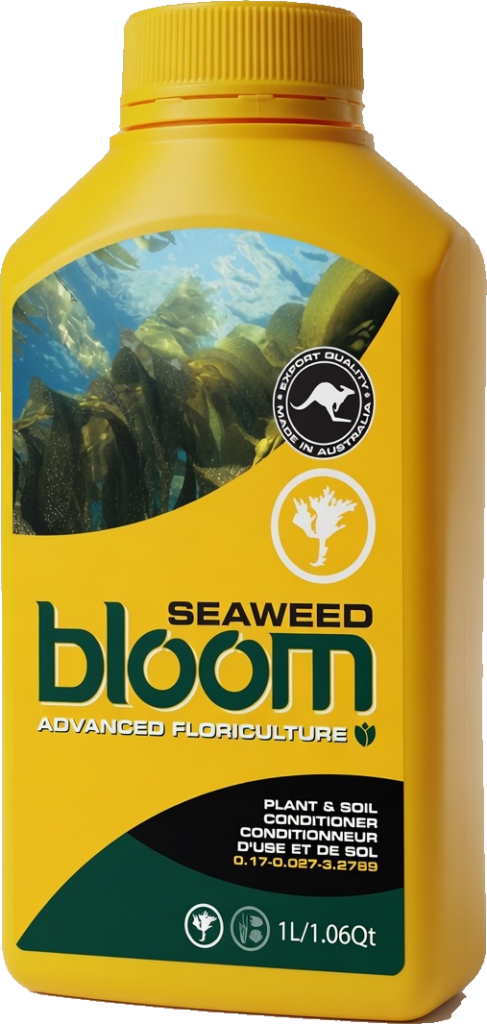
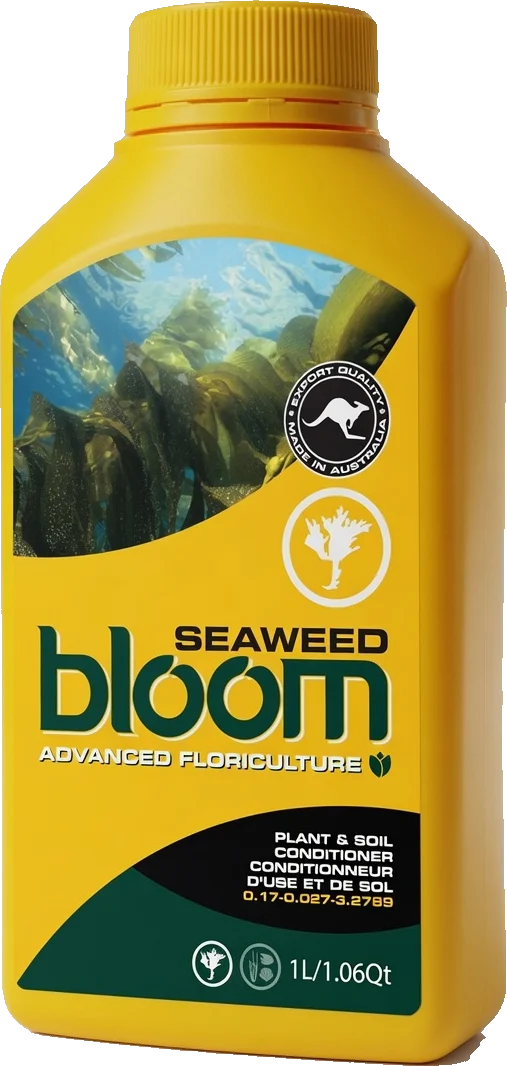
We want to be precise about what this is and isn’t. This is general science about compost tea as a category, not a claim about any Bloom product controlling disease — Bloom doesn’t sell a biocontrol or fungicide input, and nothing here should be read as one. What it does illustrate is the distinction our whole booster lineup is built around: a product like Seaweed is a single-purpose, declared-ingredient input — Durvillaea potatorum extract, 0.17-0.027-3.278, dosed at 1 ml/L — not a live biological system, and it isn’t trying to be one. A compost tea’s effect lives or dies with the organisms in the bucket on brew day. A bottled extract’s effect lives or dies with what’s declared on the label, batch to batch, every time.
The honest caveat worth carrying into the greenhouse
It’s also worth remembering, from the same body of extension research on home compost teas, that additives are exactly what let pathogens get a foothold in a tea in the first place — a nutrient-rich brew can boost a small starting population of something unwanted just as readily as it boosts the beneficial organisms a grower actually wants. A tea is not automatically safe because it’s “natural,” and it’s not automatically effective because it smells finished. Both of those are reasons a cut-flower or ornamental operation might prefer an input with a declared, consistent analysis for the parts of a program where consistency matters most — and reasons a grower running their own compost tea program should keep an eye on sourcing, aeration and additive hygiene rather than assume the biology will sort itself out.
None of this is an argument against compost tea — the sterilization comparison is, if anything, evidence that a well-managed one is doing something real. It’s an argument for knowing which of your inputs are living systems that vary with every batch, and which are declared formulations that don’t. A greenhouse program usually benefits from having both, as long as nobody mistakes one for the other.