
The Metals Line on the Back of the Bottle, and Why It’s an Easy Question at Garden Scale
Home & Backyard Garden · Brand & Experience
Flip over any bottle in the Bloom range and, underneath the guaranteed analysis, there’s a sentence most people never read: a pointer to a public registry where anyone can look up the heavy-metal limits that fertilizer has to meet. We’ve written before about the four standing lines that show up on every Bloom label and what the manufacturer’s address says about the company. This one is worth a post of its own, because the honest answer to “what does that line actually mean for me” is different depending on whether you’re running a few raised beds or a few hundred acres — and for a backyard gardener, it turns out to be a genuinely simple one.
The line reads: “Information regarding the contents and levels of metals in this product is available on the internet at http://www.aapfco.org/metals.htm.” AAPFCO is the Association of American Plant Food Control Officials, the body that sets the metal ceilings every state fertilizer regulator works from. It isn’t a Bloom-specific disclosure — it’s the same public framework behind every registered fertilizer sold in the US, and Bloom points to it the same way on every bottle rather than asking anyone to just take a number on faith.
For a low-phosphate specialty fertilizer making no micronutrient claim — the category most garden biostimulants fall into — AAPFCO’s absolute ceilings are 10 ppm arsenic, 20 ppm cadmium, and 100 ppm lead. Any product sold in the US has to stay under those numbers, full stop.
Why this question is harder at broadacre scale
We’ve written for the commercial-ag side of this business about why that same per-batch ceiling doesn’t settle the whole question for a farm applying an input across hundreds of acres, season after season. A number that passes on one bag, applied over enough acreage and enough years, adds up to a real cumulative total — and tracking that total is a soil-testing question, not something any single label can answer. That’s a genuinely open, ongoing question at that scale, and we said so plainly rather than pretending a per-bag ceiling closes it.
Why it’s a simpler question in a backyard
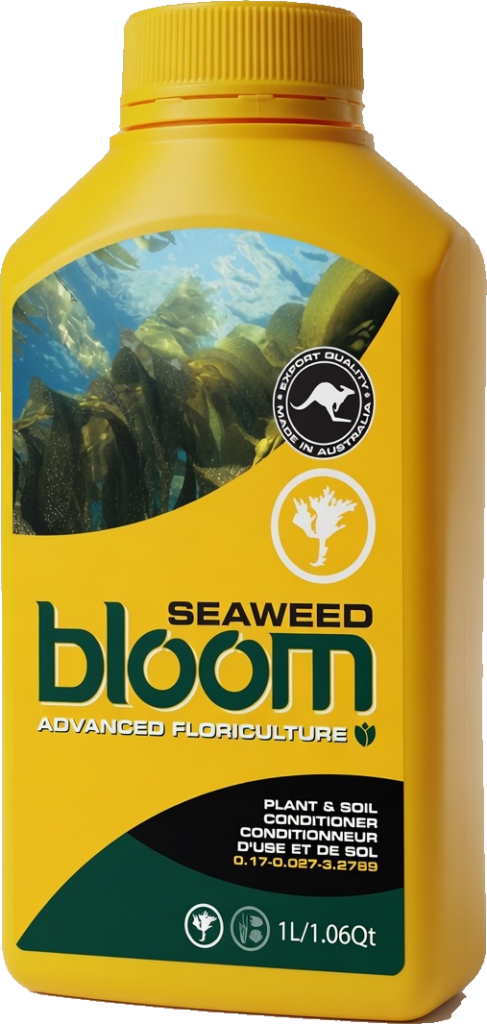
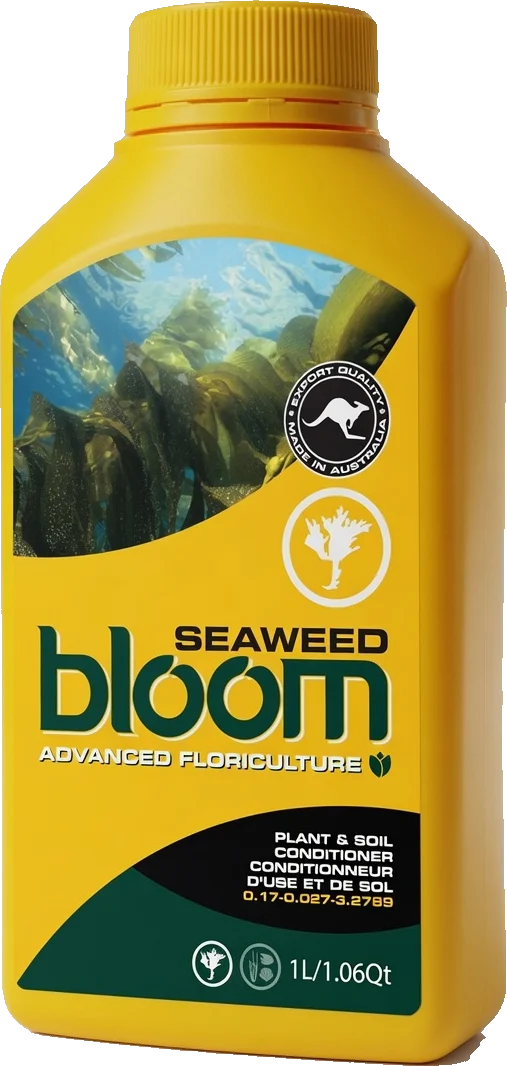
A home garden doesn’t have that arithmetic working against it. Take our own Seaweed, which is built for exactly this audience — the printed garden rate table calls for 20 ml per 10 L for ferns, 25 ml for seedlings and foliar feeding, 40 ml for general garden use, up to 100 ml per 10 L for tomatoes and large stressed trees. A single 1 L bottle, dosed at those rates into a handful of watering cans across a growing season, is a small total volume moving into a small amount of soil. The acreage and the season count that make the broadacre question genuinely open just aren’t present at this scale. The per-batch ceiling isn’t a partial answer here — it’s most of the answer, because there’s no multi-hundred-acre, multi-decade accumulation to worry it might be missing.
None of this means a home gardener should skip reading labels, or that scale erases the value of the AAPFCO framework. It means the two most common objections to that pointer line — “it’s just a formality” and “it doesn’t really tell you anything” — land differently depending who’s reading it. At broadacre scale, the honest answer is that the line is real but incomplete without your own soil-test history behind it. In a backyard, the honest answer is closer to: this really is most of what you need to know, because the thing that would make a per-batch number insufficient — years of accumulation across real acreage — isn’t the situation a container or a raised bed is in.
A regulatory ceiling doesn’t change meaning by audience — but what it settles for you does. At backyard scale, a line pointing to a public metals registry is close to a complete answer. At broadacre scale, it’s the start of a longer-running record. Knowing which situation you’re actually in is the useful part.
We print that line on every bottle regardless of who’s buying it — a backyard tomato grower and a commercial operation read the exact same sentence on the exact same label. We’d rather point to the same public framework every time and let the scale of your own garden tell you how far that one line carries you, instead of writing two different versions of honesty for two different customers.
Related reading: Boiling Your Kelp Tea Trades One Nutrient for Another, another backyard-scale look at what’s really in the bottle (or the pot).