
Two of Our Own Documents Say Different Things About Humate. Here’s Which One We Trust.
Home & Backyard Garden · Brand & Experience
If you ever want to check a fertilizer claim yourself instead of taking a brand’s word for it, here’s the single most useful habit: find the actual guaranteed-analysis label, not the cheat sheet, not the product page, not the sell copy. We’re using our own Humate as the example, because we found a real gap between two of our own internal documents, and the fix was simple once we went to the source.
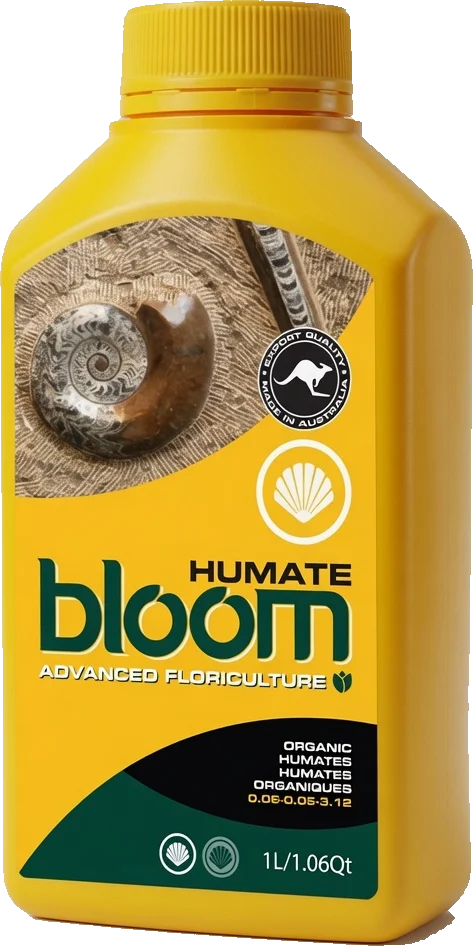
Bloom Humate’s printed label artwork declares 10% Humic Acid (Derived from Leonardite), alongside a 3.12% soluble potash (K₂O) guaranteed analysis, potassium hydroxide listed as the derived-from source for that potash. That’s the bottle. Separately, an internal cheat sheet and an older version of our own product page have, at various points, stated 20% humic acid — double the label figure. That’s a real discrepancy, open since August, and it hasn’t been resolved by anyone re-running a lab test. It got resolved the boring way: by going back to the label artwork, which is the one document in that chain that’s legally required to be accurate.
A cheat sheet is someone’s summary. A product page is marketing copy. A guaranteed-analysis label is a regulatory document a company can be held to. When they disagree, the label wins — every time, for every brand, not just ours.
Why a cheat sheet drifts from the label in the first place
We’ve flagged this exact pattern before on other products — a cheat sheet that said Pre and Final run at 4 ml/L when the real feed chart says 1 ml/L is a dosing version of the same drift. With Humate, it’s a declared-percentage version. Neither is a case of someone lying; it’s a case of a secondary document outliving the version of the label it was copied from. The fix in both cases is the same: go back to the primary, legally-filed document, not the copy of a copy.
What the label actually settles
That 10% figure isn’t just a number we’re defending because it’s ours — it’s also the one with a traceable manufacturing story behind it. The potassium hydroxide listed as the source of Humate’s potash is one of two common industrial routes for pulling humic acid out of raw leonardite ore (the other being sodium hydroxide), and the two routes leave different leftover minerals behind: a KOH extraction leaves potassium, an NaOH extraction leaves sodium. That’s a real, chemistry-backed reason the label’s derived-from line matters for a home gardener working humic acid into container soil season after season — and it’s a detail a cheat sheet summarizing “20% humic acid” would never carry, because a summary strips out exactly the context that makes a number trustworthy in the first place.
None of this means every secondary document in a company’s files is wrong, or that a shopper needs to track down label artwork for every bag of fertilizer they buy. It means that when two of a brand’s own documents disagree, there’s a reliable way to find out which one is right, and it isn’t picking the bigger number. For your own garden shelf, the same habit applies to any brand: the guaranteed analysis printed directly on the bag or bottle is the one number a manufacturer is legally accountable for. Everything else is a summary of it.
If a product’s own marketing material and its own label disagree, the label is the one that was filed with a regulator. That’s not a Bloom rule — it’s true of any fertilizer on any shelf.
We’d rather tell you we caught our own documents disagreeing than let a bigger-sounding number stand uncorrected. The bottle says 10%, filed and verified — that’s the number we’re using going forward, and the sheet is getting fixed to match it.