
What’s Actually in the Bottle: Where Bloom Comes From
Twenty-six years in the US market is a long time for a nutrient line to keep the same story straight. Here’s where Bloom actually comes from, what’s actually in it, and why we don’t dress it up as more than it is.
26 years. That’s how long Bloom Yellow Bottles has been selling into the US market. Not a relaunch, not a new label on an old idea — the same range, sourced the same way, for over two and a half decades. Most of the brands you’ll see sitting next to us on a shop shelf haven’t been around a third that long.
The short version: it’s made in South Australia
Bloom is manufactured by Agricultural Organics (Aust) P/L, out of Green Fields, South Australia. That’s not a marketing detail we buried in fine print — it’s printed on every label, because it’s the honest answer to “where does this stuff actually come from.” A lot of the plant-nutrient category leans on vague language about “premium sourcing” without saying much at all. We’d rather just tell you the address.
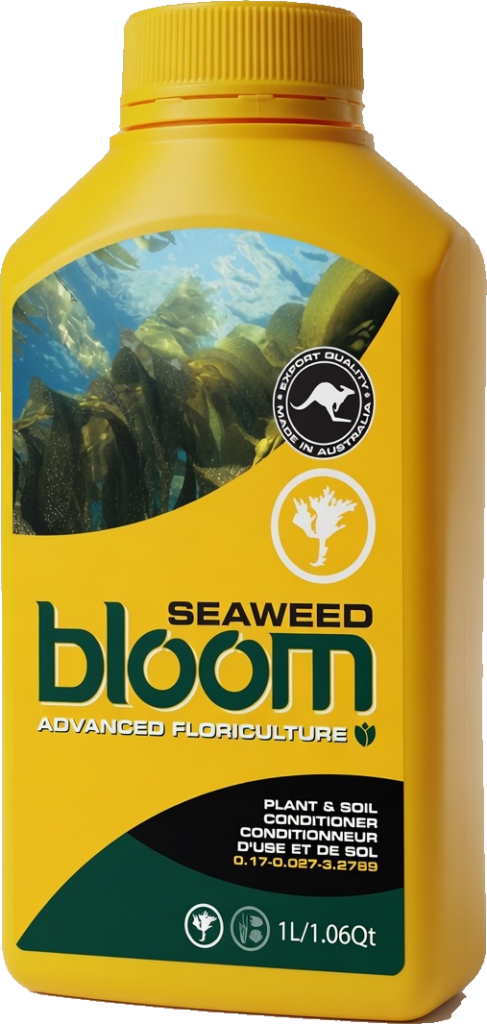
The raw material side of that story starts further south still. Several products in the range — Roots, Seaweed, and Seafuel among them — are built around Durvillaea potatorum, a seaplant extract, as their base input. It’s the same species across all three, which isn’t an accident: it’s one of the threads that runs through the whole Bloom range rather than a different mystery ingredient in every bottle.
The fish, too, isn’t generic
Seafuel’s label is specific about this: it’s derived from Southern Bluefin Tuna, hydrolyzed, paired with the same Durvillaea potatorum seaplant extract that shows up elsewhere in the range, plus a small non-plant-food dose of humic acid from Leonardite. We’re not going to tell you our fish is somehow different from every other fish-based product on the shelf — comparisons like that need a real head-to-head source before they ship, and we don’t have one to point to. What we can tell you, because it’s printed on the bottle, is exactly what’s in ours: what species, what process (hydrolysate, not a vaguer “cold composted” story), and what else rides along with it.
A thread that keeps showing up across the range once you actually read the labels side by side: Leonardite-derived humic acid (0.075% in Roots and Seafuel, 10% in Humate), Durvillaea potatorum seaplant extract (Roots, Seaweed, Seafuel), and small doses of thiamine — vitamin B1 — in more than one product. It’s not a coincidence — it’s the same handful of raw material relationships used consistently, rather than a different formula story invented for every SKU. If you’ve ever wondered why Bloom bottles read a bit like a family instead of nineteen unrelated products, that’s why.
What Bloom is — and isn’t
We’re not USDA-certified organic, and we’re not going to imply otherwise. Bloom sits in the biostimulant / organic-input-style category — additives that trigger plant responses and fill gaps around your existing feed program, not a replacement for your base nutrients. (The one exception is our UK range, where Grow A/B, Flower A/B and Euro A/B are base-nutrient pairs in their own right — different market, different job.)
That’s a narrower claim than a lot of marketing in this space makes, and we’re fine with that. Twenty-six years in one market is what happens when the story you tell about a product matches what’s actually on the label — no implied guarantees, no invented mechanisms, just the same ingredients, sourced the same way, batch after batch. It’s also why you won’t see us naming other brands or running side-by-side comparisons we can’t back with a real source — if a claim isn’t something we can point to, we leave it out rather than guess.
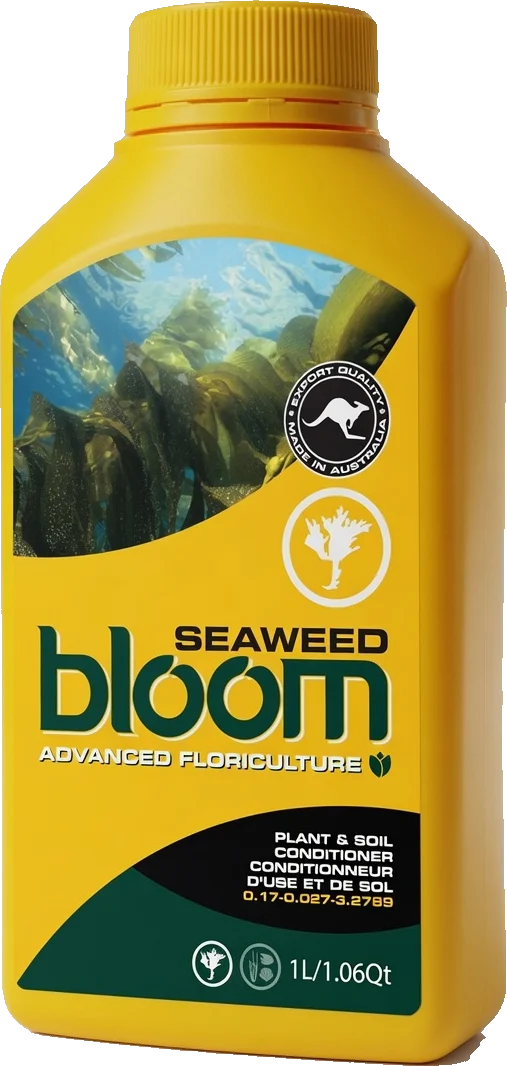
Bloom Seaweed — Durvillaea potatorum seaplant extract, the same base input behind Roots and Seafuel.
Why this matters if you’re the one feeding the plants
You don’t need to know the address of a manufacturing plant in South Australia to run a good feed program. But if you’re going to trust a bottle you didn’t formulate yourself, it’s worth knowing that the company behind it has been answering to the same market — same regulators, same growers, same label requirements — for over two and a half decades, and that the raw materials behind the range are consistent rather than reinvented product to product.
That’s the whole pitch of this post: not a new claim, not a new mechanism, just a straight look at where Bloom actually comes from — from a stretch of Southern Ocean coastline, through a manufacturer in Green Fields, onto a boat or a plane, into a warehouse, and eventually into your reservoir. Same route it’s taken for twenty-six years.