
Flowering Houseplants Get a Finishing Stretch Too — Just at a Much Smaller Scale
A tent full of cannabis plants going into the last weeks before harvest and a single African violet or anthurium sitting on a windowsill don’t look like they have much in common. But both are flowering plants moving through the same basic arc: vegetative growth, bud or flower development, then a finishing stretch where the plant is putting its remaining energy into the blooms it’s already set rather than new growth. The scale is wildly different. The structure of that last stage isn’t.
Where the idea comes from
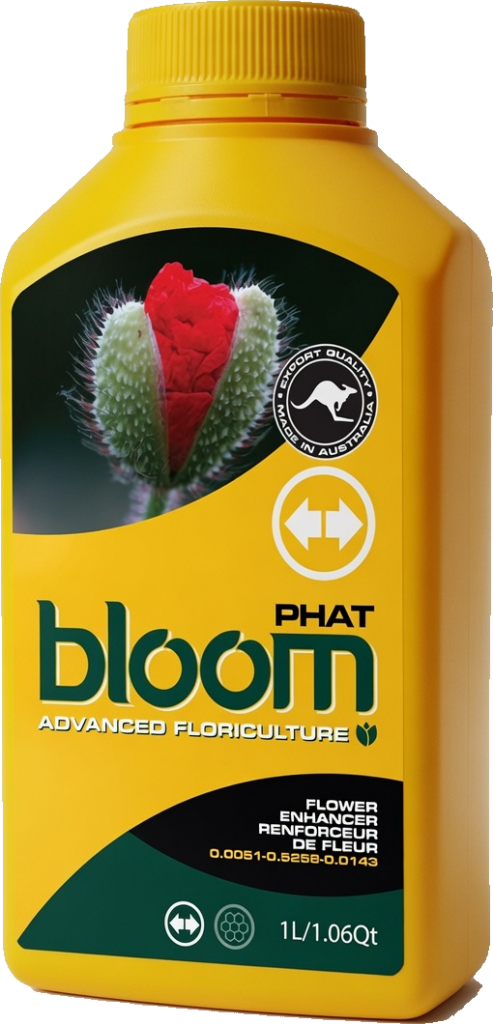
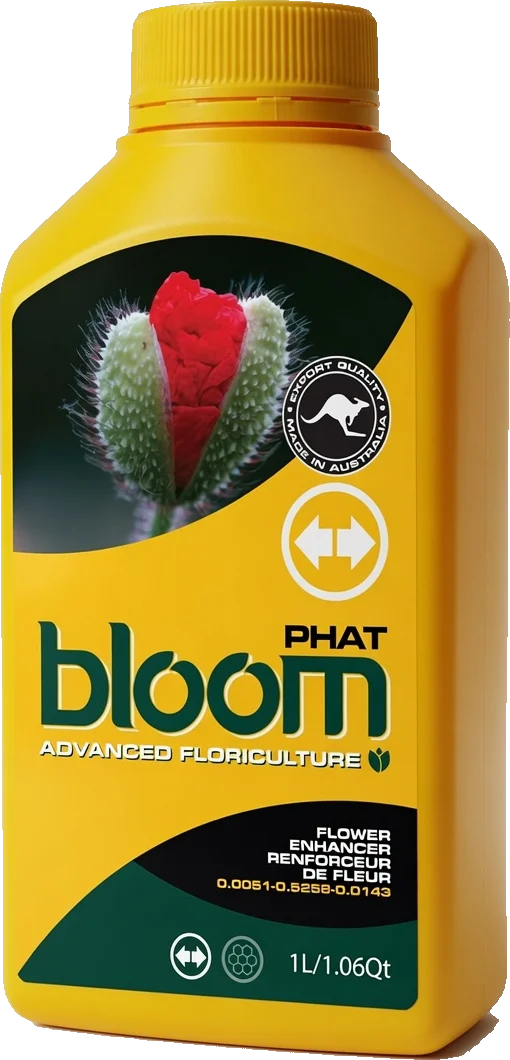
Bloom’s Ooze and Phat were built as a finishing-stage pair — layered onto an existing base program in that last stretch, not swapped in for anything. The clearest evidence behind them comes from the FROST trial, verified independently by SC Labs, which measured a real, lab-confirmed change in terpene content when the pair was added late in a cannabis cycle: 1.94% and 1.95% total terpenes across the two trial samples, with myrcene 4.2 times higher and linalool 2.1 times higher than the comparison baseline.
Terpenes aren’t the houseplant metric — and that’s fine
A houseplant grower isn’t chasing terpene percentages. What they’re actually watching for in a flowering houseplant’s finishing stretch is bloom count, how saturated the color comes in, and how long the flowers hold before dropping. Those aren’t the same measurement as the FROST trial ran, and Bloom hasn’t tested them specifically — that trial measured cannabis terpenes, full stop. What carries over isn’t the number. It’s the structural idea the trial demonstrated: a finishing layer, added in that last stage without disturbing the base program underneath it, produced a measurable change in the one crop it was tested on.
Scale is the real adjustment, not the product
The actual difference between a hydro tent and a houseplant on a windowsill isn’t the mechanism — it’s the volume of growing medium and the size of the dose that makes sense in it. Bloom’s published application rates for Ooze and Phat were written for larger reservoirs and beds, and the specific timing scheme that applies even within that context is still being finalized against Bloom’s own feed charts — so rather than publish a houseplant-scale number here that doesn’t yet have a confirmed source behind it, the right move for a small-pot grower is to follow the ratio on the current feed chart and simply mix a smaller total volume for a smaller pot, the same adjustment any grower makes moving down in container size.
This is the same adjustment semi-hydro and LECA growers already make with every Bloom product, not something unique to Ooze and Phat. A passive reservoir holding a single potted plant simply doesn’t need the same total volume of mixed solution a four-plant hydro tray does, so the working habit is: keep the ratio the feed chart specifies, scale the batch size down to what the pot and reservoir actually hold, and resist the temptation to round the dose up “to be safe” just because the container looks small. A finishing-stage input is exactly the wrong place to overcorrect, since the plant is already deep into its flowering response by the time it’s applied.
It’s also worth being honest about why this pairing isn’t the first thing most houseplant growers reach for. Ooze and Phat were built, tested, and marketed around a finishing window that follows a tent’s harvest calendar — not a windowsill’s. A flowering houseplant doesn’t “finish” on a fixed six-week clock the way a cannabis crop does; it blooms on its own schedule, sometimes more than once a year, sometimes just once. That means the usual urgency around timing a finishing layer doesn’t apply the same way, and a houseplant grower has more room to experiment at their own pace than the marketing language built around cannabis finishing windows would suggest. The same patience applies to which Bloom bottles actually belong in a passive LECA setup in the first place — not every product in the range was written with a small, infrequently-refreshed reservoir in mind.
What we’re not claiming: that Ooze and Phat will extend bloom time or improve color on a flowering houseplant. We’re saying the finishing-stage structure behind them has one verified result, in one crop, on one metric — and the same structure is worth a careful, small-scale try on a windowsill, with your own plant’s flowering history as the comparison.
Starting small, literally
If you’re trying this on a single flowering houseplant for the first time, treat it the way you’d treat any new input in a small pot: start at the lighter end of a diluted mix, give it one full flowering cycle before judging the result, and keep a mental note — or an actual one — of how that plant has bloomed in past seasons so you have something real to compare against.