
Passive and semi-hydro growers running small, enclosed reservoirs — LECA, wick systems, anything without a big, diluting volume behind it — are exactly the audience most likely to try brewing their own fish-based input at home. It’s a reasonable instinct: fish amino acid ferments are cheap and the raw material is often free. The part that gets skipped is the one that actually determines whether the bucket is safe to pour into a tank at all, and it isn’t smell.
What the published method actually checks — and doesn’t
The most commonly referenced home method is the Korean Natural Farming fish amino acid technique: fish waste layered with brown sugar at roughly a 1:1 ratio by weight, left to ferment for two to six months, then diluted 1:1000 before use. The extension publication describing this method is explicit about how doneness is judged: a finished batch “will have a sweet, slightly fishy odor.” That’s it. The publication gives no nitrogen percentage, no amino-acid figures, no pH measurement, no pathogen testing, and no shelf-life specification. The entire quality check is a smell test, run by whoever happens to be standing over the bucket.
That gap matters because the food-safety literature on fermented and acidified fish products is very specific about what actually prevents spoilage, and it isn’t aroma. FAO’s own technical guidance on fish silage states plainly that “the acidity of the mixture must be pH 4 or lower to prevent bacterial action,” with inorganic acids needing to bring it down to pH 2 or below for a fully preserved product, and formic acid routes targeting pH 3.5–4.0. Nobody measures pH by nose.
Why an uneven mix is worse than a wrong one
FAO’s technical guidance on fish silage preparation also flags a failure mode that matters more in a small home batch than a commercial one: the acid and the fish have to be mixed thoroughly, because if they aren’t, a “pocket of untreated material will putrify” even while the rest of the batch looks and smells fine. A five-gallon bucket stirred by hand is exactly the scale where that’s easy to miss. On top of that, any oil retained in the mix breaks down over storage — free fatty acids climb the longer a batch sits, which is one more reason a ferment that smelled right at month two can be a different thing by month five.
None of this means a home ferment is automatically dangerous, and it isn’t a claim that it is. It means the usual sign people watch for — does it smell like it’s supposed to — isn’t the test the food-safety literature says actually controls the risk. For a reservoir that isn’t getting flushed and diluted the way a run-to-waste system would, whatever goes into that fish ferment stays in contact with the roots for longer, which is exactly the setting where an untested pocket of material matters most.
pH 4–5
What a declared process actually buys a small system
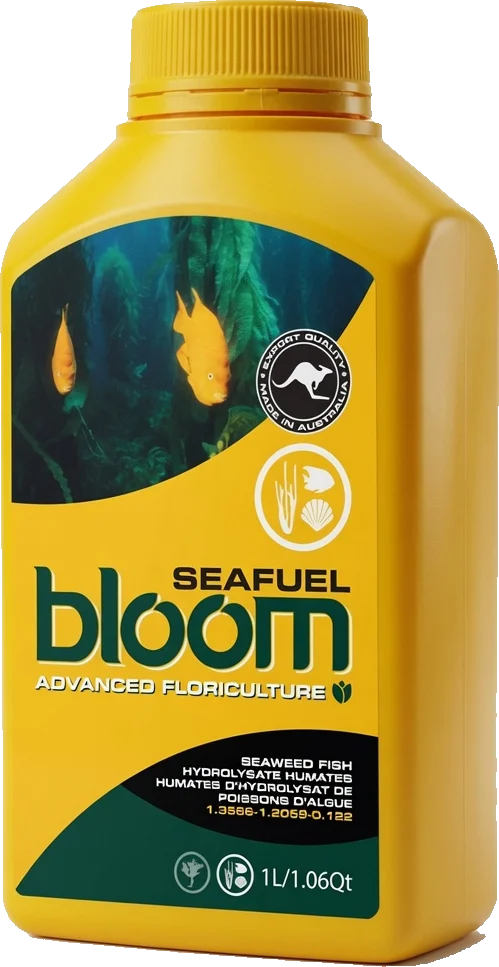
SeaFuel‘s own safety data sheet states a measured pH range of 4 to 5 — inside the band the fish-silage literature identifies as controlling spoilage, documented on paper rather than judged by nose, batch to batch. That’s not a claim that a home ferment can’t ever land in a safe pH range; plenty of careful growers measure their own batches properly. It’s a claim about what “measured and documented” buys you that “smells about right” doesn’t: a number that doesn’t drift between buckets, between seasons, or between whoever happens to be doing the mixing that month. The same logic applies to every input going into a small enclosed reservoir, not just fermented ones — see our look at what a seaweed extract is actually delivering in a small reservoir.
For a small, enclosed reservoir specifically, that consistency matters more than it would in a big outdoor bed that dilutes and drains. There’s nowhere for an under-processed pocket of fish ferment to go except straight to the root zone, sitting there until the next full reservoir change. If there’s one takeaway from the fish-silage literature worth carrying into a passive system, it’s this: smell is a vibe, not a measurement, and the thing that actually decides whether a fermented input is safe is a number nobody can sniff their way to.
Sources: Weinert E Jr, Miller SA, Ikeda DM, Chang KCS, McGinn JM, DuPonte MW. “Natural Farming: Fish Amino Acid.” SA-12, College of Tropical Agriculture and Human Resources, University of Hawai’i at Mānoa (2014). Batista I. “Fish silage: Preparation and uses.” FAO document S5347E. FAO. “Fish Silage.” FAO Fisheries document x5937e. SeaFuel safety data sheet and label artwork, Bloom Yellow Bottles.