
The Study That Found Compost Tea Low-Risk — and Why We’re Printing It Anyway
Anyone who has spent time around DIY ferments and compost teas has heard the warning: additives like kelp, fish hydrolysate and humic acid can let dormant pathogens in a brew multiply. It’s a real, sourced finding — USDA Agricultural Research Service work on compost tea found that when low numbers of Salmonella or E. coli were already present in the starting compost, those pathogens only grew when nutrient additives were included. The nutrient-rich condition that makes a tea effective is the same condition that can let a few bad organisms get a head start.
What doesn’t get repeated as often is the other half of the evidence, and it’s worth printing precisely because it cuts the other way. A 2018 survey of 60 vermicompost and vermicompost-tea samples from five smallholder farms in South Africa found exactly one potentially pathogenic isolate — a strain of Salmonella — across the entire sample set, and it was present at levels below the generally accepted infective dose. The authors’ own conclusion: the products tested presented a low risk in terms of safety. That’s a real, peer-reviewed finding too, and it says something different from the warning above.
Two honest findings, not one tidy answer
These aren’t contradictory studies — they’re measuring different things. The USDA work is about mechanism: what happens inside a brew when a few pathogens are already present and nutrient additives give them something to multiply on. The 2018 survey is about outcome: what a set of real, finished products from working farms actually tested at. Put them together and the honest read isn’t “ferments are dangerous” or “ferments are proven safe.” It’s narrower than either: risk in a home brew depends on variables most people never control for — what additives went in, how it was aerated, how long it sat, how it was stored — and almost nobody growing at home is testing the finished batch before it goes on a plant.
There’s a reason both findings can be true at once. A compost tea or ferment isn’t a single, repeatable process — it’s a fermentation happening in whatever container, at whatever temperature, with whatever starting microbial load a particular grower’s compost pile happened to carry that week. The farms in the 2018 survey were presumably following some kind of consistent routine; the USDA work was specifically testing what happens when that routine goes wrong, with pathogens already present and additives feeding them. Most home growers’ actual practice sits somewhere between those two scenarios, and without testing the finished batch, there’s no way to know which one you landed closer to on any given week.
Why the stakes are different on a propagation bench
For a cut-flower propagation bench specifically, “probably fine” carries more weight than it does elsewhere in a greenhouse. A finished crop has a whole season to average out one weak batch. A tray of cuttings at the earliest root-development stage doesn’t — a compromised brew applied right there can cost the whole tray, with nothing yet grown to offset the loss. That’s not a reason to declare compost tea unsafe; the evidence doesn’t support that conclusion any more than it supports calling it safe. It’s a reason the stakes of an unmeasured brew are highest at exactly the stage where a lot of propagation feeding happens.
It’s also the stage where a grower has the least margin to experiment. A mature plant that reacts badly to an input usually shows it in a leaf or a bloom you can prune away and recover from. A cutting that hasn’t rooted yet has no reserves to draw on and no second chance within that propagation cycle — whatever goes wrong at that stage tends to be final for that cutting, not a setback to work around.
Where that leaves us
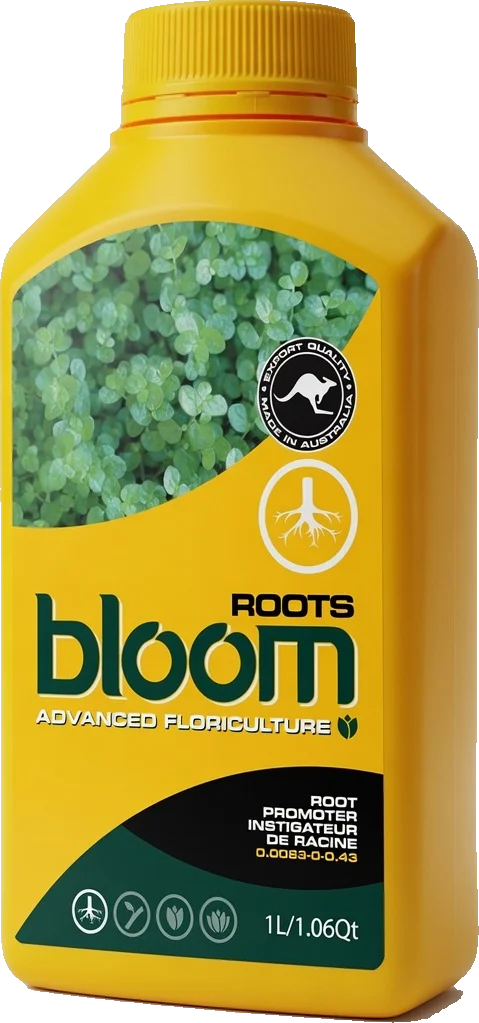
We don’t sell a ferment kit, and this finding isn’t going to turn into a reason to start selling one with a “low risk, proven safe” claim stapled to it — that would misrepresent a narrow, conditional result as a guarantee it was never built to support. What it does reinforce is why ROOTS exists as the alternative we’d rather hand a propagation bench: a declared seaplant extract, humic acid and thiamine input with one guaranteed analysis, made the same way every time, with nothing for a grower to get right or wrong about aeration or storage before it ever reaches a cutting. It isn’t a disease-control product and we’re not framing it as one. It’s simply a bottle that doesn’t ask you to manage ten variables correctly before you find out whether today’s batch was the safe kind.
Print both findings, not just the scarier one. That’s the brand-honesty bar we’re holding this to, same as every label line we’ve ever walked through in this series — and it’s also, frankly, the more useful way to read the research. A grower who only ever hears the scary version stops brewing teas at all, even the batches that would have been fine. A grower who only hears the reassuring version skips the one habit — testing or at least closely controlling the brewing conditions — that the survey’s own low finding depended on in the first place. The honest middle is the only version that actually changes anyone’s practice for the better.