
What a Soil Test Has to Show Before a Silicon Amendment Is Worth Spreading
Pre-season planning season is when a lot of broadacre decisions get made on paper before anything goes in the spreader — which inputs pencil out at field scale, and which ones don’t earn their freight. Silicon amendments come up in that conversation more than they used to. Before one goes on the budget, the honest first question isn’t “does silicon help this crop” — the evidence says it can, for the right crops — it’s “does my soil actually need it,” and that’s a soil-test question, not a marketing one.
Most of the silicon in your soil was never available anyway
Here’s the part that gets skipped in most silicon pitches: a soil can test high in total silicon and still be effectively deficient. Plants take up silicon as dissolved silicic acid, Si(OH)₄, through dedicated root transporters — not as whatever form the mineral happens to be in. A review of silicon uptake and transport puts 50–70% of soil silicon locked up as solid-phase silicon dioxide, which it describes as having relatively low availability to plants. A separate USDA technical evaluation of potassium silicate fertilizer states the same thing from the product side: uptake “depends on silicic acid concentration in the soil solution, not total soil silicon,” and silicon locked in quartz or feldspar “is not readily available to plants.” Total silicon on a standard soil report is close to meaningless for this decision. Dissolved silicic acid is the number that matters, and it isn’t the number most soil tests report by default.
The threshold a Rutgers field program put a number on
Rutgers’ New Jersey Agricultural Experiment Station fact sheet on silicon needs in soils and crops gives the one number that turns this from a feeling into a decision: field trials showed a measurable crop benefit from silicon amendment when soil tested above roughly 40 mg/L dissolved silicon. New Jersey’s own statewide average soil test result was 14 mg/L — comfortably under that line. A field sitting well above 40 mg/L has little reason to spend on a silicon amendment at all — the same soil-test-first discipline that matters before spreading a humic amendment this fall. A field sitting at or below the state average is a different conversation.
When the soil test does justify amendment, the scale is worth sitting with before it goes on the input budget. Calcium silicate rates run 1 to 6 tons per acre for responsive crops — rice, sugarcane, corn, wheat, oats, turf and cucurbit crops susceptible to powdery mildew are the ones named in the extension literature. In one documented wheat program, amendment raised flag-leaf tissue silicon from a baseline of 700–1,530 ppm up to 3,500–11,750 ppm, moving toward a target of roughly 1% silicon (10,000 ppm) in that tissue. That’s the shape of a real agronomic correction: tons per acre on the field, thousands of ppm in the tissue test that confirms it landed. It is not a rate anyone doses by the milliliter.
What this means before the spreader runs
None of this says silicon amendment is a bad idea at field scale — the responsive-crop list and the tissue data say otherwise, for the fields growing crops that are actually silicon accumulators. What it argues for is ordering the decision correctly: test dissolved silicic acid, compare it against a real published threshold, and only then decide whether a multi-ton-per-acre spread earns its place in the budget this season. A soil already sitting above that line is spending money to move a number that was never limiting in the first place — the same input-efficiency discipline growers already apply to nitrogen and phosphorus, just applied to an element that gets pitched more on crop photos than on soil data.
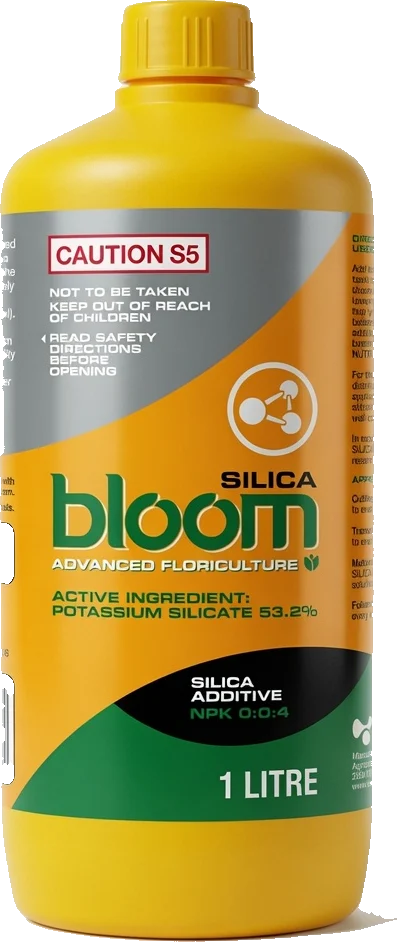
Bloom carries a silicon product, Silica, for growers working at container and bench scale rather than broadacre tonnage. We haven’t pulled its own label into our verified fact set yet in this project, so we’re not printing a guaranteed analysis or a dose figure for it here — the chemistry above is general silicon science, true regardless of which bottle or bulk amendment it’s checked against, and it’s worth running your own field’s number through it before anything goes on the budget.