
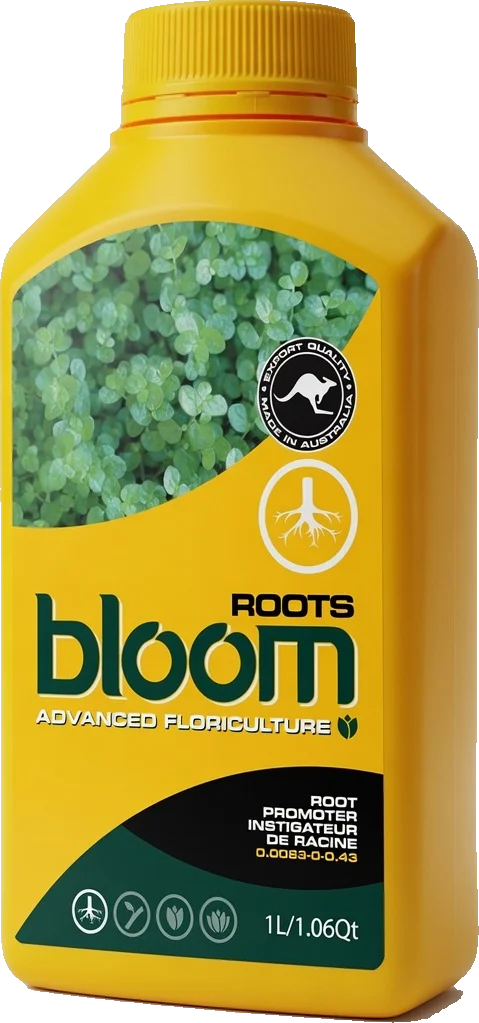
ROOTS Has a Feed Rate and a Dip Rate — Fall Transplanting Is When the Difference Matters
Home & Backyard Garden · Overstock & Seasonal Push
The ROOTS label carries two different numbers for how much to use, and it’s easy to only ever notice one of them. The ongoing feed rate is 0.5 ml/L, mixed into regular watering the way you’d use any liquid feed. The second number — a one-time bare-root dip at 1 ml/L — is the one most backyard gardeners never get to, because most of the year they’re not pulling a plant out of the ground and setting it somewhere else. Fall is the exception. It’s the season when moving perennials, dividing crowded clumps, and transplanting shrubs before the ground freezes puts that second number to work.
The two rates aren’t the same number rounded differently — the dip rate is double the feed rate, and that’s deliberate, not a typo.
A feed rate is a number designed to be applied over and over, all season. A dip rate is a number designed to be used once, for a few minutes, at a moment when the plant has the least root contact with soil it will have all year.
Why a transplant moment gets a higher number, briefly
A plant growing undisturbed in the ground is being fed through a root system that’s already established, distributed through soil it’s been in for a season or years. During a transplant, that same root system is briefly out of the ground entirely, or freshly disturbed and repositioned — the exact window where it has the least soil contact and the most exposed root surface it will ever have. The dip rate is built for that narrow window: a short, direct-contact exposure to the bottle’s seaplant extract, humic acid, and thiamine HCl (B1), rather than the slow, repeated, diluted exposure a feed rate delivers over weeks. It’s a higher concentration applied once instead of a lower concentration applied often — not more product overall, just a different delivery shape for a different moment.
Putting it to work this fall
For a bare-root shrub, a divided perennial clump, or a tree sapling going into a new spot before the ground freezes, the dip step is simple: mix 1 ml/L in a bucket large enough to submerge the root mass, let the roots sit in it for the time it takes to dig and prep the new hole, then plant as usual. Once it’s in the ground, switch back to the regular 0.5 ml/L feed rate for its next few waterings — the dip isn’t a replacement for ongoing feeding, it’s a one-time step bracketing the move itself. A 300 ml bottle holds enough concentrate for either job many times over across a typical season, so there’s no need to ration a dip step out of worry about running the bottle dry before spring.
Two numbers on one label, doing two different jobs. If your fall to-do list includes moving anything with roots, this is the season the second number earns its place on the bottle.
Which fall jobs actually call for the dip step
Not every fall garden task needs it. Potted plants being moved indoors for winter, or anything staying in its existing soil, are feed-rate situations if they need ROOTS at all — there’s no bare-root moment to dip. The dip rate earns its place specifically when roots are briefly exposed to air: digging and dividing a crowded hosta or daylily clump, moving a bare-root rose or fruit tree before the first hard freeze, or relocating a shrub that’s outgrown its spot. Timing matters more than the dip itself — getting the plant into its new hole with several weeks of cool-but-unfrozen soil ahead of it gives the root system time to settle before winter dormancy, regardless of what went into the bucket.
It’s a small detail on a label most people read once and then stop looking at — but it’s also the kind of detail that’s easy to miss precisely because it only matters a few days a year. Fall transplanting is one of those days, and it’s a good one to check the label again before reaching for the bottle out of habit at the usual feed-rate dilution.
Related reading: ROOTS Has Two Numbers on the Same Label — and Repotting Day Is When They Stop Being Interchangeable, on the same distinction at specialty-niche container scale.