
Science & Education — Commercial / Broadacre
The Pre-Seeding Window Isn’t a Nitrogen Decision — Even When the Input Is Liquid
Growers who budget nitrogen-use efficiency before the planter ever moves tend to fold every liquid input into the same N ledger. A soluble seaweed extract or humic-acid product doesn’t belong on that ledger line — and knowing why changes when it makes sense to apply one.
Most broadacre pre-seeding planning runs on one spreadsheet: soil test, residual nitrogen credit, starter rate, in-season topdress plan. It’s an accounting exercise, and a good one — nitrogen-use efficiency (NUE) only improves when every nitrogen source in the program is counted, not just the obvious bag of urea. The problem shows up when a grower adds a soluble biostimulant to the pre-seeding pass and, by habit, tries to slot it into that same N accounting. For a seaweed extract or a humic-acid product, that’s the wrong ledger entirely.
What’s actually in the jug
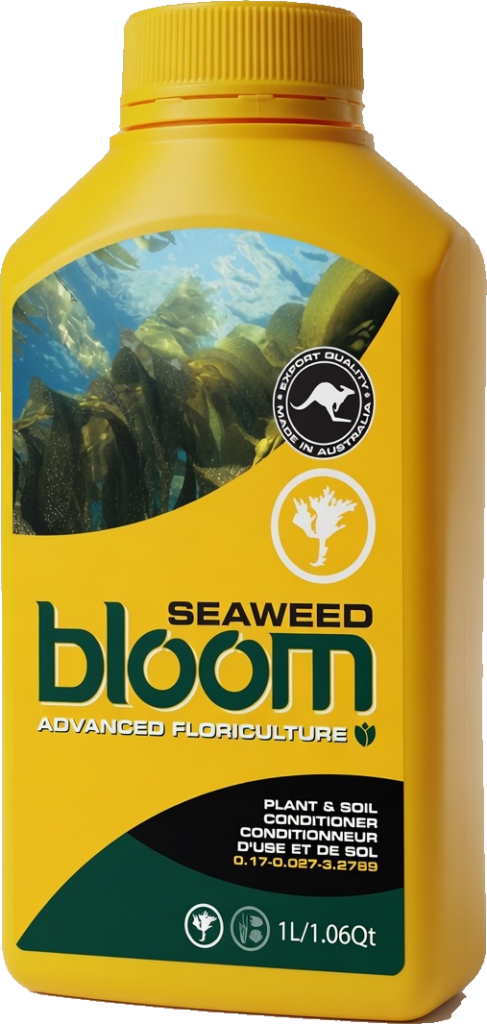
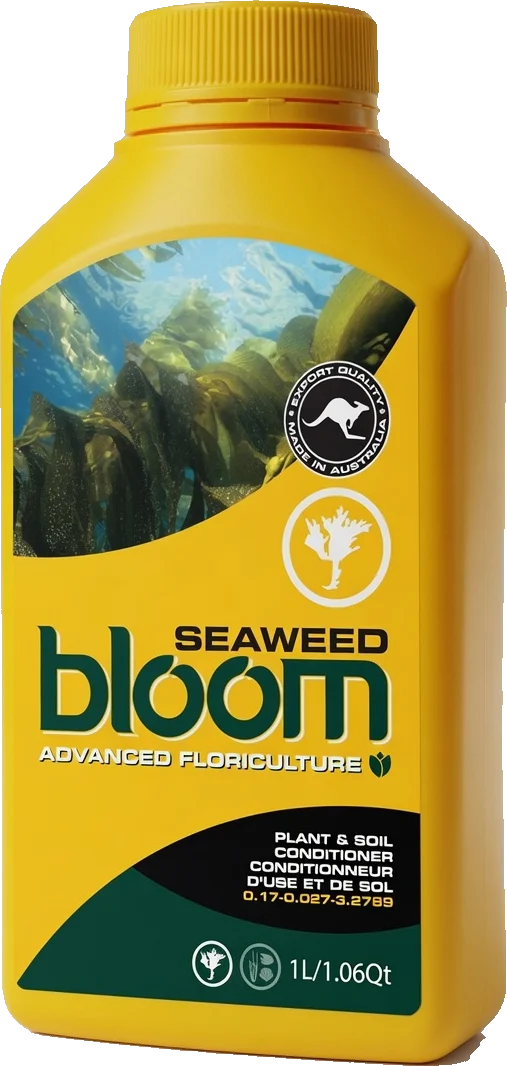
Bloom Seaweed’s guaranteed analysis declares Total Nitrogen at 0.17% — and all of it is Water Soluble Organic Nitrogen, not nitrate or ammoniacal N. Alongside it: Available Phosphate (P₂O₅) at 0.027% and Soluble Potash (K₂O) at 3.278%, derived solely from Durvillaea potatorum seaweed extract. Bloom Humate’s settled, label-verified figures are narrower still: Soluble Potash (K₂O) at 3.12%, derived from potassium hydroxide, plus a non-plant-food declaration of 10% Humic Acid, derived from Leonardite.
Reading the guaranteed analysis for what it is
Neither product declares a nitrate or ammoniacal nitrogen fraction of any consequence. At 0.17% total N, a soluble seaweed extract simply isn’t a nitrogen input in the sense an NUE budget cares about — it’s a potash and biostimulant input riding in a nitrogen-light carrier. That’s a label fact, not a marketing claim, and it’s the whole reason the timing question below is a different question than “when do I apply my nitrogen.”
Two different clocks, not one
A nitrogen program runs on a mineralization-and-uptake clock: credit what’s already in the soil, time the starter to emergence, time the topdress to the crop’s peak demand curve. A soluble seaweed extract or humic-acid product runs on a different clock — one tied to soil biological activity and seed-zone conditioning ahead of germination, not to the crop’s nitrogen demand curve. Treating the two as one clock is how a grower ends up either skipping the pre-seeding pass because “the N budget is already set,” or second-guessing a starter rate because a biostimulant got folded into it by mistake.
That seed-zone window — the pass (or passes) between burndown and planting — is where a soluble input has the most contact time with soil before roots are competing for anything. It’s a conceptual window, not a prescribed calendar date: it opens once the seedbed is settled enough to carry a liquid pass and closes at planting. Nothing about Bloom’s own labels specifies a broadacre lb/acre rate or a days-before-planting figure for that window — the guaranteed analyses above describe a soluble-extract product, and the stated rates on file are for solution-based and garden-scale use, not a per-acre field rate. Where this piece stays deliberately general is exactly there: it’s a framework for separating the two clocks, not a prescription for how many ounces to run per acre.
Why the humic fraction adds a wrinkle, not a complication
Humate’s humic acid is not simply “in solution the moment it hits water.” Per USDA’s own technical evaluation of the material, humic acid is not soluble under acidic conditions (pH below 2), but is soluble at higher pH values — plain water sits around pH 7, which is why water is itself one of the commercial extraction routes alongside potassium hydroxide. That’s a reagent-chemistry fact, not a field-performance claim, but it does mean the humic fraction’s behavior in a tank or in soil moisture is pH-sensitive in a way that’s worth knowing before a pre-seeding pass, rather than assuming every soluble label is chemically interchangeable.
The GA, broken down
Folding this into a pre-seeding checklist
- Keep the N budget clean. Soil test, credit, starter and topdress stay on their own line — a seaweed or humic pass at 0.17% N or 0% declared N respectively doesn’t move that math.
- Treat the soluble pass as a seed-zone decision, not a fertility decision. It’s asking “is the seedbed ready to carry a liquid pass,” not “how much nitrogen does this field need.”
- Know which fraction you’re applying. Seaweed’s potash (3.278% K₂O) and Humate’s potash (3.12% K₂O) both land on the same side of the ledger as any other soluble potash source — budget them there, not under biostimulant effect.
- Mind the pH of the carrier water when a humic-acid product is in the tank — the fraction’s solubility is pH-dependent, which is a mixing consideration ahead of planting, not a performance claim.
The one-line version
A soluble seaweed extract or humic-acid input doesn’t ask “how much nitrogen,” it asks “is the seed zone ready.” Keep those two questions on two different lines of the pre-seeding plan, and the NUE budget stays exactly as clean as it was before the biostimulant pass got added.
Figures above are read directly from Bloom Seaweed and Bloom Humate’s guaranteed analyses on file. No broadacre per-acre application rate is printed here because none is verified for either product at field scale.