
The Gram-Per-Hectare Mineral a Legume Rotation Runs On
Commercial & Broadacre Agriculture — Science & Education
Every broadacre operator running soybeans, alfalfa, field peas or clover into a rotation is counting on a biological shortcut: the crop fixes a meaningful share of its own nitrogen, so the purchased-N line on next season’s budget gets smaller. That shortcut runs on rhizobia — the root-nodule bacteria that convert atmospheric N₂ into a form the plant can use. What gets left off most nitrogen-use-efficiency worksheets is that the bacteria doing the fixing have their own nutrient requirement, and it isn’t nitrogen at all.
The enzymes rhizobia can’t fix nitrogen without
Fixation inside a legume nodule depends on three cobalamin-dependent enzymes in the rhizobial partner — methionine synthase, methylmalonyl-CoA mutase and ribonucleotide reductase. Cobalamin is vitamin B12, and B12 synthesis is itself a cobalt-dependent pathway. No cobalt, no cobalamin, and those three enzymes stall. The plant host has no formal cobalt requirement of its own; it’s the nitrogen-fixing symbiont living in its root tissue that needs the element, which is exactly why a standard plant-tissue nutrient panel built around N-P-K-and-the-usual-micros can miss the gap entirely.
This is a case where a beneficial element earns real, replicated evidence rather than a marketing claim. A 2023 review of beneficial-but-not-essential elements rated the supporting evidence for cobalt as moderate — weaker than silicon’s, stronger than sodium’s or vanadium’s — and the mechanism for legumes specifically is published and cobalamin-specific, not a general stress-tolerance story. That distinction matters on a crop where the entire economic case for growing it in rotation rests on the nitrogen credit it’s supposed to leave behind.
A gram-per-hectare problem, not a bulk-mineral one
The published range on this is narrow and specific. Legume cobalt deficiency shows up below roughly 0.02–0.04 mg/kg cobalt in shoot tissue (dry weight), and the corrective field application sits at 1.8 to 145.6 grams per hectare — call it roughly 0.7 to 59 grams per acre. Toxicity, by contrast, starts around 30–40 mg/kg tissue. Background soil cobalt averages 4.5–12 mg/kg. That is a tight window, measured in grams across a hectare, bracketed by a toxicity ceiling that isn’t far above the correction itself.
Scale check
A nitrogen correction on broadacre ground is measured in units per acre. A cobalt correction for the rhizobia living in that same ground is measured in grams per acre — roughly three to four orders of magnitude smaller. It is a precision micronutrient decision, not something that rides along in a bulk mineral or biostimulant application at any meaningful concentration.
Figures: Hu et al., Frontiers in Plant Science 12:768523 (2021). Acre figure converted from the published grams-per-hectare range.
Where this sits next to a nitrogen budget
None of this replaces soil testing or a rhizobial inoculant check ahead of planting a legume into rotation — it’s a separate line item, not a substitute for either. The point for a nitrogen-use-efficiency plan is narrower: the fixation credit a grower is counting on from that rotation depends on a micronutrient that a standard N-P-K soil test won’t flag, and that a bulk trace-mineral or seaweed-based biostimulant program isn’t built to deliver at a controlled, gram-per-acre rate. Cobalt belongs on the pre-seeding checklist as its own decision, verified against a tissue or soil test, not assumed to be covered by whatever else is already going on the ground that season.
It’s also worth being honest about why bulk doesn’t solve this. A product dosed in quarts or gallons per acre, formulated around a handful of guaranteed macro- and micronutrients, has no mechanism for landing in the 0.7-to-59-gram-per-acre window a legume’s rhizobia actually need — it will either carry no meaningful cobalt at all, or carry an amount nobody measured and nobody is managing against the toxicity ceiling thirty to forty times higher. That’s not a knock on any particular input; it’s the same logic that applies to a bulk sea-mineral blend trying to deliver a precision trace element at field scale. Precision micronutrients want a dedicated, measured source, checked against a current test — not an assumption riding along inside something formulated for a different job.
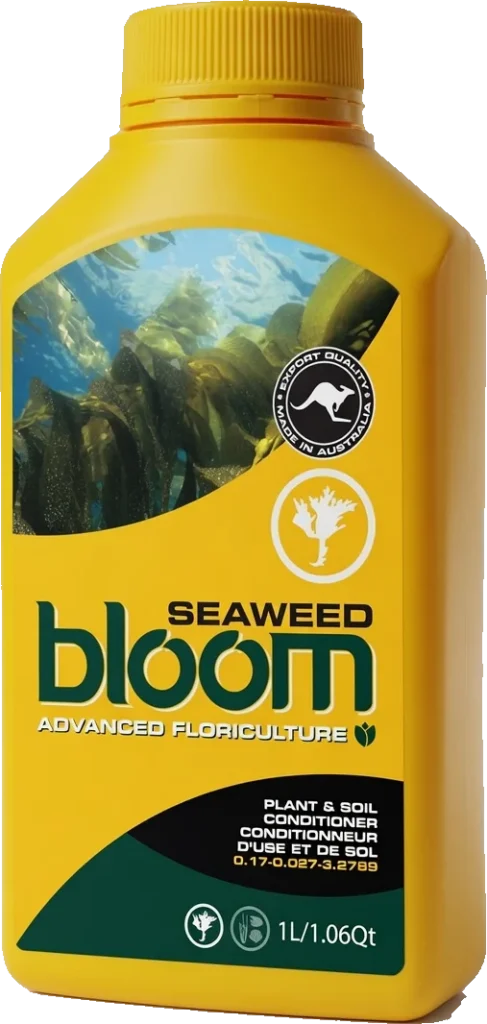
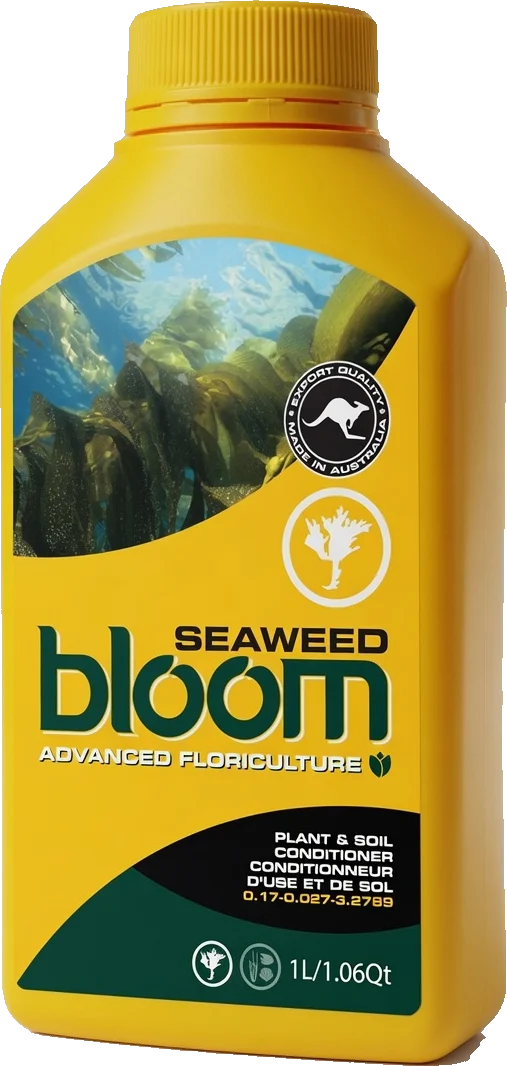
In the interest of being plain about our own shelf: none of Bloom’s current labels declare cobalt, and this isn’t a pitch for a product that does. Bloom Seaweed is a seaweed-extract biostimulant with its own guaranteed analysis, used by some of the same operations running legume rotations into their broadacre programs — it simply isn’t the tool for this particular gap, and nothing we sell should be read as one. A grower planning a legume year and counting on the nitrogen it leaves behind is better served by a dedicated cobalt source, checked against an actual test result, than by hoping it’s covered somewhere in the program already.
Before the next legume goes into the rotation: pull a tissue or soil cobalt reading alongside the nitrogen-credit math. A deficiency a standard panel won’t show can cap the fixation you’re budgeting for.