
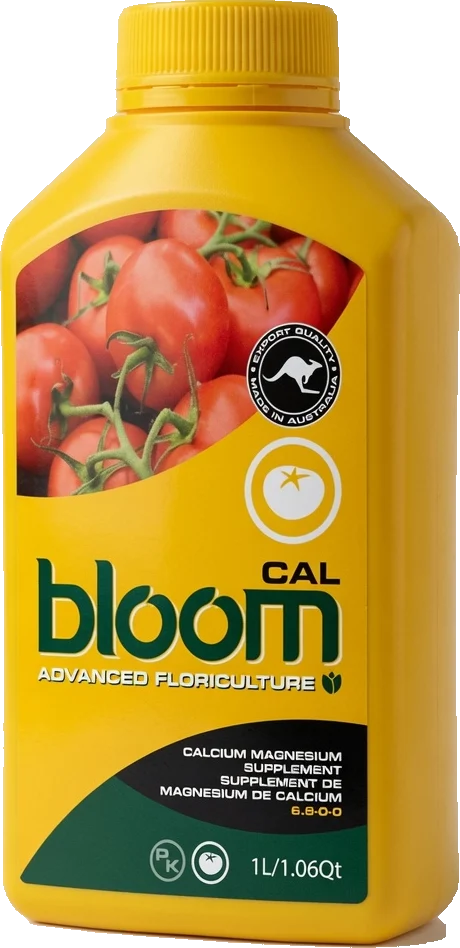
The Chelate That Decides Whether Your Cal-Mag Iron Survives Greenhouse Water
<p style=”font-size:19px;line-height:1.6;”>Most feed-chart comparisons for a calcium-magnesium supplement stop at the three headline numbers. For a greenhouse crop grown on recycled nutrient solution or hard municipal water, a fourth, unlabeled factor usually decides whether that calcium and magnesium actually reach the plant: which iron chelate is riding along in the same bottle, and where that chelate stops working.</p>
<h2 style=”font-family:Georgia,serif;font-weight:400;color:#105732;”>Two Chelates, Two Breaking Points</h2>
<p style=”font-size:19px;line-height:1.6;”>A chelate is only a temporary shell around an iron ion. As the pH of a nutrient solution climbs — which happens routinely in greenhouse production when irrigation water carries natural alkalinity, or when a recirculating system drifts upward between adjustments — some chelating agents let go of their iron before others do. Once the iron is released, it reacts with hydroxide and drops out as an insoluble compound the root can no longer take up. The flower crop doesn’t get less iron on paper; it gets less iron in solution.</p>
<p style=”font-size:19px;line-height:1.6;”>Bloom CAL’s label declares its guaranteed analysis as 5.2% total nitrogen (all nitrate nitrogen), 5% calcium, 1.4% magnesium, 0.5% chelated iron, and 0.036% chelated zinc — derived from calcium nitrate, magnesium nitrate, iron DTPA, and zinc EDTA. That single line is the whole story: two different chelating agents were chosen for two different micronutrients, and they don’t fail at the same point on the pH scale. DTPA holds iron in solution to roughly pH 7.5. EDTA, used here for zinc, starts losing its grip above roughly pH 6.5.</p>
<div style=”background:#fff;border:1px solid #e2ddc9;border-radius:8px;padding:20px 24px;margin:24px 0;”>
<p style=”font-size:19px;line-height:1.6;margin:0;”><strong>What’s actually on the label:</strong> Derived From — Calcium Nitrate, Magnesium Nitrate, Iron DTPA, Zinc EDTA. Iron is chelated specifically as DTPA, not EDTA, which is the formulation choice that keeps it available at the higher end of a greenhouse’s working pH range.</p>
</div>
<svg viewBox=”0 0 600 300″ xmlns=”http://www.w3.org/2000/svg” style=”width:100%;height:auto;background:#F5F2E7;border-radius:8px;”>
<rect x=”0″ y=”0″ width=”600″ height=”300″ fill=”#F5F2E7″/>
<line x1=”60″ y1=”240″ x2=”560″ y2=”240″ stroke=”#111311″ stroke-width=”2″/>
<line x1=”60″ y1=”40″ x2=”60″ y2=”240″ stroke=”#111311″ stroke-width=”2″/>
<text x=”300″ y=”275″ text-anchor=”middle” font-family=”Georgia,serif” font-size=”15″ fill=”#111311″>Nutrient solution pH</text>
<text x=”25″ y=”140″ text-anchor=”middle” font-family=”Georgia,serif” font-size=”15″ fill=”#111311″ transform=”rotate(-90 25 140)”>Iron held in solution</text>
<text x=”60″ y=”258″ font-family=”Georgia,serif” font-size=”13″ fill=”#111311″>5.5</text>
<text x=”200″ y=”258″ font-family=”Georgia,serif” font-size=”13″ fill=”#111311″>6.5</text>
<text x=”340″ y=”258″ font-family=”Georgia,serif” font-size=”13″ fill=”#111311″>7.5</text>
<text x=”480″ y=”258″ font-family=”Georgia,serif” font-size=”13″ fill=”#111311″>8.5</text>
<polyline points=”60,60 200,62 300,70 340,95 400,180 460,225 560,235″ fill=”none” stroke=”#FFD200″ stroke-width=”6″ stroke-linecap=”round”/>
<polyline points=”60,60 150,65 200,110 260,190 330,225 560,235″ fill=”none” stroke=”#105732″ stroke-width=”6″ stroke-linecap=”round”/>
<rect x=”380″ y=”50″ width=”14″ height=”14″ fill=”#FFD200″/>
<text x=”400″ y=”62″ font-family=”Georgia,serif” font-size=”14″ fill=”#111311″>DTPA — stable to ~pH 7.5</text>
<rect x=”380″ y=”75″ width=”14″ height=”14″ fill=”#105732″/>
<text x=”400″ y=”87″ font-family=”Georgia,serif” font-size=”14″ fill=”#111311″>EDTA — fails above ~pH 6.5</text>
</svg>
<p style=”font-size:19px;line-height:1.6;”>That one-point gap in pH tolerance matters more for floriculture and greenhouse ornamentals than it would in a controlled rockwool system with municipal RO water, precisely because greenhouse floriculture is where alkaline source water and long recirculation runs are the norm, not the exception. A chelate that quietly fails at pH 6.8 doesn’t announce itself with a warning label — it shows up later as pale new growth that was never actually short on iron feed, just short on iron the plant could still reach.</p>
<h2 style=”font-family:Georgia,serif;font-weight:400;color:#105732;”>The Nitrate Comes Along for the Ride</h2>
<p style=”font-size:19px;line-height:1.6;”>Calcium nitrate and magnesium nitrate are the only two base inputs on the CAL label, and both carry nitrogen as their counter-ion. At the label’s guaranteed 5.2% total nitrogen — all of it nitrate form — a 1 ml/L dose of CAL adds roughly 52 ppm of nitrate nitrogen to the feed solution before any base nutrient line is factored in. That’s not a flaw in the product; it’s simply what calcium nitrate and magnesium nitrate are. Any calcium-magnesium supplement built on nitrate salts carries this same math, and a greenhouse grower balancing a tight nitrogen program for bloom timing needs to count it rather than treat the cal-mag bottle as nitrogen-neutral.</p>
<div style=”display:flex;gap:12px;margin:24px 0;flex-wrap:wrap;”>
<div style=”flex:1;min-width:140px;background:#105732;color:#F5F2E7;border-radius:8px;padding:16px;text-align:center;”>
<div style=”font-size:28px;font-weight:bold;”>5.2%</div>
<div style=”font-size:14px;”>Total N — all nitrate</div>
</div>
<div style=”flex:1;min-width:140px;background:#FFD200;color:#111311;border-radius:8px;padding:16px;text-align:center;”>
<div style=”font-size:28px;font-weight:bold;”>0.5%</div>
<div style=”font-size:14px;”>Chelated iron (DTPA)</div>
</div>
<div style=”flex:1;min-width:140px;background:#fff;border:1px solid #e2ddc9;border-radius:8px;padding:16px;text-align:center;”>
<div style=”font-size:28px;font-weight:bold;color:#111311;”>1.4%</div>
<div style=”font-size:14px;color:#111311;”>Magnesium</div>
</div>
</div>
<h2 style=”font-family:Georgia,serif;font-weight:400;color:#105732;”>No Sulfate, No Gypsum</h2>
<p style=”font-size:19px;line-height:1.6;”>There’s a second formulation detail worth noting precisely because it’s easy to get wrong when a grower builds a cal-mag blend from separate bagged salts: pairing calcium nitrate with magnesium sulfate (Epsom salt) in the same concentrate puts calcium and sulfate ions in close contact, and they react to precipitate gypsum — a loss of both nutrients before the solution ever reaches a plant. CAL’s label avoids that pairing entirely by sourcing magnesium as magnesium nitrate instead of magnesium sulfate. There’s no sulfate in the bottle for the calcium to react with, so that particular precipitation reaction has nothing to work with. It’s a narrow point, but it’s the kind of detail that only shows up when you read what’s actually declared on the label rather than assuming all calcium-magnesium products are built the same way.</p>
<p style=”font-size:19px;line-height:1.6;”>None of this is a claim that chelate chemistry alone determines bloom quality. It’s a narrower, checkable point: a greenhouse operation running alkaline source water or a long recirculating loop is exactly the setting where a half-point of pH tolerance in an iron chelate stops being trivia and starts being the difference between iron that’s on the label and iron that’s actually in solution.</p>