
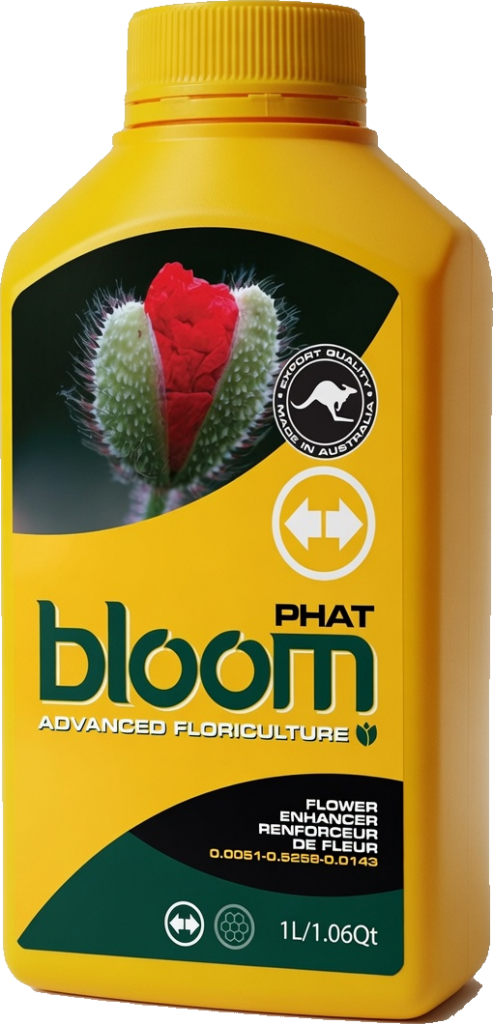
PHAT builds the canvas. OOZE paints it.
Two flower-stage triggers, one sequence. When each one goes in, what it’s actually doing to the plant, and what an independent lab found when we split a room between them.

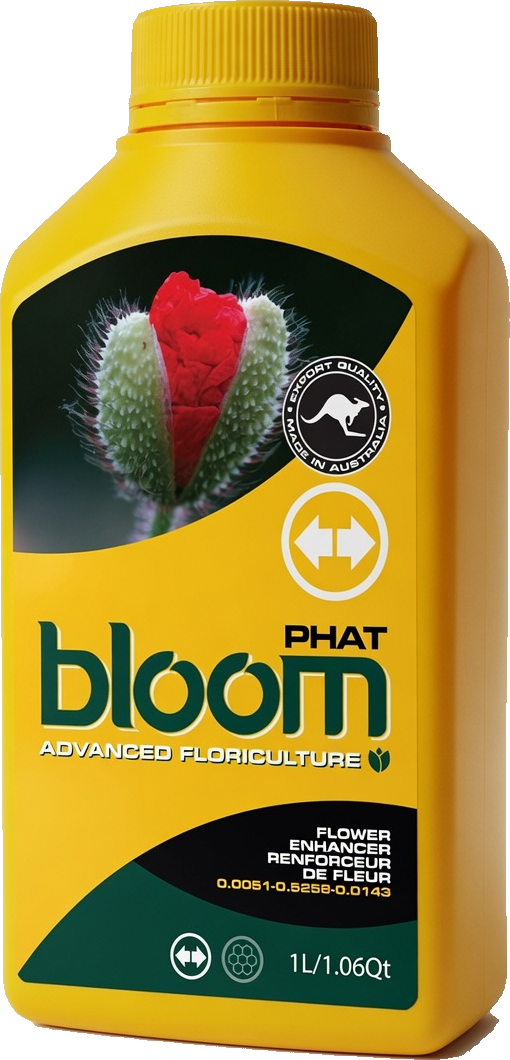
- PHAT goes in weeks 3–4 of flower. Its job is building flower surface: more bract, more room for resin to land.
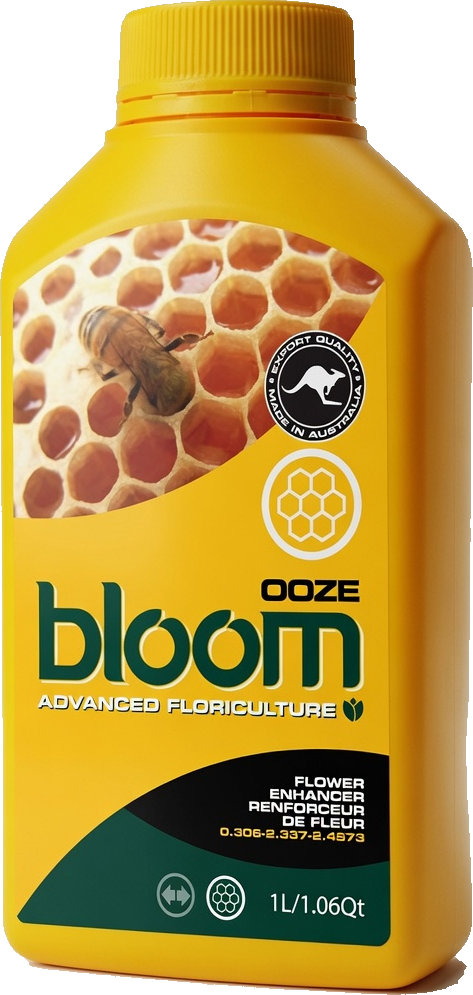
- OOZE takes over from week 5 to harvest. Its job is finishing that surface: fuller resin heads and a shift in the terpene profile.
- They’re triggers, not food. Both sit on top of the base feed you already run, so there’s no need to pull it back.
- An SC Labs test showed the difference. Two batches landed on the same total terpenes, but the OOZE batch carried 4.2× the myrcene and 2.1× the linalool.
They don’t feed the plant. They tell it what to do.
Most bottles on the shelf are selling you more of something: more P, more K, more salts in the tank. PHAT and OOZE aren’t that.
They’re biostimulants. They switch processes on and redirect energy the plant already has, working off whatever base feed you’re already running. You’re not adding food. You’re giving the plant an instruction.
That’s why they work as a sequence rather than a choice. One builds something. The other finishes it. Run them in the wrong order and you’re wasting both.
Mid-flower is when the plant decides how much flower it’s going to build. PHAT pushes that energy into surface area. It opens up and stacks the bracts, so there’s more real estate for resin later on.
It isn’t just another PK booster. It works on how efficiently the plant uses the phosphorus and potassium already in your tank.
Once the surface is built, OOZE works on what sits on it: resin heads that finish fuller and more swollen, and aroma and flavour that hang around and carry more character.
It also shifts the terpene profile toward compounds like myrcene and linalool. The lab section below shows how far.
Bulk without frost is a big, boring flower. Frost without bulk has nowhere to sit.
Where each one sits in an 8-week flower.
Straight off the Bloom feed chart. Count from your first week of flower. ULTRA and FINAL are shown faded for context, because they bookend the two you’re here for.
Deluxe feed chart, 8-week flower. Running longer? The chart stretches with you. On a 10-week flower, PHAT runs weeks 3–5 and OOZE takes weeks 6–10. The nutrient calculator works it out for any flower length.
Chasing weight over character?
Because these are triggers rather than a fixed recipe, you choose where the line sits. Commercial rooms chasing yield often push PHAT out through week 6 and hand the last two weeks to OOZE. Our chart runs the quality-first version.
How much to add
The rate depends on your system. Every feed, through its window:
Rates from the Bloom Deluxe feed chart. At 2.5 ml/L, one litre of either bottle makes 400 litres of finished feed.
Same total terpenes. A very different flower.
We ran this in a commercial room: two batches of the same cultivar, same room, same base program through the same lines. One batch finished on PHAT, the other on OOZE, hand-fed over the final two weeks. Both went to SC Labs for terpene testing.
On total terpenes, it’s a dead heat. Look at what the terpenes are made of, though, and the two batches split apart:
The PHAT batch was mostly lemon and not much else. The OOZE batch spread across all three. That’s the difference between a flower that’s loud and one that’s complete, and it’s exactly the finishing job OOZE is built for.
This was two commercial batches, not a controlled study. No batch got neither product, and each batch went to the lab as one composite sample, so plant-to-plant variation isn’t captured. We make no claim about potency. The terpene shift is the finding: a strong signal, and the reason we’d rather you test it in your own room.
Growing outdoors this season?
If your plants are still in flower this late in the year, you’re in OOZE territory and PHAT’s window has likely closed. Run OOZE through to harvest at your system’s rate.
Then write PHAT into next year’s plan. Outdoors, week one is the week you first see flowers setting. Count from there and bring PHAT in at week three.
Don’t take our word for it. Test it.
Best proof is your own room. Same strain, same run, three trays:
Send all three off for a terpene test at harvest and put the numbers side by side. That’s the trial we couldn’t run in someone else’s commercial room, and it’s the one that’ll tell you the most about yours.
Before you mix it in
Do I need to cut back my base nutrients?
No. PHAT and OOZE sit on top of the base feed you already run. You don’t need to pull the base back to make room for them.
Can I run PHAT and OOZE at the same time?
On the feed chart they run back to back, not together: PHAT builds the surface in weeks 3–4, then OOZE finishes it from week 5. The order is the whole point.
Is PHAT just a PK booster?
No. It works on how efficiently the plant uses the phosphorus and potassium already in your tank. It isn’t adding a big dose of either. Bloom’s actual PK spike is a separate product.
Does the rate change for soil, coco or hydro?
Yes. Run-to-waste setups like coco and rockwool run both at 2.5 ml/L. Soil runs both at 1.25 ml/L. Recirculating systems run PHAT at 1.25 ml/L and OOZE at 2 ml/L. The table in section 02 has the per-gallon numbers too.
My flower runs longer than 8 weeks. What changes?
The windows stretch with you, and OOZE always runs through to harvest. On a 10-week flower, for example, PHAT runs weeks 3–5 and OOZE runs weeks 6–10. Plug your flower length into the nutrient calculator and it lays out every week.
Build it. Then finish it.
Grab both in one hit, or pick up the one you need if you’re already partway through flower.
Want the full week-by-week plan for your setup? DM FEED CHART to @bloom_crew_nate or grab it from the feed schedules.