
The Metals Framework Behind Every Specialty Fertilizer Label — and Why Scale Changes What It Means
Most growers never read the small line at the bottom of a fertilizer label pointing to AAPFCO’s metals registry. At backyard scale, there’s not much reason to. At broadacre scale — hundreds or thousands of acres, the same input applied season after season — that line is pointing at a framework worth actually understanding, because the question stops being “does this one bag pass” and starts being “what does this add up to over years of applications across the whole operation.”
What AAPFCO’s framework actually limits
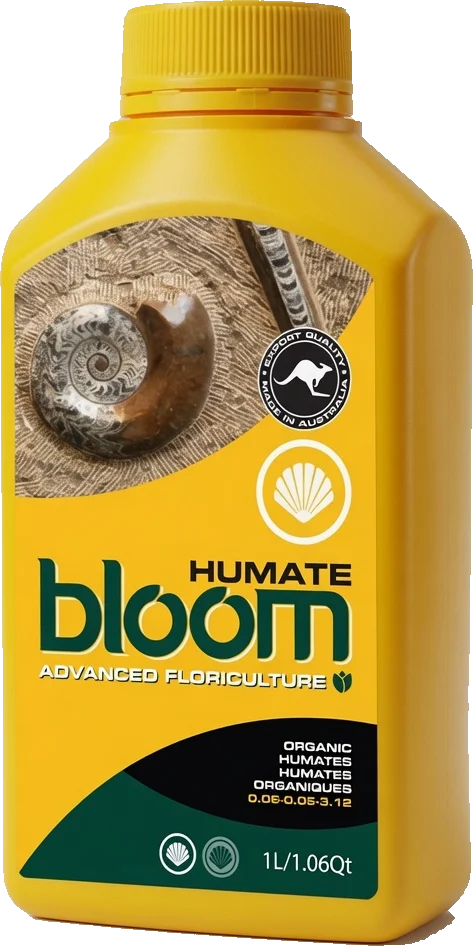
The Association of American Plant Food Control Officials sets maximum allowable metal content for fertilizers sold in the US, and the limits scale with what the product claims. For a low-phosphate specialty fertilizer making no micronutrient guarantee, the ceilings are absolute: 10 ppm arsenic, 20 ppm cadmium, 100 ppm lead. Where a product does guarantee phosphate or a micronutrient, the limits are instead expressed per percent of that nutrient — for example 2 ppm arsenic, 4 ppm cadmium and 20 ppm lead per percent of P₂O₅, or 13, 12 and 140 ppm respectively per percent of iron, manganese or zinc. Every Bloom label points growers to this same public registry, at aapfco.org/metals.htm, rather than asking anyone to take a number on faith.
Why a per-bag limit isn’t the whole question at acre scale
A per-bag or per-liter metals ceiling answers one question: is this specific product, at this specific concentration, within the allowed maximum. It doesn’t answer a second question that only shows up once you’re applying any input across real acreage, repeated over multiple seasons: what’s the cumulative load landing on that soil over time. Any input applied within every single-batch limit can still represent a meaningfully larger total mass of material moving into the soil at broadacre scale than it ever would in a container or a greenhouse bench — simply because the acreage and the number of seasons are both larger. That’s not a statement about any specific product’s metal content; it’s a statement about arithmetic. More acres times more seasons times any nonzero metal content is a bigger number than one bag on one bench, regardless of what that per-unit number is.
What this means in practice
It means a per-batch compliance number, while real and worth checking, isn’t a substitute for tracking total nutrient and amendment load across a field’s history — the same logic that drives routine soil testing for any input, not just one company’s product. For an operation evaluating any biostimulant or soil input at scale, the AAPFCO registry is the right place to check the per-unit figure, and your own soil-test history is the right place to track what’s accumulating over time. We’re not publishing a cumulative-load figure for any Bloom product here, because that number depends entirely on your acreage, your season count and your existing soil chemistry — not on anything we can state generically.
This isn’t a flag on any particular input, Bloom’s or otherwise — it’s the same regulatory framework behind every specialty fertilizer sold in the US, and it’s worth knowing how to read before you’re applying anything across real acreage, season after season.
Why this is a soil-testing question, not a label question
It’s tempting to look for a single per-acre figure that settles the question of cumulative metal load, the same way a guaranteed analysis settles the question of a single bag’s compliance. That figure doesn’t exist in a generic form, because it depends on variables specific to each operation: baseline soil metal content before any input was ever applied, the exact products and rates used across seasons, irrigation water quality, and how the soil itself handles those metals over time — some bind tightly to organic matter and stay put, others move more freely. A standard soil test panel, run periodically and compared year over year, is the tool built for tracking that trajectory. A label’s compliance figure is the tool built for a different, narrower question. Neither one substitutes for the other, and treating a per-batch number as a full answer to the cumulative question is the mistake worth avoiding.
The practical takeaway
If you’re sourcing inputs for a broadacre program, check the AAPFCO registry for the product’s filing, keep your own soil-test record current, and treat the per-batch number as one data point in a longer-running record rather than the whole answer. That’s the same diligence that makes sense at any scale — it just starts to matter in a way you can actually measure once the acreage and the seasons start adding up. The same scale logic applies to how a biostimulant input is applied across a field, not just how much metal is in the jug.