Base or Booster? What Bloom’s Lineup Actually Breaks Down Into
Twenty-two products on one shelf looks like a lot to learn. It isn’t, once you split the lineup the way it’s actually built: a short list of base programs, and a longer list of boosters that layer on top of whichever base you already run.
The short version: A base program (Bloom’s two-part Euro, Grow and Flower lines) carries the plant’s core nutrition from one stage to the next. Everything else — Roots, Seaweed, Humate, Seafuel, Cal, and the finishing pair OOZE and PHAT — is a booster: a smaller, targeted addition built to do one job without asking you to change the base underneath it.
What a base program actually does
A base program’s job is unglamorous and essential: supply the core nitrogen, phosphorus and potassium a plant needs across its life, in a ratio that shifts as the plant moves from vegetative growth into bloom. Bloom’s own base lines — Euro A+B, Grow A+B and Flower A+B — are built as two-part systems for exactly that reason, splitting the feed so the calcium and sulfate don’t lock each other up in the jug before they ever reach the root zone. If you’re running one of these, or an equivalent two-part base from another manufacturer, that’s your foundation. Nothing below changes it or asks you to rip it out.
What a booster actually does — and why the numbers are small on purpose
A booster isn’t a second base program. It’s a small-dose, single-job addition, and the guaranteed-analysis numbers on the label say so plainly. Bloom Roots is labeled 0.0083-0-0.43 — a trace of nitrogen and a modest potash figure, because its declared job is seaplant extract for root development, not feeding the whole plant. Bloom Seaweed carries 0.17-0.027-3.278, again light on N and P, built around the same Durvillaea potatorum extract for a different purpose. Bloom Humate’s label reads 0-0-3.12 with 10% humic acid from Leonardite riding along as the non-plant-food ingredient that’s actually the point of the bottle. None of these numbers compete with a base program’s NPK — they’re not supposed to. They’re supposed to be small enough to layer in without recalculating your whole feed chart.
That’s the real distinction between “base” and “booster,” and it’s worth knowing before you add anything new to a feed schedule: if a product’s label numbers look like they could replace what you’re already running, it’s a base. If they look too small to matter on their own, that’s not a flaw — that’s the category doing its job.
Where OOZE and PHAT sit in that lineup
OOZE and PHAT are both finish-stage boosters — the layer timed for the back half of flower, after the base and the mid-cycle additions have already done their work. Ooze’s own label descriptor calls it a “flower enhancer,” which is the honest, narrow way to describe a finishing product: it’s not trying to be a second base, it’s trying to do one job well at one point in the cycle. We’ve written before about the lab-verified terpene difference between a PHAT-finished and an OOZE-finished batch (the FROST trial, if you want the actual numbers), and that result still holds — but the point of this post isn’t the trial. It’s simpler than that: neither bottle asks you to touch your base program at all. They sit on top of it.
That’s also, practically, why this is a good month to add them. Both are currently well stocked and moving at good margin for shops carrying them, and because they’re boosters rather than a base swap, there’s no retraining and no re-ordering risk for a customer who’s happy with the feed program they already have. It’s a shelf addition, not a shelf replacement.
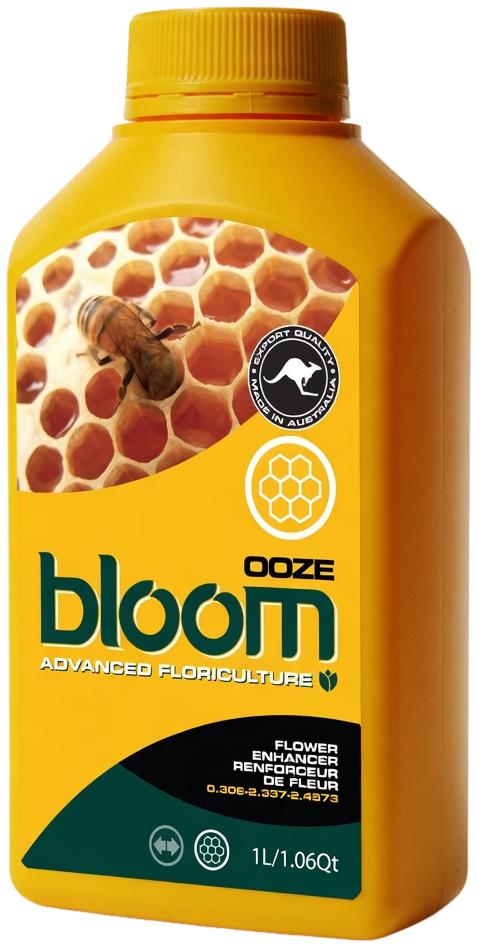
OOZE
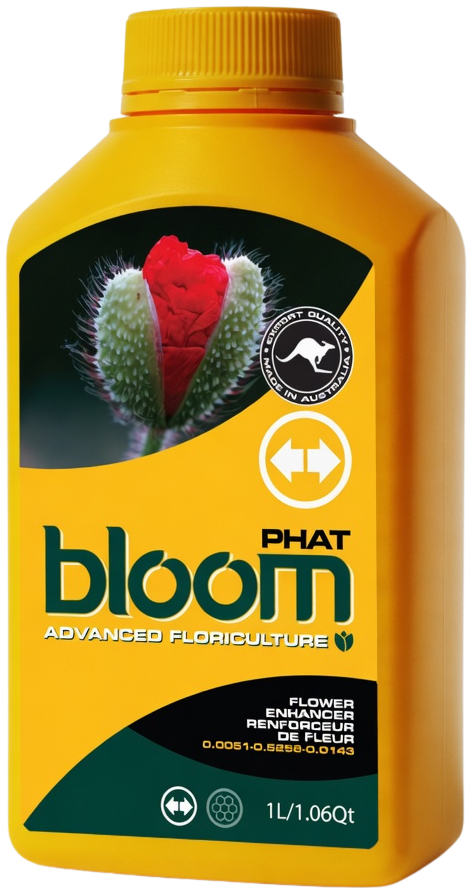
PHAT
The one-line takeaway
Keep your base. Add the boosters that match what stage you’re in. Roots early, Seaweed or Humate through the middle, PHAT and OOZE at the finish — each one sized to do its own job and stop, not to replace the program underneath it. That’s the whole structure of the lineup, and it’s also the easiest way to decide what to add next without overhauling anything you’re already running.