
The Paperwork Nobody Sees: A Decade of CDFA Letters Behind Four Bloom Labels
Most of what a grower sees of a product is the bottle, the label, and the feed chart. What they don’t usually see is the regulatory file behind it — the back-and-forth with a state agriculture department that decides whether a label is even allowed to say what it says. For four products in the Bloom range, that file goes back to 2018, and it’s still open.
What’s actually in the file
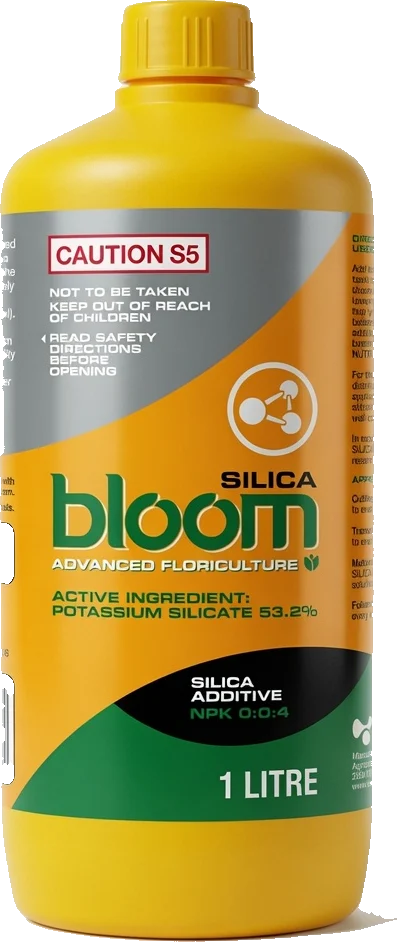
California’s Department of Food and Agriculture reviews fertilizer product registrations, and real review correspondence survives for four Bloom products — Silica, Seaweed, Seafuel and SWTNR — from a Senior Environmental Scientist in CDFA’s fertilizing materials program. That’s not a marketing document. It’s the kind of file that exists because a regulator is checking a label’s claims against what the product can actually support.
The summary sheet tracking required revisions across the range was built in 2018 and rolls up guaranteed-analysis and labeling checkpoints across roughly twenty products. What makes it worth mentioning now, in 2026, is that it isn’t a dusty one-time filing. It’s been actively updated as recently as this past August — eight years of the same document still getting touched, which only happens if someone is still checking label language against the file rather than assuming it was settled in 2018 and left alone.
Why this is a Brand & Experience story, not a label story
We’ve written before about Bloom’s standing rule for every label-facts piece we publish: the label beats the feed chart, the feed chart beats the website, and nothing gets printed that the label can’t back up. A regulator’s file is the version of that rule that exists outside of anything Bloom controls. CDFA doesn’t take Bloom’s word for a guaranteed analysis — it checks the number against what the product is permitted to claim, and keeps a paper trail of every revision along the way.
What this doesn’t claim
We’re not going to turn “a file exists” into a claim that every Bloom label has been fully reviewed, or that every product carries the same paper trail — it doesn’t. Only four products have surviving CDFA review letters that we’ve been able to locate; the rest of the range isn’t covered by this particular file. This isn’t a blanket certification claim, and Bloom doesn’t carry a USDA organic certification either — the label itself says so plainly. What it is is evidence that for the products this file does cover, label language has been checked against a state agency’s own standard, more than once, over a long stretch of time.
Where it’s made
Every one of these labels, reviewed or not, traces back to the same manufacturer entry: Agricultural Organics in South Australia, 26 years at one address. A single, consistent point of origin is part of why a regulatory file like this one is even possible to track in the first place — one manufacturer, one set of labels, one ongoing conversation with the agency that signs off on them, rather than a shifting patchwork that would make this kind of long-running review impossible to maintain.
What a state review actually checks
A fertilizing-materials review isn’t a rubber stamp. The reviewer’s job is to check a product’s guaranteed analysis, its derived-from statements, and the specific wording used anywhere on the label against what the registration file can support — the same categories we check against when we decide what number is safe to print in anything we publish. When CDFA’s reviewer flags a revision, that’s an outside party independently applying the same kind of scrutiny Bloom’s own labels already have to survive internally before they’re printed.
That overlap is worth noticing. Most brands never have an outside regulator look this closely at their label language more than once, if at all. Having the same four products revisited across eight years means the label claims on those four products have been checked by someone outside the company more recently than most competitors’ labels have been checked at all.
A grower reading a Bloom label doesn’t see any of this. But it’s part of why we keep coming back to the standing rule in everything we publish: read the label first, because the label is the one document that’s actually been checked by someone whose job is to check it.