
One Bottle, Five Different Dials: Reading Bloom Seaweed’s Garden Rate Table
Most backyard gardeners who pick up a bottle of seaweed extract use one rate for everything — a capful in the watering can, more or less by feel. Bloom Seaweed’s own label doesn’t work that way. It carries a full rate table, with five different doses depending on what you’re feeding. That’s worth reading closely, because the differences aren’t arbitrary.
What’s on the label
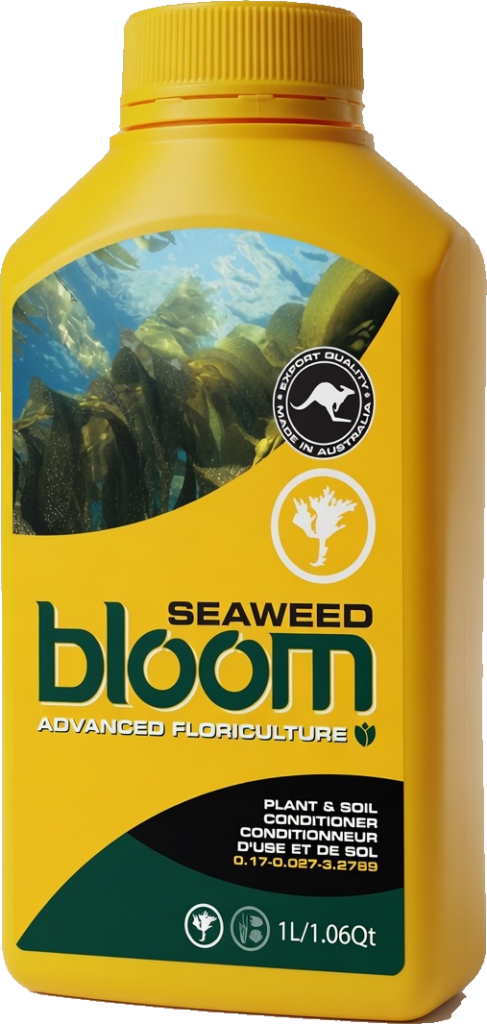
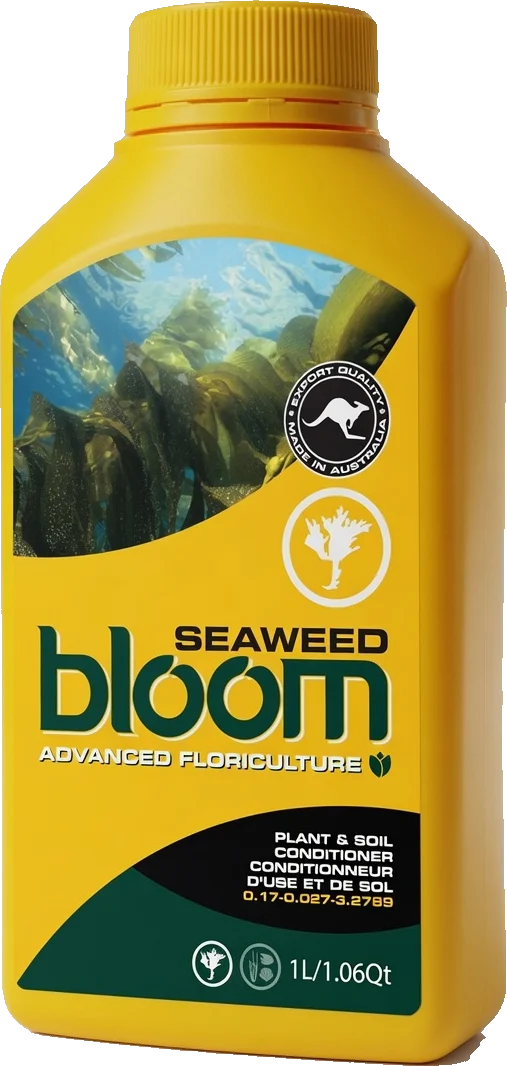
Bloom Seaweed’s guaranteed analysis is 0.17% Total Nitrogen, 0.027% Available Phosphate (P₂O₅) and 3.278% Soluble Potash (K₂O), derived from Durvillaea potatorum seaplant extract — the only declared input on the panel. The base hydroponic rate is 1 ml/L of nutrient solution. But the label also carries a separate garden-use table, in milliliters per 10 liters of water, covering five different situations:
Why the dose changes by five times across one bottle
Ferns and seedlings sit at the gentle end — 20 to 25 ml per 10 liters — because both are either sensitive to concentration (young, undeveloped root systems) or being applied as a foliar spray, where leaf tissue is more exposed than roots sitting in soil. General garden beds sit in the middle at 40 ml. Lawns jump to 75 ml, and tomatoes or a large, visibly stressed tree top the table at 100 ml — five times the seedling rate.
That’s not the label hedging. It’s the label matching application rate to two separate variables: how much root or leaf mass is actually there to take up the feed, and how urgently that planting needs support. A stressed, established tree has a large root system and a specific, visible problem to push back against. A tray of seedlings has almost no root system yet and nothing to push back against — pushing it with a tomato-strength dose risks doing more than helping.
What it’s doing, honestly described
Seaweed extracts like this one aren’t a hormone shot, and we’re not going to frame it that way. The declared input is a seaplant extract supplying nitrogen, phosphate and a meaningful dose of soluble potash, plus whatever supporting compounds come along in a whole-extract seaplant input. What the rate table is really doing is matching a nutrient and stress-support feed to how much plant is on the other end of it — more for an established lawn or a tomato plant under visible stress, less for something young and still building its root system.
If you’ve only ever used one dose of a seaweed feed because that’s what the bottle “usually” gets, it’s worth checking whether your situation actually matches that rate. A tomato plant wilting in August heat and a flat of seedlings three weeks old aren’t the same situation, and this label doesn’t treat them as one.
The practical takeaway
Match the rate to the planting, not the planting to the rate. Keep seedlings and ferns on the gentle end of the table, save the full 100 ml dose for established plants that are genuinely showing stress, and use the general 40 ml garden rate as your default everywhere in between. It’s a small amount of label-reading for a meaningfully different result bed to bed. The same label-first habit applies to working Humate into a fall routine — a different bottle, same read-the-panel-first approach.
Where this rate table actually comes from
We read this directly off the label artwork rather than off a feed chart or the website — Bloom’s standing rule is that the printed label is the most reliable source there is, ahead of any secondary chart. In this case the bottle render that ships alongside the physical label prints the same guaranteed-analysis figures, down to a rounding difference in the third decimal of the potash number. When the label and the render agree that closely, there’s no ambiguity left to flag, which isn’t true of every product in the range — some of Bloom’s own labels and renders disagree on their guaranteed analysis, and where that happens we leave the conflicting figures out of what we publish rather than guess.
One more distinction worth being precise about: the 1 ml/L hydroponic rate and this garden table aren’t two versions of the same number dressed up in different units. They’re two different measurement systems entirely — 1 ml/L describes concentration in a mixed nutrient reservoir, while the garden table describes a one-time application rate per area of soil. Converting between them by eye is how a tomato bed ends up over- or under-fed; the label keeps them as separate instructions for a reason. If you’re weighing this against a home seaweed steep instead, the sodium arithmetic is worth doing first. The same read-the-label-not-the-myth habit applies to silicon, too — see why pouring seawater on your garden won’t give you silicon.