
The Chelate Choice That Matters Most on High-pH Ground
Bloom CAL is built for hydroponic reservoirs — the label says so plainly, and nothing here is a suggestion to put a hydroponic calcium-magnesium concentrate on field soil. But the chemistry behind why CAL is built the way it is happens to be the same chemistry that decides whether a broadacre grower’s chelated micronutrient purchase actually works once it hits real ground, and that’s worth understanding on its own terms.
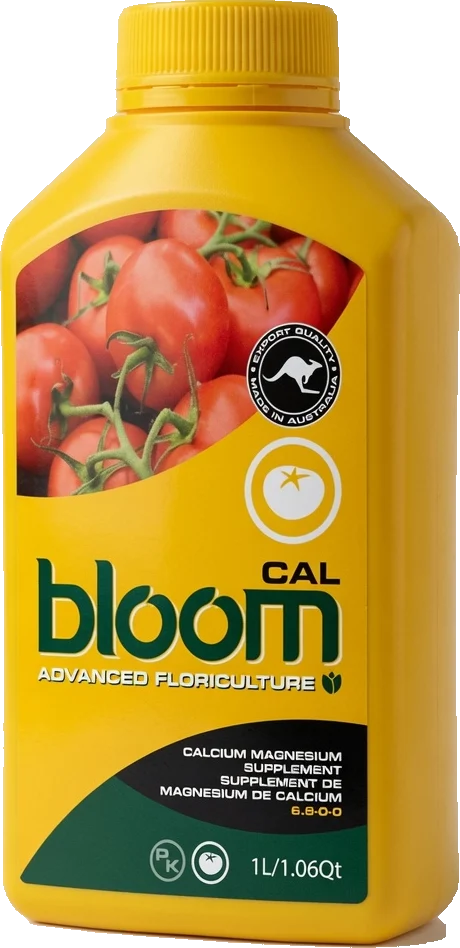
What’s actually on the CAL label
CAL’s guaranteed analysis is 5.2% total nitrogen (all nitrate nitrogen), 5% calcium, 1.4% magnesium, 0.5% iron — declared as chelated iron — and 0.036% zinc, declared as chelated zinc. The derived-from statement names the inputs exactly: calcium nitrate, magnesium nitrate, iron DTPA, and zinc EDTA. Two different chelating agents, named separately, for two different micronutrients. That’s not an accident of formulation — DTPA and EDTA hold a metal ion in solution across different pH ranges, and the difference is large enough to decide whether an iron supplement works at all once conditions change.
Why the agent matters more than the metal
EDTA-chelated iron is the more common, cheaper choice in the broader fertilizer market, and it performs fine in a lot of conditions — but its grip on iron starts failing above roughly pH 6.5. DTPA holds iron stable considerably further, to around pH 7.5. That three-quarters-of-a-point gap sounds small until you consider where it actually lands: broadacre ground across the Great Plains and much of the western U.S. commonly tests in the 7.5–8.5 range, calcareous by nature, well past the point where EDTA iron starts dropping out of solution and becoming unavailable — the textbook mechanism behind iron chlorosis on high-lime soils. A chelate that quietly fails above 6.5 is a chelate that was never going to help on ground that routinely tests a full point higher than that.
It’s worth being precise about what “fails” means here. The iron doesn’t vanish — it drops out of the soluble, plant-available chelated form and reverts toward insoluble iron compounds the plant’s roots can’t take up. From a field inspection, that failure looks identical to a true iron deficiency: interveinal yellowing on new growth, worse on the highest-pH patches of a field. The difference only shows up when you ask which chelate was actually applied and compare it against a measured soil pH — a question most troubleshooting skips straight past on the way to “apply more iron.”
What this means for CAL, and what it doesn’t
Inside a hydroponic reservoir, a grower controls pH directly, so the DTPA choice in CAL is about buffering against normal reservoir drift rather than fighting calcareous ground — the same chemistry, applied to a much smaller, much more controllable system. CAL’s own nitrogen load is worth knowing too: at 5.2% N, all of it nitrate, a 1 ml/L dose adds roughly 52 ppm N to a reservoir, something a hydroponic grower needs to count against their overall feed program.
Notice also that CAL pairs its two micronutrients with two different chelates rather than defaulting to one for both. Zinc is carried as EDTA, which is perfectly adequate for zinc — EDTA’s pH ceiling is a problem specifically for iron chemistry, not for every metal it chelates. That detail matters for reading any chelated-nutrient label correctly: the chelating agent has to be evaluated metal by metal and pH range by pH range, not treated as one blanket spec that applies the same way across a whole product line.
None of that makes CAL a field product — it isn’t one, and the label says so. What it does mean is that a broadacre grower reading a bag of chelated micronutrients for ground that tests above pH 7 has a real, specific question worth asking the supplier: which chelating agent, and what pH does it actually hold to. It’s the same question the DTPA line on a hydroponic label answers for a much smaller volume of water. The agent named on a label is doing more work than the percentage next to it, in a reservoir or in a field.
Iron chlorosis on calcareous ground is one of the most common, most frustrating micronutrient problems in broadacre agriculture, and the fix usually sold for it is “more iron” — when the real variable, as the pH-stability numbers above show plainly, is almost always which chelate carried that iron in the first place. A soil test that comes back above pH 7.5 isn’t a signal to buy more of the same chelated product that already failed once; it’s a signal to check the derived-from line before buying it again.