
The Organic Claim We Never Make — and Why That’s the Point at Field Scale
Walk through the fine print on any Bloom label and one line shows up again and again, worded almost identically every time: not for use in organic crop or organic food production in the state of California. It’s an easy line to skim past. For a broadacre or commercial operation weighing inputs against a certification program, a buyer contract, or an export market’s own rulebook, it’s actually one of the more useful sentences on the bottle — because it tells you exactly what we’re not claiming, which turns out to matter as much as what we are.
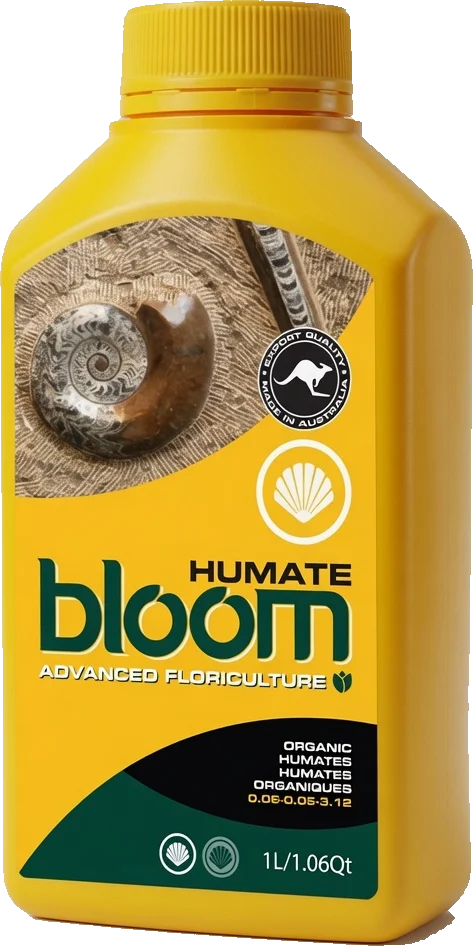
A line that’s really a boundary
Every Bloom label we’ve read into our own fact-checking reference carries three things in common, worded consistently: the non-organic disclaimer above, a pointer to AAPFCO’s public heavy-metals reporting page for anyone who wants to check metals content, and an unchanged manufacturer address — Agricultural Organics (Aust) P/L, Green Fields, South Australia — across every label vintage we’ve examined. None of those three lines makes the product sound more impressive. Each one draws a boundary around exactly what the label is willing to stand behind.
That matters more at field scale than it does in a single grow tent, because the downstream paperwork is heavier. A broadacre operation selling into a certified-organic supply chain, a cooperative with its own input-approval list, or an export buyer working under a different country’s fertilizer rules all need an input’s status to be unambiguous before it ever gets delivered. A label that quietly implied organic status it couldn’t back up would be a liability precisely where the stakes are highest — a rejected load, a voided certification, a contract clause triggered after the product is already in the ground. Bloom’s label doesn’t leave that question open for a buyer, an auditor, or a grower to answer on our behalf.
An ocean away, the same question gets answered differently
It’s also worth knowing this isn’t only a US question, or only a Bloom question. European Union rules on protein hydrolysate inputs go further in one specific direction: an EU regulation bars animal-derived protein hydrolysates, fish-based ones included, from application to the edible parts of a crop grown under organic certification, while still permitting their use on non-edible parts, seed, roots and foliage outside that narrow carve-out. That’s a different, more detailed rule than anything on a US label — it’s not a blanket ban, it’s a scoped one — and it exists for the same underlying reason Bloom’s own disclaimer exists: a fish-derived or marine input and an organic-certified supply chain need a clearly stated relationship, because “probably fine” isn’t a standard a certifier, an auditor, or an export inspector will accept.
We’re not claiming Bloom products meet or don’t meet that EU standard — that’s a different jurisdiction, a different rule, and not one we’re positioned to speak to here. What the comparison actually shows is that this is a live, serious question across more than one regulatory system, not a formality unique to one label. A grower moving product across borders, or selling into a buyer who answers to a different rulebook than the one on our own bottle, is better served by a label that states its boundary plainly than by one that’s vague enough to mean whatever the reader hopes it means.
What this is, and isn’t
This isn’t a brand story about Bloom being more honest than a competitor — we’re not naming one, and we don’t need to. It’s a brand story about what a label is for. A guaranteed analysis, a derived-from statement, a manufacturer’s unchanging address and a plain statement of what a product isn’t certified for all do the same job: they let a grower, a buyer or a regulator take the label at face value instead of having to guess. At a scale where one load’s paperwork can decide whether a whole season’s product clears a buyer’s gate, that’s worth more than a claim we were never in a position to make honestly in the first place.
None of this changes what our biostimulant and booster lines are built to do — it’s a separate question from efficacy, and we treat it that way deliberately. But a grower deciding what goes into a broadacre input program is usually weighing two things at once: what a product does, and what it’s cleared to be used for. We’d rather a label answer the second question too plainly than leave it for someone else to find out the hard way, mid-season, when it’s too late to swap the input out.